Introduction
Many children recognize letters long before their little hands possess the refined finger strength needed to form them on paper. This fascinating developmental gap often surprises adults who expect early visual recognition to translate instantly into pencil control. According to the National Association for the Education of Young Children, young children learn best through active engagement with meaningful materials that bridge developmental milestones and foundational academic skills. Supporting this journey requires resources that respect both cognitive readiness and muscular maturity. The capital letters tracing a to z in single page worksheet meets this exact developmental need by organizing the entire alphabet onto one cohesive sheet. It sounds simple, and that is precisely the point. By reducing page clutter, children can focus entirely on directional stroke execution without getting overwhelmed by multi-page workbooks. Accessing targeted tools like the Alphabet And Numbers Tracing collection helps build essential confidence during those crucial early writing experiences.
💡 Educational Key Takeaways:
- Core Skill: Structured Capital Letters Tracing A To Z In Single Page focused on developing pencil grip, stroke control, and early literacy/math confidence.
- Target Scope: Suited for homeschoolers, preschool, kindergarten, and elementary learners.
- Best Recommendation: Practice 10–15 minutes daily with ergonomic writing tools to reinforce muscle memory without hand fatigue.
What This Worksheet Covers
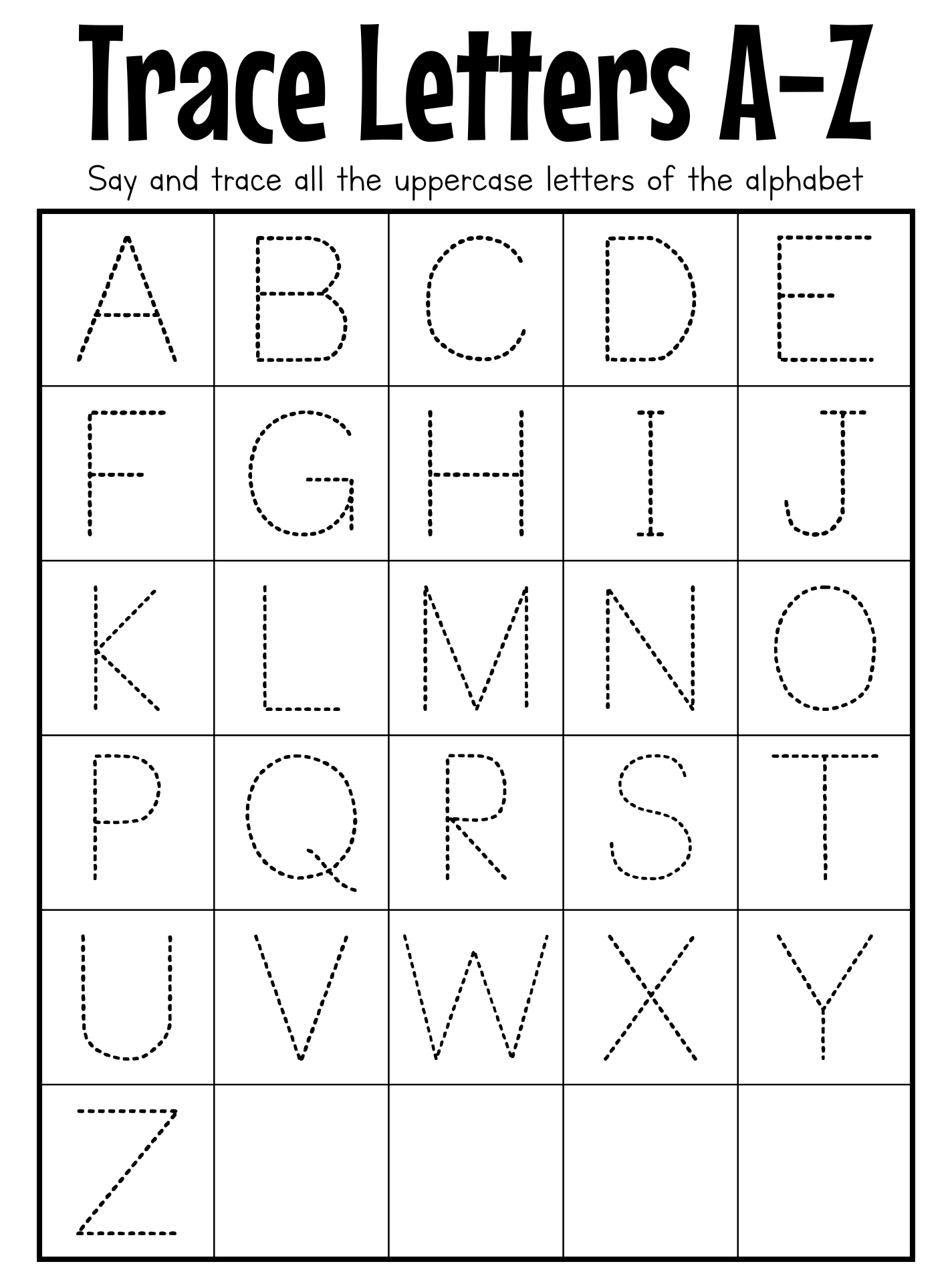
Targeting uppercase letter formation requires careful attention to top-to-bottom and left-to-right progression. This single-sheet resource displays every capital letter from A to Z in a clear, highly legible font equipped with directional arrows and clear starting dots. Children encounter straight lines, diagonal slashes, and complex curves in a structured visual layout that promotes muscle memory. Letter and numeral formation demand precise control over hand-eye coordination, postural stability, and visual-spatial processing. Here’s what makes this worksheet different: it allows learners to scan the entire alphabet at a glance, fostering a sense of completion and visual tracking that fragmented workbooks simply cannot replicate. Exploring additional resources found within Dotted Letters For Tracing provides even more targeted practice for perfecting stroke directionality.
Key Learning Outcomes
Mastering this single-page layout yields multiple foundational developmental milestones. Learners internalize proper stroke order by following standardized directional cues, reducing the habit of drawing letters from the bottom up. Hand-eye coordination improves significantly as little fingers guide writing utensils along the prescribed paths without straying. Visual discrimination skills sharpen as children differentiate between similarly shaped capitals like E, F, and H, or M and W. Furthermore, working through the alphabet in sequential order reinforces early literacy awareness and alphabetical sequencing, connecting tactile motion directly to cognitive memory systems. This seamless integration of physical movement and cognitive recall establishes a robust foundation for future academic success.
How to Use This Worksheet
Facilitating a positive writing session involves setting up a supportive physical environment before any marks land on the paper. Start by ensuring the child sits with feet flat on the floor, hips and knees at ninety-degree angles, and the paper slightly tilted to match the natural arc of the writing hand. Encourage a functional tripod grasp where the pencil rests gently against the middle finger while thumb and index finger stabilize the shaft. Adults should model the correct starting point for each letter aloud, emphasizing words like top, down, and around. Consistency in verbal cues transforms abstract lines into memorable physical actions, turning a routine chore into an engaging, multi-sensory exercise.
Practical Tips for Parents and Teachers
Scaffolding pencil tasks prevents hand fatigue and frustration during writing practice. Break the sheet into manageable chunks rather than demanding all twenty-six letters in one sitting, perhaps tackling the straight-line capitals like I, L, and T before moving on to diagonal letters like A, V, and W. For children struggling with grip endurance, wrapping a small foam gripper around the pencil or using shorter, stubby crayons naturally encourages correct finger placement. According to the American Occupational Therapy Association, incorporating short movement breaks between letter groups helps regulate muscle tension and keeps the nervous system primed for fine motor work. Praise the process of careful tracing rather than focusing solely on a pristine final product, keeping motivation high and anxiety low.
Age-Appropriate Recommendations
Aligning expectations with developmental stages ensures that children remain confident and eager to learn. For toddlers and preschoolers aged two to four, building foundational strength remains the top priority; according to the Handwriting Without Tears framework, these early learners benefit most from exploring pre-writing vertical, horizontal, and diagonal strokes before tackling complex letter formations. Kindergarteners and early elementary students aged five to eight are fully equipped to refine letter proportions, alignment, and sizing within structured guidelines. Utilizing supplementary materials from the Fine Motor and Pre-Writing Skills section helps bridge any developmental gaps for children who need extra support building hand strength.
Young children frequently develop strong visual letter recognition months or even years before their intrinsic hand muscles and motor planning networks possess the endurance required to form those same letters consistently on standard paper. — Early Childhood Developmental Milestones
Frequently Asked Questions
Navigating early writing resources is easier with clear answers to common questions regarding printing, skill development, and educational standards.
Explore More Free Printable Tracing Worksheets
Supporting a young learner through every stage of development requires a diverse toolkit of engaging, accessible resources. Families and educators can discover an extensive selection of thematic printables, number exercises, and line-control sheets by browsing the complete collection at KidTraces.com. Whether preparing a classroom for the upcoming school year or setting up a homeschool station at the kitchen table, having reliable access to high-quality printables makes all the difference. Continue building essential writing foundations by exploring the curated categories and finding fresh ways to make pencil practice an enjoyable daily routine.
Developmental Milestone & Activity Table
| Development Stage | Recommended Daily Duration | Primary Learning Objective |
|---|---|---|
| Preschool & Pre-K | 10 – 15 Minutes | Pencil grip development & basic pre-stroke lines |
| Kindergarten | 15 – 20 Minutes | Letter/number formation & spatial line awareness |
| Early Elementary (Grade 1–2) | 20 – 30 Minutes | Fluency, sentence construction & neatness |
Images References