Introduction
Many children recognize letters, numbers, and geometric forms long before their fine motor control allows them to replicate those shapes on paper. According to the American Occupational Therapy Association, foundational fine motor skills—such as hand strength, bilateral coordination, and finger dexterity—are critical precursors to mastering functional tasks like handwriting and tool use. Translating visual recognition into physical output requires a gradual bridging of cognitive understanding and neuromuscular execution. It sounds simple, and that is the point. The free printable “tracing rectangle”,3″,0″,0%”,9.333333333333334″” provides a focused, low-pressure avenue for young learners to gain confidence in closed-shape geometry and foundational pre-writing strokes. Without heavy distraction, children can center entirely on the physical mechanics of maintaining pencil contact, navigating sharp ninety-degree corners, and completing a continuous path.
💡 Educational Key Takeaways:
- Core Skill: Structured Tracing Rectangle”,3″,0″,0%”,9.333333333333334″ focused on developing pencil grip, stroke control, and early literacy/math confidence.
- Target Scope: Suited for homeschoolers, preschool, kindergarten, and elementary learners.
- Best Recommendation: Practice 10–15 minutes daily with ergonomic writing tools to reinforce muscle memory without hand fatigue.
What This Worksheet Covers
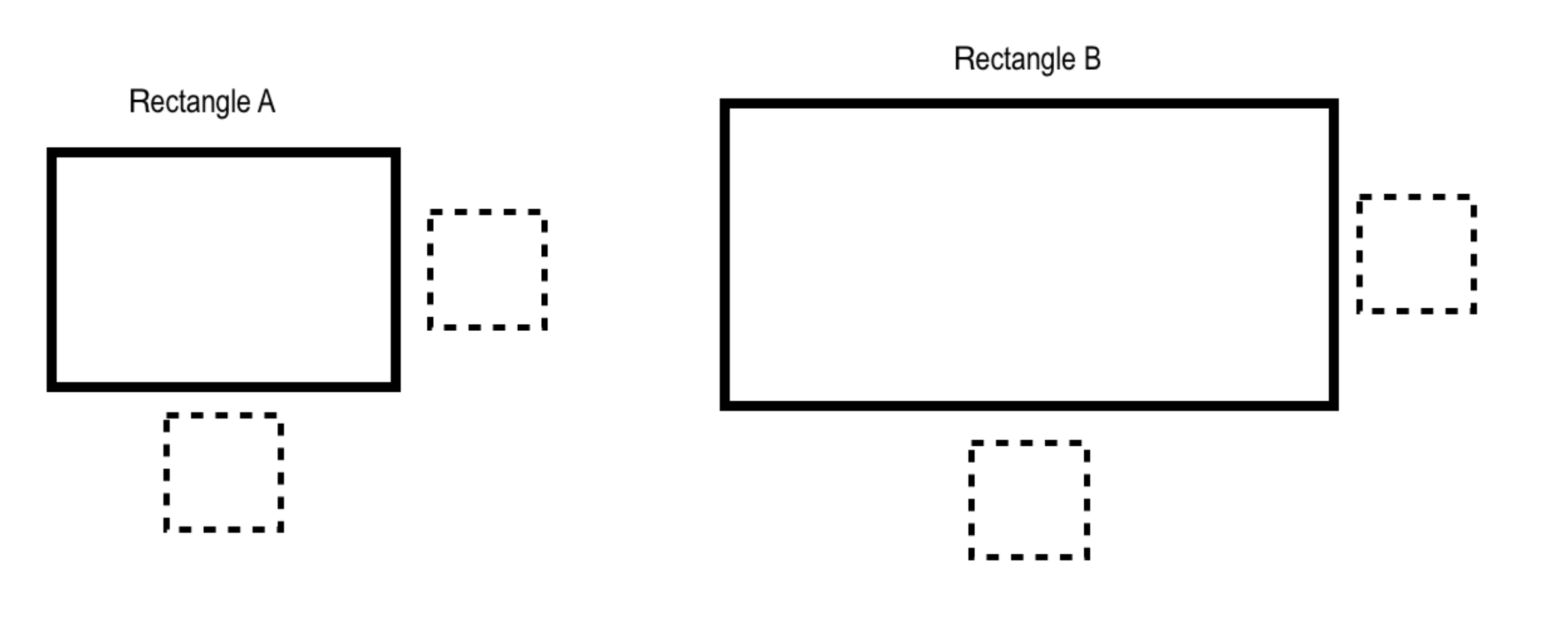
Geometric shape tracing forms the backbone of advanced visual-motor integration. This specific printable isolates the rectangle, offering a unique set of challenges compared to circles or triangles. Navigating distinct horizontal and vertical lines requires varying levels of postural stability and distinct wrist movements. Children must shift from long, sweeping horizontal visual tracking to abrupt vertical shifts, engaging both sides of the brain and exercising precise spatial awareness. The worksheet acts as a bridge between continuous curving lines and the sharp angles demanded by uppercase letters like H, E, and L. Practitioners in classrooms and therapy clinics often notice that children who struggle with corner transitions on geometric shapes similarly struggle with starting points in letter formation. By mastering closed-loop structures on a structured page, learners build the muscle memory required for confident pencil control across various contexts found within Shape and Line Tracing.
Key Learning Outcomes
Working through this page fosters several foundational academic milestones simultaneously. Visual-motor integration improves as the eyes guide the hand along precise boundary lines, teaching the brain to translate visual cues into physical output. Motor planning, or praxis, develops organically as children figure out how to pause, pivot, and change direction without losing their place. Bilateral coordination strengthens naturally, with one hand stabilizing the paper while the dominant hand executes the tracing stroke. Furthermore, spatial perception sharpens as learners navigate the specific dimensional constraints of length and width, noticing where lines begin and end. These cumulative outcomes support broader early literacy goals, preparing tiny hands for the diverse demands found in Fine Motor and Pre-Writing Skills.
How to Use This Worksheet
Facilitating a successful tracing session involves more than simply handing over a writing utensil and a sheet of paper. Success often hinges on environmental setup, posture, and emotional climate. Children perform best when seated at a surface where their feet rest flat on the floor and their hips, knees, and elbows form ninety-degree angles. This optimal postural alignment provides the proximal stability necessary for distal finger mobility. Encouraging a functional grasp—whether a tripod, quadrupod, or adapted grasp—ensures efficient movement without premature hand fatigue. It is always wise to observe whether the child is pressing too hard into the paper, which signals excessive muscle tension, or too softly, indicating low foundational tone.
Practical Tips for Parents and Teachers
Here is what makes this worksheet different: it invites multisensory engagement before any pencil touches the page. Try having the child trace the perimeter of the rectangle with a finger, a toy car, or a textured marker to feel the corners before visual-motor integration takes over. Scaffolding is essential when working with early learners; adults can gently guide the child’s hand through the first corner transition to demonstrate the physical pause required before changing direction. As the child gains proficiency, gradually fade assistance to encourage independent problem-solving. If pencil resistance becomes an issue, slipping the worksheet into a dry-erase sleeve with a chunky marker can instantly lower frustration while offering immediate tactile feedback. For broader pencil control practice, similar foundational printables are accessible within Tracing Worksheets.
Age-Appropriate Recommendations
Developmental expectations vary widely depending on the age and stage of the individual learner. According to the National Association for the Education of Young Children guidelines on developmentally appropriate practice, children aged two to four are typically refining their grasp patterns and exploring basic strokes, making large-scale shape tracing ideal for gross and early fine motor integration. For this younger cohort, printing the resource at a larger scale or utilizing thick writing tools allows for shoulder and elbow-led movements. Children aged five to eight are generally transitioning toward refined pencil control, standard tripod grasps, and letter formation that requires exact corner transitions and directional consistency. Educators working with older kindergarten and early elementary students can use this precise rectangle template to reinforce impulse control, visual tracking, and steady pacing. This structured practice lays a strong groundwork for complex writing tasks, connecting directly to the developmental milestones outlined in General Kidtraces.
Foundational fine motor skills, including hand strength and visual-motor integration, serve as essential predictors for academic success and functional independence in early childhood. — American Occupational Therapy Association
Frequently Asked Questions
Navigating printing options, developmental pacing, and skill integration is straightforward when guided by clear developmental standards and accessible resources.
Early writing readiness relies on the coordinated development of core stability, bilateral integration, and spatial awareness before formal letter formation is introduced. — National Association for the Education of Young Children
Explore More Free Printable Tracing Worksheets
Supporting a growing child’s writing journey is a continuous process that benefits from a wide variety of engaging, developmentally appropriate practice materials. Whether the focus is on mastering curved lines, learning letter sequences, or exploring seasonal motifs, having access to an organized library makes skill-building seamless and enjoyable. Every learner advances at an individual pace, and rotating through diverse practice sheets keeps enthusiasm high while targeting specific muscle groups. Caregivers, educators, and therapists are invited to explore the full collection of printable resources available at KidTraces.com to find additional tools that inspire confidence, foster independence, and celebrate every small developmental victory.
Developmental Milestone & Activity Table
| Development Stage | Recommended Daily Duration | Primary Learning Objective |
|---|---|---|
| Preschool & Pre-K | 10 – 15 Minutes | Pencil grip development & basic pre-stroke lines |
| Kindergarten | 15 – 20 Minutes | Letter/number formation & spatial line awareness |
| Early Elementary (Grade 1–2) | 20 – 30 Minutes | Fluency, sentence construction & neatness |
Images References