Introduction
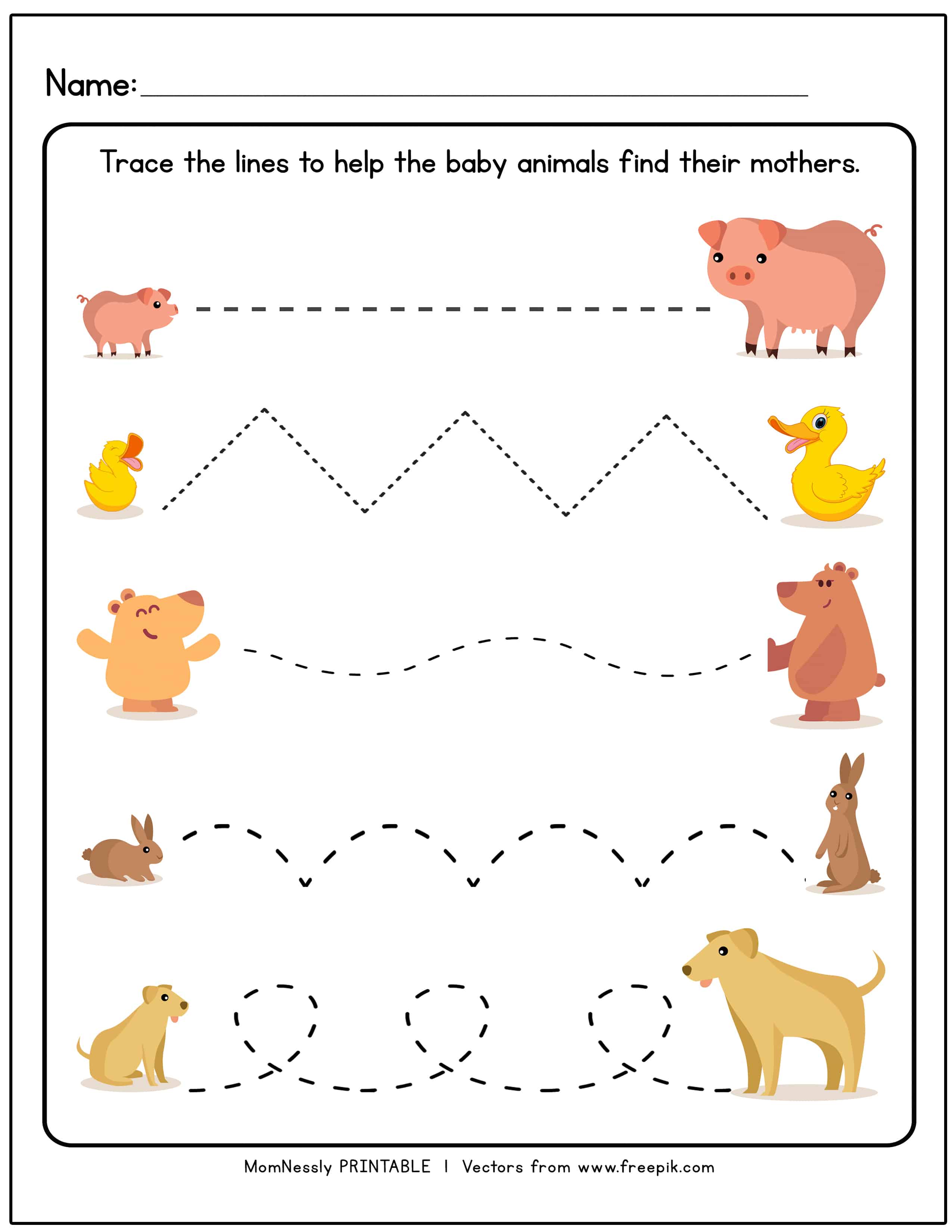
Many young children recognize letters long before their fine motor skills can actually form them on paper. According to the American Occupational Therapy Association, foundational hand strength and visual-motor integration must develop before a child can master controlled pencil strokes. Bridging this gap requires engaging, low-pressure exercises that build finger dexterity without the frustration of formal writing. The free printable tracing lines animals serves as an ideal bridge, transforming early pencil control into a playful journey across the page. Young learners connect dots to help a friendly bunny hop home or guide a puppy along a wavy trail. It sounds simple, and that is the exact point. By embedding pre-writing strokes into an animal theme, children build the intrinsic hand muscles necessary for lifelong writing success while staying thoroughly engaged.
💡 Educational Key Takeaways:
- Core Skill: Structured Tracing Lines Animals focused on developing pencil grip, stroke control, and early literacy/math confidence.
- Target Scope: Suited for homeschoolers, preschool, kindergarten, and elementary learners.
- Best Recommendation: Practice 10–15 minutes daily with ergonomic writing tools to reinforce muscle memory without hand fatigue.
What This Worksheet Covers
Developing solid pre-writing skills requires mastering a specific developmental progression of lines and curves. Horizontal, vertical, diagonal, and curved lines form the building blocks of every letter and number in the alphabet. The tracing lines animals printable organizes these essential geometric strokes into delightful pathways connecting various creatures. A meandering snake path teaches smooth continuous curves, while a zigzag trail for a climbing monkey builds angular control and directional shifts. These visual tracks demand careful visual-motor coordination, teaching little hands to pause, pivot, and maintain steady downward pressure. Exploring these diverse paths supports the broader spectrum of Fine Motor and Pre-Writing Skills by isolating finger movements and stabilizing the wrist.
Key Learning Outcomes
Working through these animal paths directly enhances pencil control, visual tracking, and spatial awareness. According to the National Association for the Education of Young Children, active manipulation of drawing tools supports the fine motor control essential for later literacy development. Children learn to cross the visual midline smoothly as they trace from left to right across the page. Consistent practice strengthens the small intrinsic muscles of the hand, paving the way for a functional tripod grasp. Furthermore, maintaining contact between the pencil tip and the dotted line builds the concentration and bilateral coordination required for independent classroom tasks.
How to Use This Worksheet
Maximizing the benefits of any tracing activity starts with creating an inviting, pressure-free environment at a properly sized table. Positioning the child with feet flat on the floor and hips at a ninety-degree angle provides the core stability needed for distal hand control. Adults should encourage a functional grasp naturally, allowing for open web spaces and relaxed finger placement rather than enforcing rigid perfection too early. Placing the sheet on a vertical surface, such as an easel or taped to a wall, naturally promotes wrist extension and strengthens the shoulder girdle. When children slide crayons or markers along the tracks of the Shape and Line Tracing collection, they gain confidence before ever touching lined paper.
Practical Tips for Parents and Teachers
Scaffolding the experience ensures every learner finds an appropriate level of challenge. Begin by having the child trace the thick lines with an index finger before introducing a writing utensil, reinforcing the tactile path of the animal route. Thicker writing tools like broken crayons, short colored pencils, or chunky markers naturally encourage a proper grasp by discouraging a tight fist. Adults can verbally narrate the journey to boost engagement, such as encouraging the puppy to gallop over the bumpy hills. When children show fatigue, pause the session immediately to protect hand stamina and prevent the formation of compensatory, painful gripping habits.
Age-Appropriate Recommendations
Toddlers around ages two and three benefit most from simple horizontal and vertical tracks using thick markers, aligning with early Childhood developmental milestones for basic stroke imitation. By ages four and five, children transition to diagonal lines, intersecting shapes, and looping animal trails that demand greater bilateral integration and visual-motor control. According to the Handwriting Without Tears framework, developmental readiness progresses from imitating vertical lines to forming complex diagonal shapes and intersecting paths. For older children in kindergarten and first grade who need extra practice with letter formation, combining animal lines with resources from Alphabet And Numbers Tracing creates a seamless continuum of skill refinement.
Visual-motor integration and foundational hand strength must develop through hands-on play before a child can master formal handwriting tasks. — American Occupational Therapy Association
Frequently Asked Questions
Clear answers to common questions help caregivers implement these printables effectively at home or in the classroom.
Explore More Free Printable Tracing Worksheets
Supporting a young learner’s journey from early scribbles to confident handwriting takes a diverse toolkit of engaging resources. Exploring additional pre-writing materials helps maintain enthusiasm while targeting specific developmental milestones at every stage of growth. Discover a wide selection of printable activities designed to build coordination, control, and early literacy confidence by browsing the full library at KidTraces.com.
Developmental Milestone & Activity Table
| Development Stage | Recommended Daily Duration | Primary Learning Objective |
|---|---|---|
| Preschool & Pre-K | 10 – 15 Minutes | Pencil grip development & basic pre-stroke lines |
| Kindergarten | 15 – 20 Minutes | Letter/number formation & spatial line awareness |
| Early Elementary (Grade 1–2) | 20 – 30 Minutes | Fluency, sentence construction & neatness |
Images References