Introduction
Many children recognize letters, shapes, and numbers long before their fine motor skills can actually form them on paper. According to the American Occupational Therapy Association, foundational hand strength and dexterity are prerequisites for successful handwriting and daily functional tasks. Closing this developmental gap requires targeted practice that builds stability in the hand and wrist. The trace circles activity bridges this gap by offering a structured, engaging way to master continuous curving strokes. It sounds simple, and that’s the point: mastering the circle is the bedrock of all advanced pre-writing geometry. Practitioners and educators often notice that children who struggle with rigid straight lines find surprising freedom in the fluid, flowing motion of round shapes.
💡 Technical Key Takeaways:
- Core Focus: Diagnostic schematic and terminal connection layout for Trace Circles Activity.
- Target Scope: Field technicians, automotive DIYers, and residential/commercial electricians.
- Safety Rule: Always disconnect the primary power source/battery terminal and verify zero voltage with a multimeter before touching wires.
What This Worksheet Covers
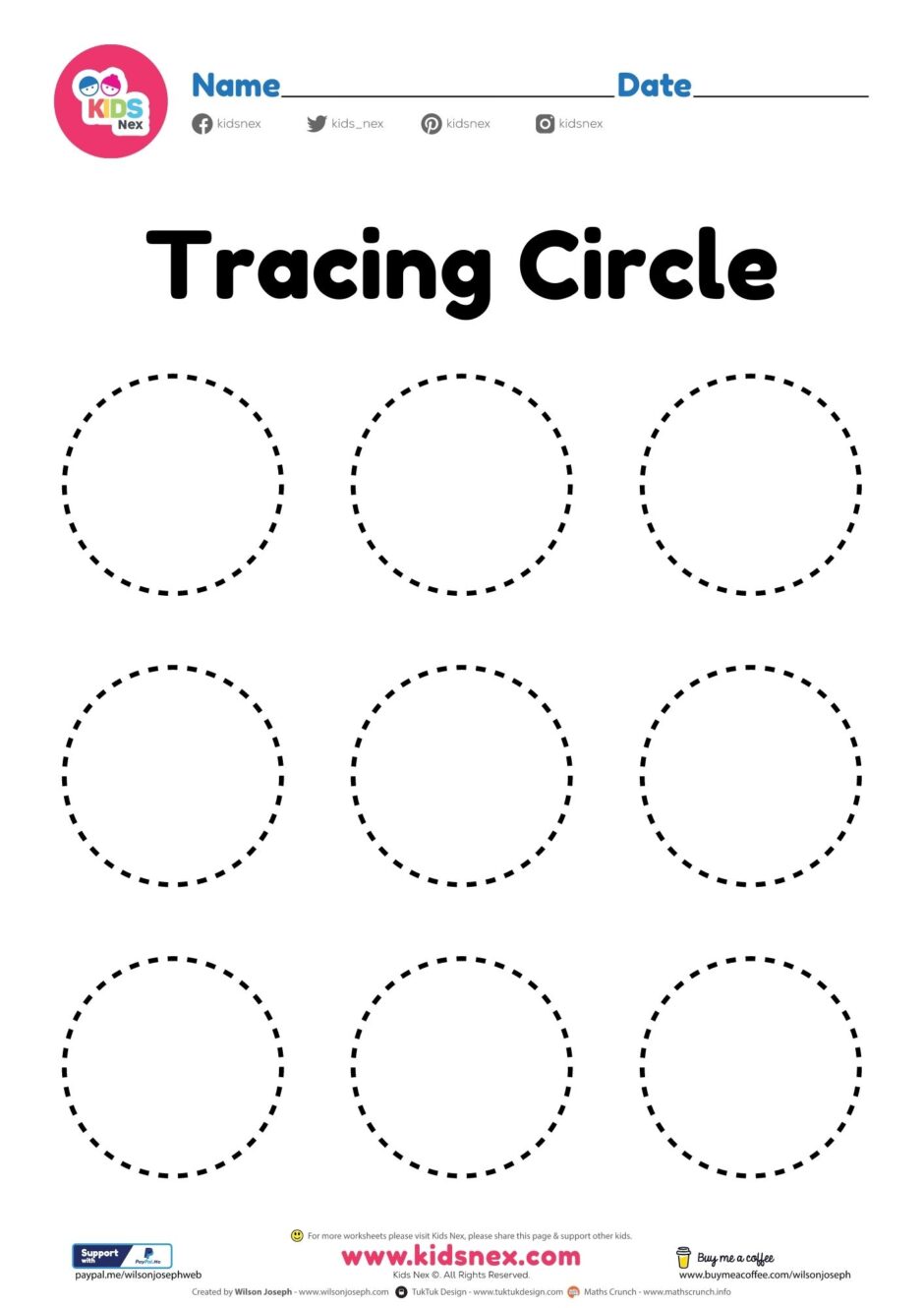
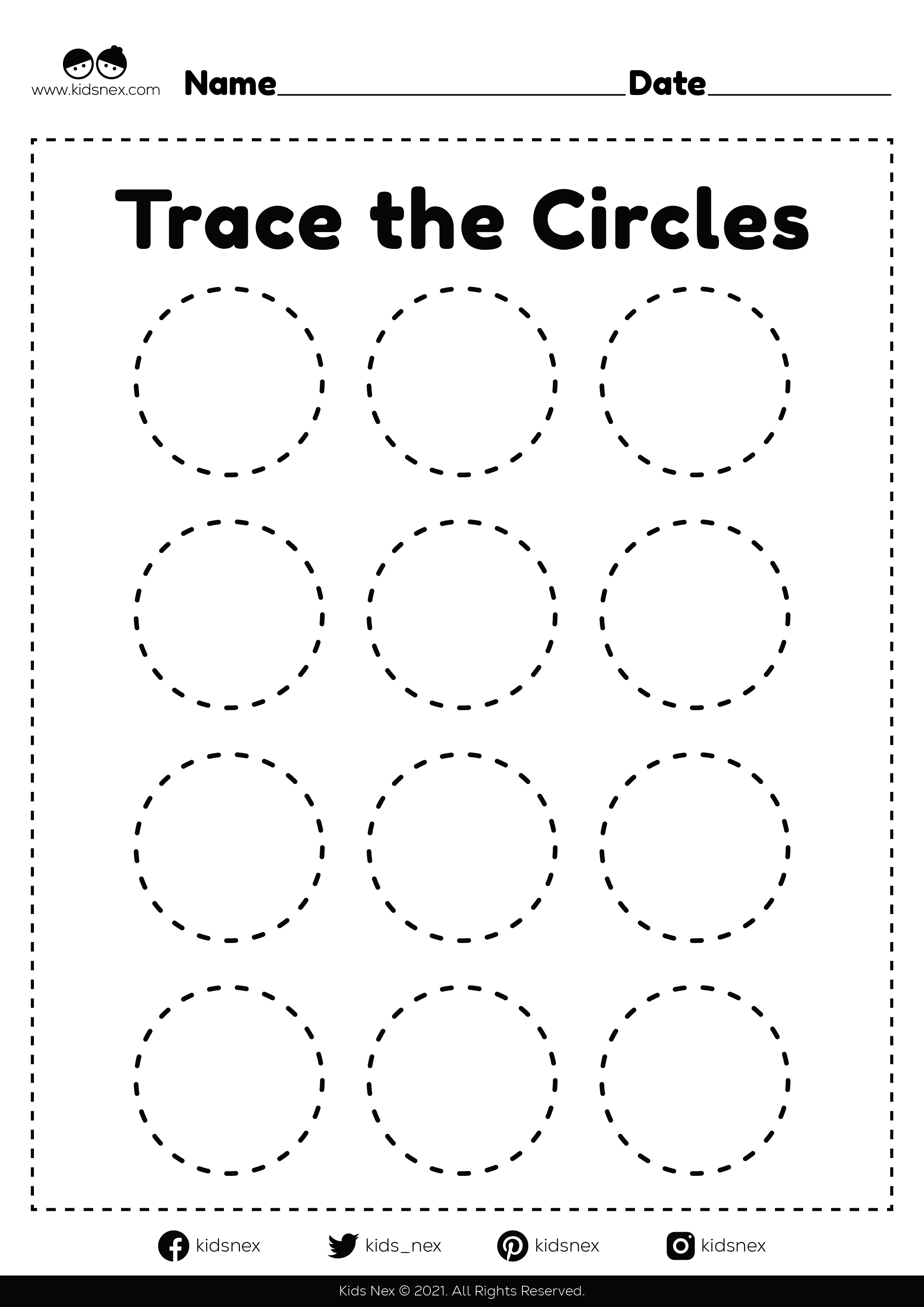
This printable resource focuses specifically on continuous curvilinear movement, teaching hands and pencils to work in harmony. Continuous curves demand synchronized coordination between the visual system and the small muscles of the hand, challenging young learners to maintain steady contact from start to finish. Here’s what makes this worksheet different: instead of jumping straight into complex letters, it breaks down the fundamental arc and loop formations that reappear constantly in both manuscript and cursive writing. Developing this muscle memory early prevents the heavy, fatiguing hand pressure so frequently observed in early elementary classrooms.
Key Learning Outcomes
Engaging consistently with circular tracing sheets yields measurable improvements in fine motor control and visual-motor integration. Learners steadily build bilateral coordination as one hand stabilizes the paper while the dominant hand executes the smooth, rounded motion. Furthermore, the activity nurtures directional awareness, teaching little ones how to navigate curves from top to bottom and left to right with confidence. Spatial awareness improves naturally as pencils stay within designated boundaries, refining the hand-eye coordination necessary for crisp, legible letter formation later in life. Additionally, children cultivate sustained attention span and patience, realizing that slow, deliberate control produces much cleaner results than rushing through the exercise.
How to Use This Worksheet
Setting the stage for successful tracing involves more than simply handing over a piece of paper and a crayon. Adults should first check the seating posture, ensuring feet rest flat on the floor and elbows bend comfortably at a ninety-degree angle on the table. It is helpful to encourage an efficient pencil grasp, such as a tripod or quadrupod grip, while remaining gentle with corrections to avoid frustrating the child. Placing the sheet on a slight slant matching the angle of the child’s forearm often yields a more natural drafting position. Beginning with thicker writing utensils like broken crayons or short markers provides natural resistance, which helps activate the intrinsic hand muscles more effectively than thin pencils.
Practical Tips for Parents and Teachers
Scaffolding the learning process makes a tremendous difference in how a child receives pre-writing tasks. Adults can model the motion first in the air, using sweeping arm movements to show the continuous curve before putting pencil to paper. Tracing over thicker tactile outlines, such as raised glue lines or textured templates, offers helpful sensory feedback for learners who need extra proprioceptive input. For children who easily tire, keeping sessions brief—perhaps five minutes at a time—maintains high engagement and prevents hand cramps. As proficiency grows, gradually transition from large primary tracing paths down to the more refined Shape and Line Tracing exercises available in broader educational collections.
Age-Appropriate Recommendations
Younger children between ages two and four benefit most from large-scale circular paths utilizing whole-arm movements originating from the shoulder rather than just the wrist. According to the National Association for the Education of Young Children guidelines for developmentally appropriate practice, toddlers and preschoolers thrive when fine motor tasks remain playful, open-ended, and scaled to their natural motor planning abilities. By ages five through eight, expectations shift toward refined pencil control, precision, and alignment with early elementary standards like Common Core ELA CCSS.ELA-LITERACY.L.K.1.A, which emphasizes printing all uppercase and lowercase letters accurately. At this later stage, circular tracing supports the formation of letters like ‘o’, ‘a’, ‘g’, ‘c’, and ‘e’, ensuring smooth transitions into word-level writing tasks found within Fine Motor and Pre-Writing Skills programs and broader Tracing Worksheets.
Foundational hand strength and dexterity are prerequisites for successful handwriting and daily functional tasks. — American Occupational Therapy Association
Frequently Asked Questions
Clear guidance helps educators and caregivers maximize the utility of printable tracing resources.
According to Reading Rockets, early handwriting instruction significantly enhances letter recognition, reading fluency, and overall literacy acquisition. — Reading Rockets
Explore More Free Printable Tracing Worksheets
Unlocking a child’s writing potential requires a diverse library of engaging, skill-building resources tailored to every stage of development. Exploring complementary categories can provide endless variety to keep young learners motivated day after day. Whether practicing curved motions, mastering fundamental shapes, or branching out into letters and numbers, a well-rounded practice routine builds lasting confidence. Discover the full collection of educator-approved resources by visiting KidTraces.com to support continuous growth from toddlerhood through early elementary school.
Quick Wiring Specifications & Terminal Guide
| Component / Circuit | Standard Wire Gauge | Recommended Protection |
|---|---|---|
| Control & Trigger Signals | 18 – 20 AWG | 5A – 7.5A Inline Fuse |
| Standard Auxiliary Load | 14 – 16 AWG | 15A – 20A Circuit Breaker |
| Main Power Feed / Supply | 10 – 12 AWG | 30A – 40A Heavy-Duty Relay |
Images References