Introduction
Watch any group of preschoolers, and a fascinating developmental gap quickly emerges. Many children recognize letters, shout out initial sounds, and pretend to write long before their tiny hands possess the physical endurance to form a legible alphabet. According to the National Association for the Education of Young Children, early writing development relies heavily on meaningful, developmentally appropriate experiences that connect visual symbols to spoken sounds. Bridging that gap requires more than endless repetition on blank paper. It takes thoughtful tools that anchor abstract symbols into concrete, sensory-rich realities. Enter the letter tracing with phonics picture, a brilliantly straightforward resource designed to unify visual letter formation with auditory letter-sound correspondence. It sounds simple, and that is precisely the point. By pairing stroke practice with an engaging, recognizable picture, young learners anchor their fine motor movements to a tangible semantic meaning rather than tracing meaningless geometric shapes. Explore more in our Alphabet And Numbers Tracing collection.
💡 Educational Key Takeaways:
- Core Skill: Structured Letter Tracing With Phonics Picture focused on developing pencil grip, stroke control, and early literacy/math confidence.
- Target Scope: Suited for homeschoolers, preschool, kindergarten, and elementary learners.
- Best Recommendation: Practice 10–15 minutes daily with ergonomic writing tools to reinforce muscle memory without hand fatigue.
What This Worksheet Covers
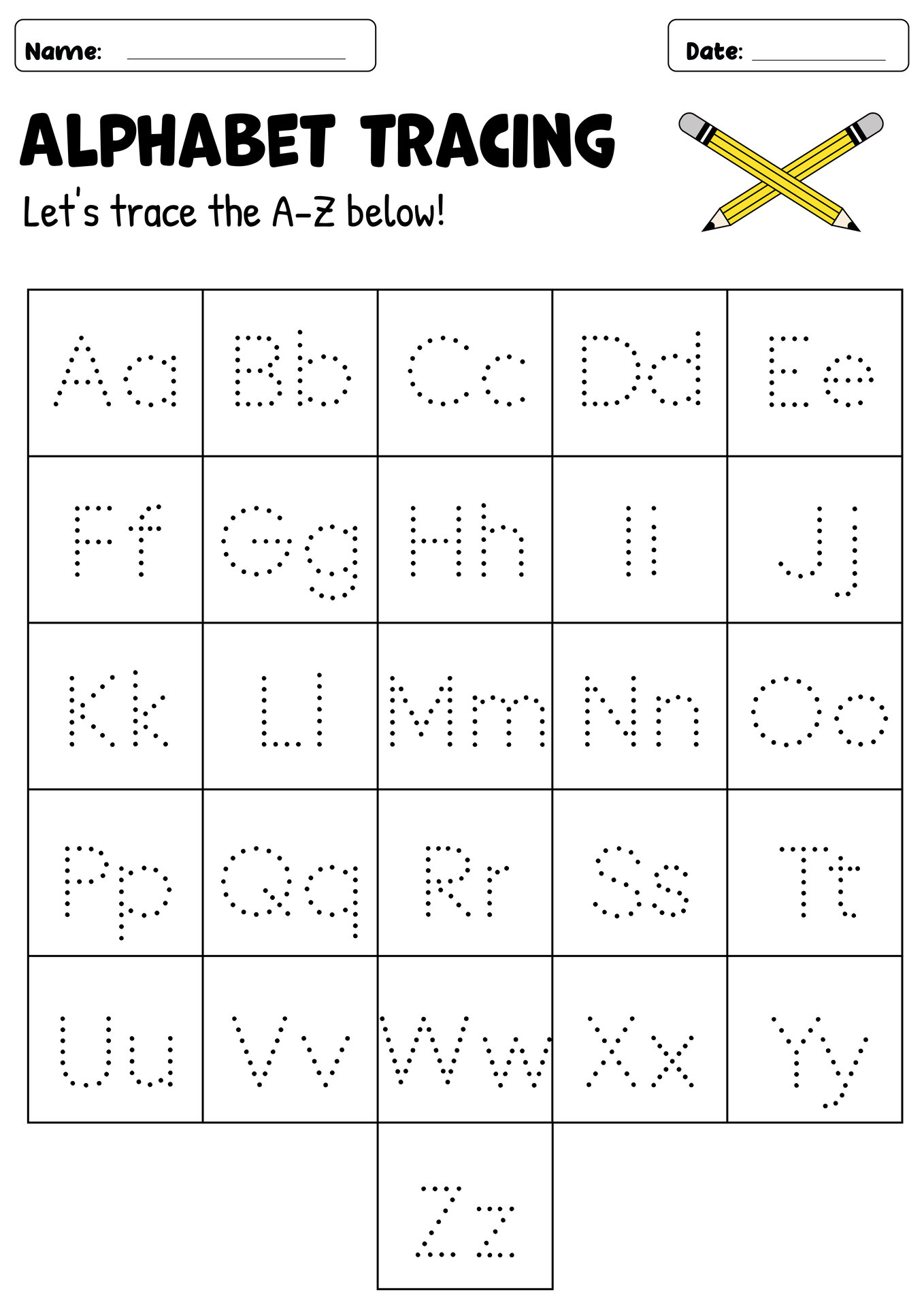
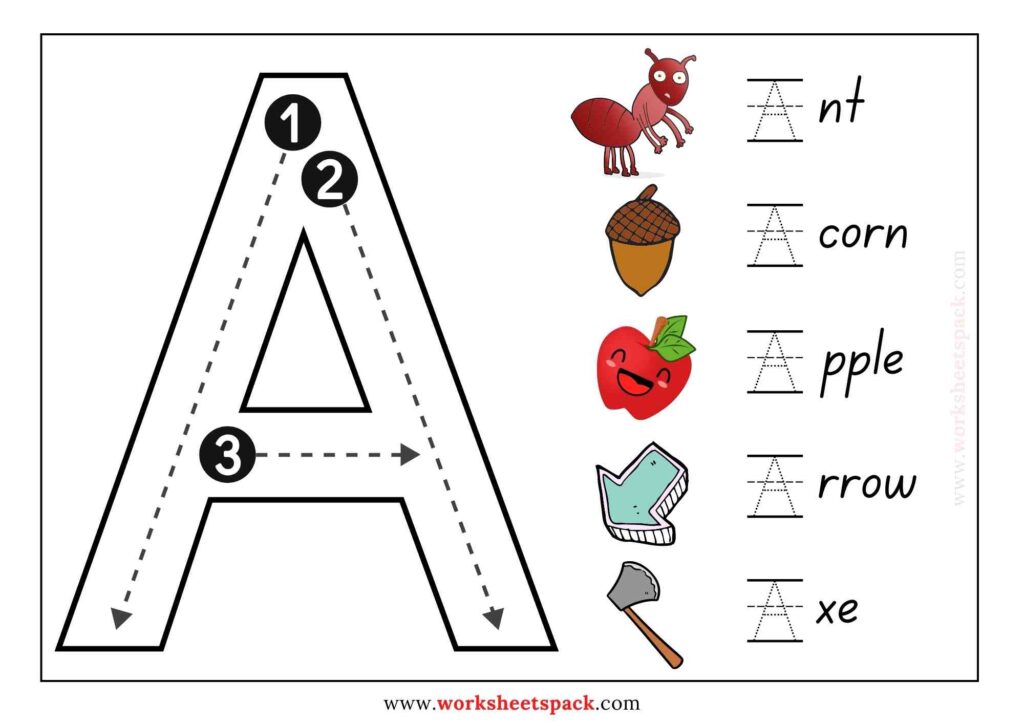
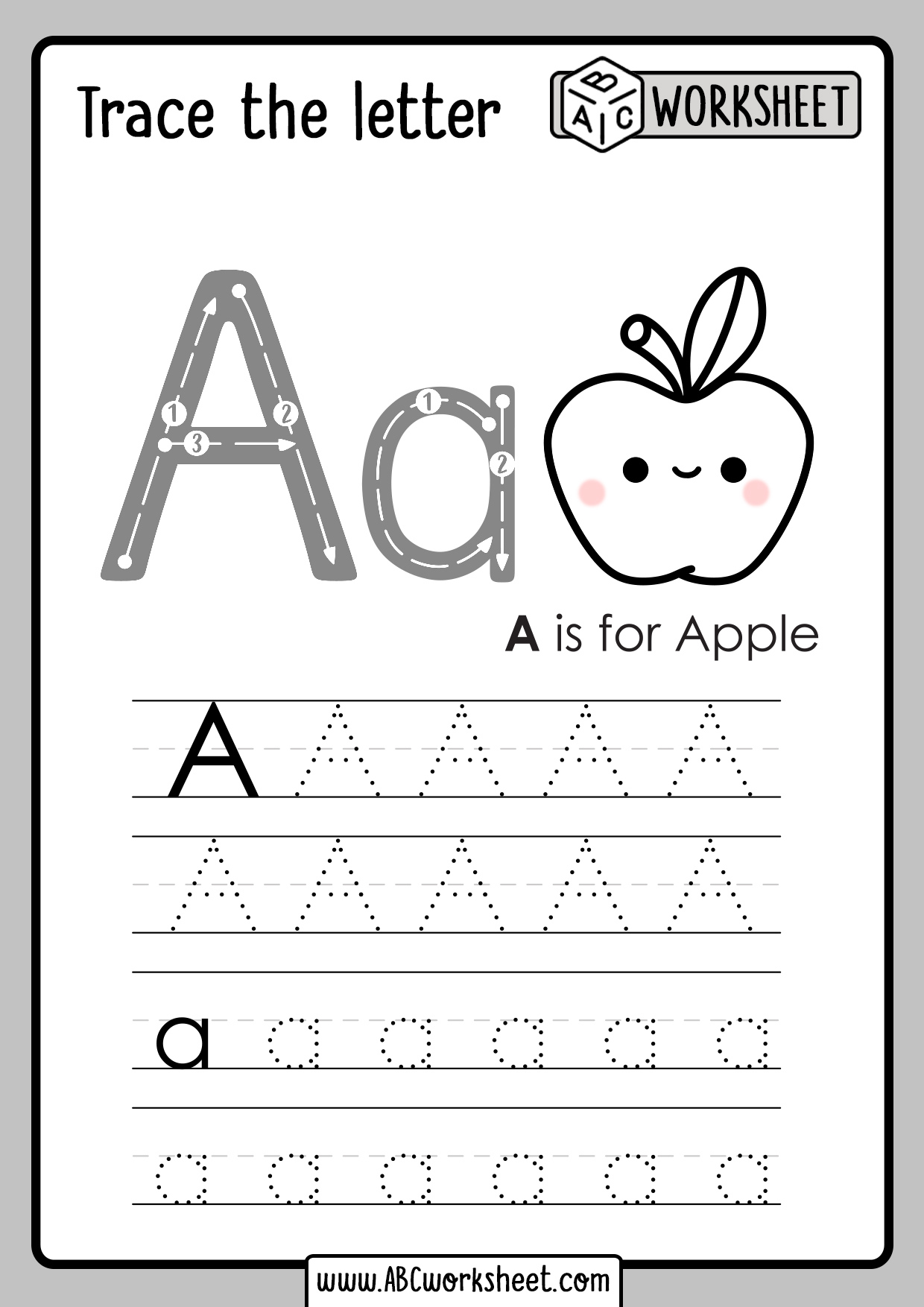
This specialized worksheet focuses on guided letter formation, stroke directionality, and phonemic awareness all on a single page. Every sheet highlights a single uppercase and lowercase target letter, complete with directional arrows that teach children exactly where to place the pencil and which way the lines must travel. Right beside the tracing paths sits a vibrant phonics picture beginning with that exact letter sound, turning a purely physical exercise into a multi-sensory literacy lesson. Children do not just pull pencils across paper; they connect the physical arc of a lowercase “a” to the crisp image of an apple. This dual-purpose design ensures that hand-eye coordination develops simultaneously with early reading foundations, making every single stroke count toward true academic readiness.
Key Learning Outcomes
Working through these pages builds precise pencil control through controlled directional strokes while reinforcing correct letter sizing and spatial awareness on primary lines. According to the American Occupational Therapy Association, foundational handwriting tasks support bilateral coordination, visual-motor integration, and the intrinsic muscle strength required for sustained academic endurance. Beyond fine motor gains, learners strengthen phonological awareness by repeatedly associating the visual glyph with the corresponding phonetic sound of the illustrated object. This dual engagement transforms passive tracing into active cognitive wiring, helping children transition smoothly from recognizing letters to independently producing them with confidence and accuracy.
How to Use This Worksheet
Success with these pages depends heavily on how the adult guides the child through the initial strokes. Begin by having the child trace the large letter with a finger, tracing the directional arrows to internalize the muscle memory before introducing a writing utensil. Once the finger traces the path smoothly, hand over a short, broken crayon or a triangular pencil to naturally encourage an efficient grasp. Encourage the child to name the phonics picture aloud before picking up the writing tool, tying the auditory sound directly to the visual target. Invite them to trace the letters slowly, prioritizing neatness and correct starting points over finishing the entire page in one rushed sitting.
Practical Tips for Parents and Teachers
Scaffolding makes all the difference when a child feels frustrated by a tricky curve or an intersecting diagonal line. Model the exact stroke on a separate piece of paper first, narrating the physical movement out loud by saying things like “start at the top, slide down, and jump back up.” If hand fatigue sets in quickly, break the worksheet into manageable chunks, letting the child complete just one row or a single letter before taking a movement break. To extend the learning beyond the printed page, invite children to mold playdough directly over the dotted letter tracks or trace the outlines using a cotton swab dipped in colorful paint. Keeping the experience playful ensures that fine motor development remains an enjoyable journey rather than a tedious chore.
Age-Appropriate Expectations
Developmental readiness dictates how children interact with writing pages across early childhood. According to the CDC developmental milestones, toddlers typically scribble spontaneously, while children around age three begin imitating horizontal and vertical lines. By ages four and five, children align with early NAEYC Developmentally Appropriate Practice guidelines, showing the wrist stability and finger dexterity required to trace structured lines, imitate crosses, and tackle basic uppercase letter forms. For younger children aged two to four, focus strictly on the Fine Motor and Pre-Writing Skills needed to manipulate crayons without gripping them too tightly. Children aged five to eight can dive deeply into mastering precise stroke sequences, letter sizing, and phonics integration using targeted sheets found within Alphabet And Numbers Tracing collections, building the speed and automaticity necessary for fluent daily writing.
Foundational handwriting tasks support bilateral coordination, visual-motor integration, and the intrinsic muscle strength required for sustained academic endurance. — American Occupational Therapy Association
Frequently Asked Questions
Finding the right resources should be seamless, which is why clear answers to common questions help parents and educators get started immediately. Whether navigating printing formats or understanding how pencil control links to reading, these concise answers provide direct guidance for daily learning routines.
Explore More Free Printable Tracing Worksheets
Supporting a young learner takes a diverse toolkit of engaging, well-designed practice materials tailored to every developmental stage. Expanding beyond basic letter pages helps children master spatial awareness, number recognition, and creative pencil control through fun, seasonal designs. Explore the complete collection of free printables available across Dotted Letters For Tracing, discover playful challenges within Shape and Line Tracing, or browse the entire library directly at KidTraces.com to find the exact resources needed for your classroom or home learning environment today.
Developmental Milestone & Activity Table
| Development Stage | Recommended Daily Duration | Primary Learning Objective |
|---|---|---|
| Preschool & Pre-K | 10 – 15 Minutes | Pencil grip development & basic pre-stroke lines |
| Kindergarten | 15 – 20 Minutes | Letter/number formation & spatial line awareness |
| Early Elementary (Grade 1–2) | 20 – 30 Minutes | Fluency, sentence construction & neatness |
Images References