Introduction
Watch any group of preschoolers, and a fascinating developmental gap quickly emerges. Many children recognize letters, shapes, and complex patterns long before their small hand muscles possess the endurance required to form those same symbols on paper. According to the American Occupational Therapy Association, foundational fine motor control and bilateral coordination must develop before children can comfortably manage pencil pressure and sustained writing tasks. Bridging that gap requires playful, engaging materials that disguise hand strengthening as creative exploration. Enter the free autumn leaf tracing worksheet, a timely seasonal resource designed to transform foundational pencil control into an enjoyable, low-pressure autumn activity. It sounds simple, and that is the exact point. By anchoring hand-eye coordination exercises to the familiar shapes of falling foliage, adults can capture children’s natural curiosity while supporting vital pre-writing milestones. Exploring seasonal printables provides an ideal entry point for children to refine their pincer grasp, practice steady stroke control, and build the visual-motor integration necessary for future academic success without the fatigue of traditional drill-and-practice sheets.
💡 Educational Key Takeaways:
- Core Skill: Structured Autumn Leaf Tracing Worksheet focused on developing pencil grip, stroke control, and early literacy/math confidence.
- Target Scope: Suited for homeschoolers, preschool, kindergarten, and elementary learners.
- Best Recommendation: Practice 10–15 minutes daily with ergonomic writing tools to reinforce muscle memory without hand fatigue.
What This Worksheet Covers
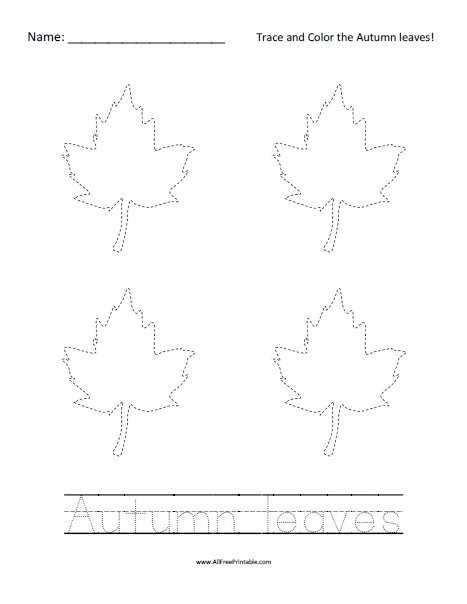
Autumn-themed tracing resources focus on the fundamental pre-writing strokes that precede letter and number formation. Children encounter curving stems, jagged leaf margins, and looping veins that demand precise wrist stability and fluid finger movements. Tracing these distinct contours helps learners transition from gross motor scribbling on oversized easels to controlled, refined pencil manipulation on standard paper sheets. Here is what makes this worksheet different: instead of repeating sterile vertical and horizontal lines, children trace organic, asymmetrical paths that mirror the natural world. This variability challenges the brain to continuously adapt motor plans, strengthening the neural pathways responsible for spatial awareness, directional tracking, and visual-motor precision. As learners guide their pencils along the dotted borders of maple and oak leaves, they unconsciously rehearse the exact curves and angles required for proper handwriting later on. For more related activities, check out our Rracing Snowman Activities.
Key Learning Outcomes
Engaging with seasonal tracing materials yields multiple developmental benefits across cognitive and physical domains. Hand strength improves naturally as little fingers sustain the pressure needed to keep a pencil moving smoothly along varied curves. Visual tracking skills sharpen significantly as the eyes anticipate upcoming turns and junctions within the leaf patterns. Bilateral coordination also advances because one hand must stabilize the paper firmly while the writing hand executes the tracing motion. Furthermore, children develop enhanced spatial awareness by learning to contain their strokes within specific boundaries, an essential precursor to writing neatly on lined paper.
How to Use This Worksheet
Successful implementation relies on creating an inviting workspace that supports proper posture and ergonomics. A child-sized table and chair ensure that feet rest flat on the floor, providing the core stability necessary for distal hand control. Adults can introduce the page as a fun puzzle or a quest to help a stray leaf find its way back to the branch. It sounds simple, and that is the beauty of thematic learning. Children willingly repeat the tracing motions multiple times when the context feels playful rather than academic. Placing the printable inside a heavy-duty clear dry-erase sleeve allows learners to practice with markers, wiping away mistakes and encouraging a relaxed, experimental attitude toward fine motor challenges.
Practical Tips for Parents and Teachers
Encouraging a functional tripod grasp requires patience and gentle observation rather than constant correction. If a child wraps a fist around the crayon, introduce broken crayons or short golf pencils to naturally encourage finger-pinching behaviors. Scaffolding the activity helps prevent frustration; toddlers might start with thick markers and continuous finger-tracing before picking up standard pencils, while older children can challenge themselves by moving backward along the lines or using non-dominant hands for fun. Educators and parents should praise effort and steady control rather than focusing solely on staying precisely on the dotted line. Offering frequent movement breaks, such as stretching fingers or crumpling tissue paper, keeps hand muscles loose and prevents fatigue.
Age-Appropriate Recommendations
Tailoring expectations to developmental stages ensures that children remain motivated and confident. According to the National Association for the Education of Young Children guidelines on developmentally appropriate practice, toddlers and young preschoolers ages two to four benefit most from large, simplified outlines, thick writing utensils, and an emphasis on sensory exploration rather than precision. For older children in the five-to-eight age bracket, the focus shifts toward refined pencil control, accurate stroke directionality, and smooth transitions around tight corners. During these early elementary years, tracing activities complement broader classroom goals found within categories like Shape and Line Tracing and specialized Fine Motor and Pre-Writing Skills practice, ensuring a comprehensive foundation for future writing proficiency.
Foundational fine motor control and bilateral coordination must develop before children can comfortably manage pencil pressure and sustained writing tasks. — American Occupational Therapy Association
Frequently Asked Questions
Explore More Free Printable Tracing Worksheets
Expanding a child’s collection of tracing activities keeps learning fresh and engaging throughout the entire year. Beyond seasonal favorites, children often benefit from targeted practice across diverse formats, including options found within Seasonal and Fun Themes and structured exercises available at Tracing Worksheets. Exploring these resources ensures a steady supply of creative challenges tailored to every developmental milestone. Discover the complete library of free educational materials by visiting KidTraces.com today.
Developmental Milestone & Activity Table
| Development Stage | Recommended Daily Duration | Primary Learning Objective |
|---|---|---|
| Preschool & Pre-K | 10 – 15 Minutes | Pencil grip development & basic pre-stroke lines |
| Kindergarten | 15 – 20 Minutes | Letter/number formation & spatial line awareness |
| Early Elementary (Grade 1–2) | 20 – 30 Minutes | Fluency, sentence construction & neatness |
Images References