Introduction
Many children recognize geometric shapes and symbols long before their fine motor control allows them to successfully draw or write them on paper. According to the American Occupational Therapy Association, foundational fine motor and visual-motor skills are essential precursors for functional classroom participation and successful written communication. Traditional pencil-and-paper tasks often frustrate early learners whose hand muscles fatigue quickly. Transforming a standard geometry lesson into a tactile exercise completely changes the cognitive and physical experience of learning. Exploring shapes tracing using pom pom activity benefits offers a hands-on method to bridge this developmental gap. Placing small objects along printed lines builds intrinsic hand strength without the immediate pressure of pencil grip execution. Early educators frequently observe that children grasp spatial concepts much faster when tactile feedback is paired with visual tracking. This printable resource transforms basic pre-writing geometry into an engaging, multi-sensory challenge that prepares hands for rigorous academic tasks.
💡 Educational Key Takeaways:
- Core Skill: Structured Shapes Tracing Using Pom Pom Activity Benefits focused on developing pencil grip, stroke control, and early literacy/math confidence.
- Target Scope: Suited for homeschoolers, preschool, kindergarten, and elementary learners.
- Best Recommendation: Practice 10–15 minutes daily with ergonomic writing tools to reinforce muscle memory without hand fatigue.
What This Worksheet Covers
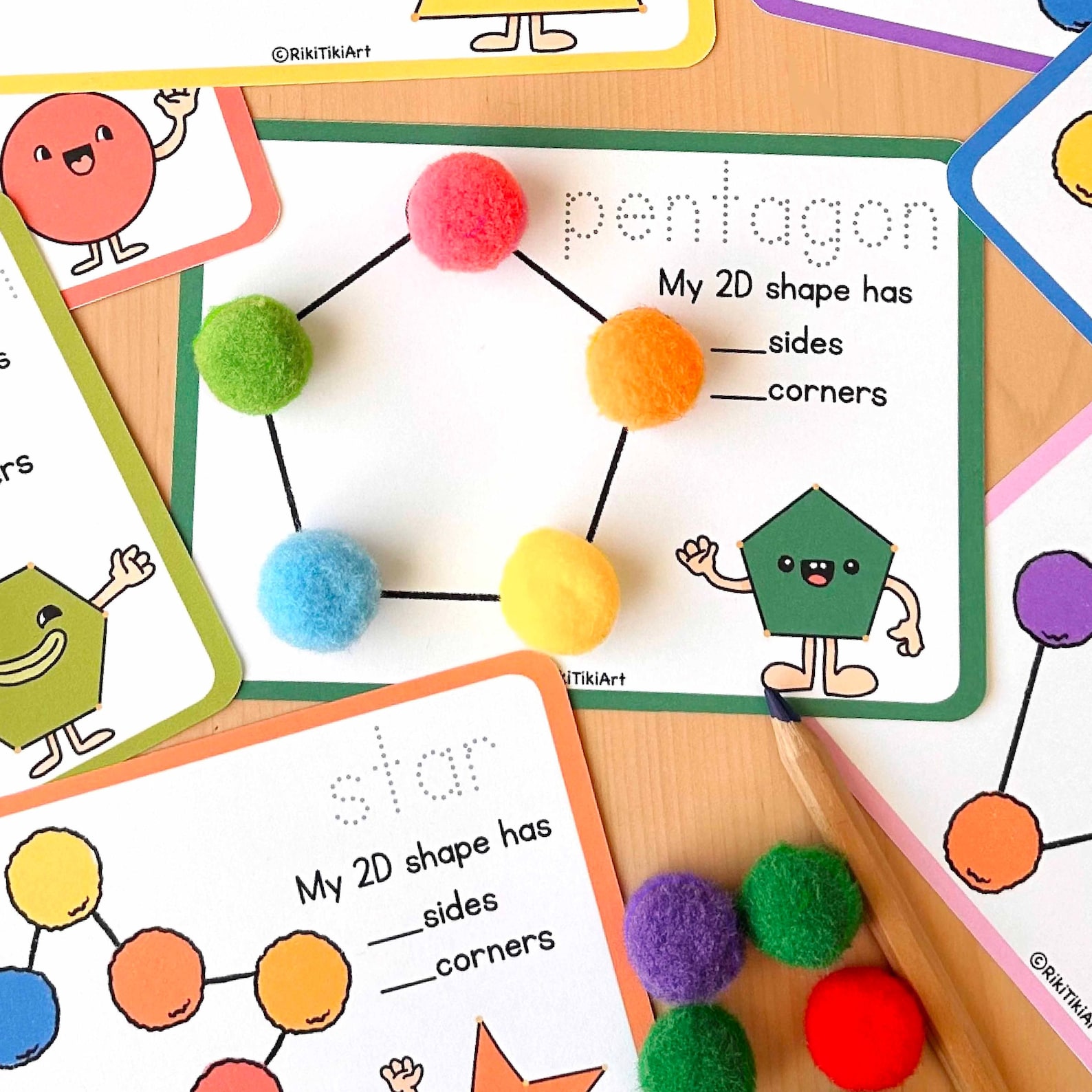
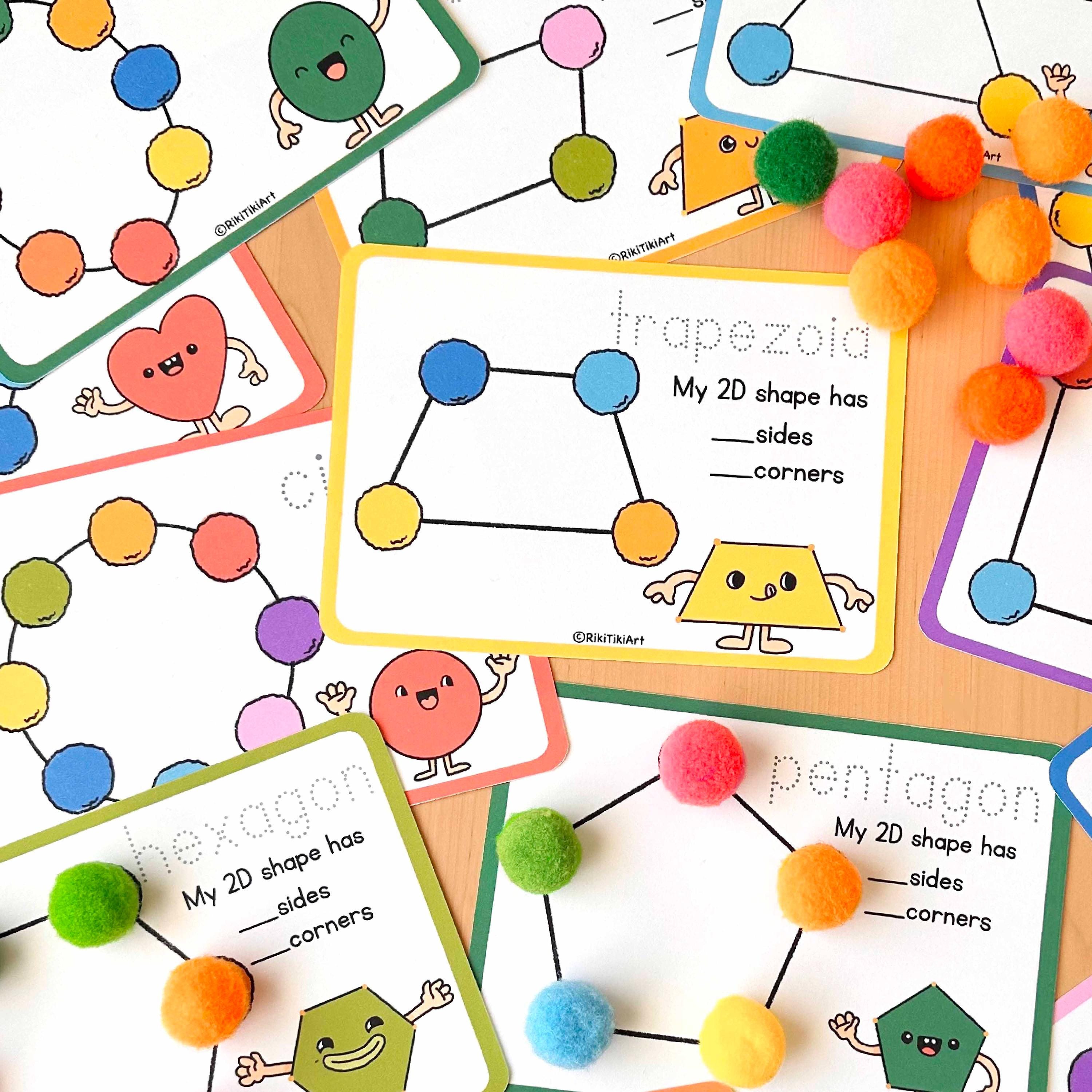
This specialized printable focuses on foundational geometric shapes, including circles, squares, triangles, rectangles, and diamonds, which serve as the basic building blocks for all future letter and number formations. Instead of relying solely on standard pencils, learners place colorful crafting spheres along the printed outlines to map out each distinct form. The exercises emphasize continuous line awareness, corner navigation, and spatial orientation on a two-dimensional plane. By substituting writing utensils with small manipulatives, learners concentrate entirely on the physical trajectory of the shape rather than worrying about pencil pressure or erasing mistakes. This method encourages deliberate hand movements, teaching the brain how visual cues translate into physical actions. Such foundational control aligns closely with broader curriculum goals found in Shape and Line Tracing practice routines, ensuring children build confidence before transitioning to traditional writing implements.
Key Learning Outcomes
Engaging with this printable delivers multiple cognitive and physical benefits that support overall developmental readiness. First, picking up small spheres using fingers or specialized tongs isolates the index and thumb, promoting a functional grasp pattern. Second, following the directional path of a shape reinforces visual tracking skills necessary for reading fluency and scanning text from left to right. According to the National Association for the Education of Young Children, active, play-based tactile investigations enhance spatial awareness and cognitive mapping in early childhood environments. Third, the exercise builds bilateral coordination as one hand stabilizes the paper while the dominant hand places the manipulatives. Finally, completing each shape fosters patience, persistence, and self-regulation, turning a simple motor task into an accomplishment in executive functioning.
How to Use This Worksheet
Successful implementation begins by securing the printable sheet to a flat surface using low-tack tape to prevent shifting during manipulation. Adults can place a bowl of colorful crafting pom poms next to the workspace, inviting the learner to pick them up one by one. The objective is to line the objects directly over the printed dotted or solid lines of each geometric shape, starting at the designated top anchor point. This setup encourages deliberate, point-by-point placement rather than random scattering. Once the outline is fully mapped out, learners can trace over the objects with a finger to feel the completed form. This multi-step process transitions seamlessly into broader developmental pathways supported by Fine Motor and Pre-Writing Skills programs designed to strengthen hands for lifelong learning.
Practical Tips for Parents and Teachers
Scaffolding this activity ensures that every child experiences success regardless of their current developmental stage. For younger learners struggling with fingertip isolation, introduce child-safe plastic tweezers or large clothespins to pick up the spheres, instantly turning the exercise into an upper extremity strengthening workout. Model the correct starting point for each shape, using verbal cues like starting at the very top and moving downward and around. If hand fatigue sets in early, shorten the session by focusing on just one shape per day instead of completing the entire page at once. Extend the challenge for advanced learners by asking them to sort the crafting materials by color as they trace, incorporating early mathematical patterning into the fine motor routine. These subtle adjustments keep motivation high while targeting specific muscle groups necessary for later academic success.
Age-Appropriate Recommendations
For toddlers and preschoolers aged two to four, this activity aligns directly with the Centers for Disease Control and Prevention developmental milestones for fine motor coordination, specifically drawing simple lines and imitating circles. At this stage, focus entirely on open-ended exploration, sensory engagement, and gross placement without worrying about precise alignment. For older children aged five to eight, the expectations shift toward precision, directional accuracy, and controlled pincer grasps, supporting formal handwriting readiness guidelines established by the Handwriting Without Tears framework. Older children can use smaller crafting balls and transition from fingers to tongs, challenging their intrinsic hand muscles and visual-motor integration to prepare for complex paragraph composition and cursive instruction.
Multi-sensory manipulation significantly improves fine motor control and spatial retention in early childhood learners — American Occupational Therapy Association
Frequently Asked Questions
Finding the right resources and understanding their developmental impact helps educators and parents maximize learning time. The section below addresses common inquiries regarding downloading procedures, fine motor integration, and expert recommendations for early childhood development.
Explore More Free Printable Tracing Worksheets
Supporting a well-rounded pre-writing curriculum requires access to a diverse variety of engaging, developmentally appropriate materials. Expanding practice routines beyond basic geometry helps maintain high engagement and enthusiasm during daily learning sessions. Exploring supplementary resources such as Alphabet And Numbers Tracing allows children to transition smoothly from geometric shapes to formal letters and digits. Discovering the complete library of educational materials available across KidTraces.com ensures that parents, educators, and caregivers always have fresh, high-quality resources tailored to every stage of early childhood development.
Developmental Milestone & Activity Table
| Development Stage | Recommended Daily Duration | Primary Learning Objective |
|---|---|---|
| Preschool & Pre-K | 10 – 15 Minutes | Pencil grip development & basic pre-stroke lines |
| Kindergarten | 15 – 20 Minutes | Letter/number formation & spatial line awareness |
| Early Elementary (Grade 1–2) | 20 – 30 Minutes | Fluency, sentence construction & neatness |
Images References