Introduction
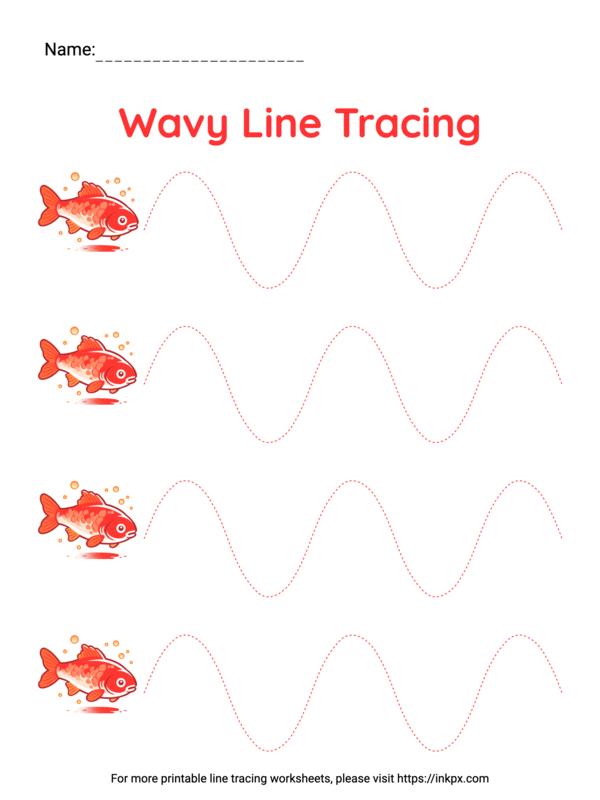
Many children recognize letters long before their fine motor skills can actually form them on paper. According to the National Association for the Education of Young Children, young learners develop physical coordination through purposeful play and foundational pencil control before transitioning to formal writing. Mastering a pencil requires immense intrinsic hand strength, spatial awareness, and bilateral coordination that cannot be rushed. Bridging the gap between cognitive readiness and physical execution requires targeted practice that builds endurance without causing frustration. Enter the line tracing worksheet with curves and waves,1″,0″,0%”,8″”, a thoughtfully designed resource that helps young learners master the foundational strokes required for both drawing and eventual handwriting success.
💡 Educational Key Takeaways:
- Core Skill: Structured Line Tracing Worksheet With Curves And Waves”,1″,0″,0%”,8″ focused on developing pencil grip, stroke control, and early literacy/math confidence.
- Target Scope: Suited for homeschoolers, preschool, kindergarten, and elementary learners.
- Best Recommendation: Practice 10–15 minutes daily with ergonomic writing tools to reinforce muscle memory without hand fatigue.
What This Worksheet Covers
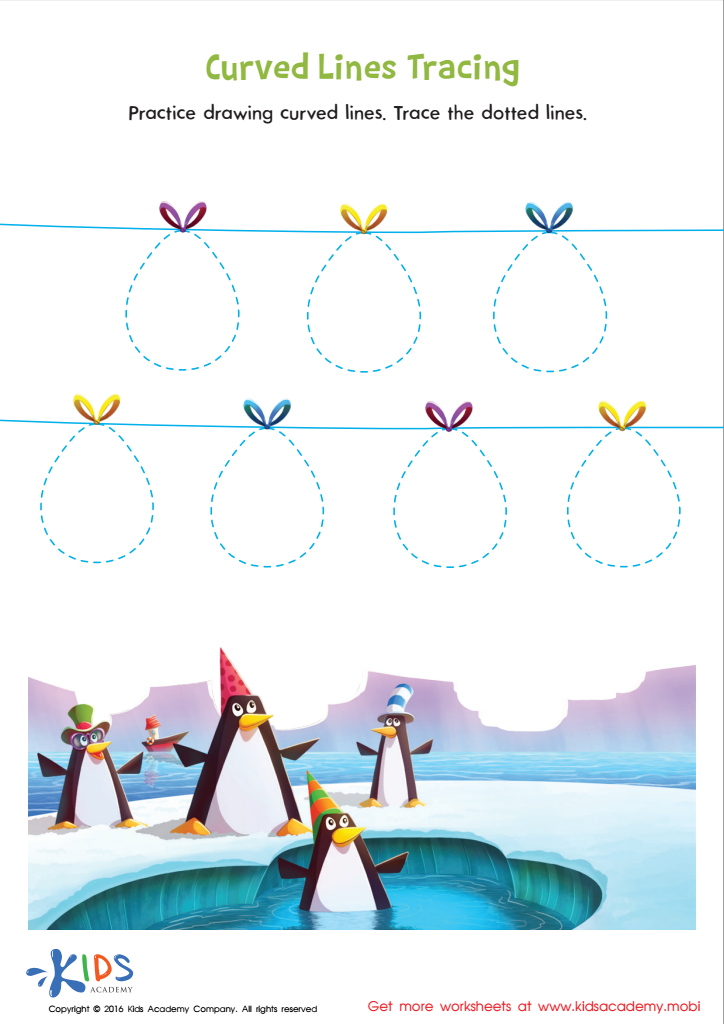
This specific printable isolates the fundamental pre-writing strokes that precede traditional letter formation. Children naturally gravitate toward straight vertical or horizontal lines, but fluidly navigating undulating waves and sweeping loops challenges the small muscles of the hand in entirely new ways. By guiding a writing tool along continuous paths, learners practice visual-motor integration, which is the ability of the eyes to direct the hands in precise movements. The sheet introduces gradually increasing complexity, starting with gentle arcs and moving into rolling waves and tight loops. Such careful progression builds confidence while systematically targeting the intrinsic muscles responsible for stabilizing the wrist and fingers. Exploring these patterns acts as a stepping stone toward mastering more advanced concepts found throughout our collection of Shape and Line Tracing activities.
Key Learning Outcomes
Working consistently with curved tracing paths yields noticeable improvements in pencil control, visual tracking, and directional awareness. Children learn to maintain steady downward pressure on the writing utensil, preventing the hand from fatiguing too quickly during longer academic tasks. Additionally, navigating undulating contours strengthens the arches of the hand, which supports a mature tripod grasp over time. According to the American Occupational Therapy Association, foundational fine motor interventions involving continuous strokes significantly enhance a child’s readiness for classroom writing demands. Beyond physical benefits, these sheets cultivate sustained attention span and visual tracking from left to right, laying vital groundwork for early literacy milestones found in broader Fine Motor and Pre-Writing Skills development.
How to Use This Worksheet
Successful implementation relies on keeping the activity engaging, low-pressure, and adaptable to individual developmental stages. Adults can introduce the page as a playful journey, such as helping a butterfly fly over rolling hills or guiding a boat across ocean waves. It sounds simple, and that is the exact point; lowering cognitive load lets the child focus entirely on physical execution and fluid wrist movement. Placing the printable inside a dry-erase sleeve allows for repeated attempts without the fear of making permanent mistakes, fostering a growth mindset where erasing is replaced by simply wiping clean and trying again.
Practical Tips for Parents and Teachers
Observing hand posture closely helps identify whether a child is relying too heavily on shoulder movement rather than isolated finger and wrist control. When fatigue sets in, switching to a shorter writing instrument like a broken crayon or a golf pencil naturally encourages a proper three-finger grasp by leaving no room for a fist grip. Scaffolding the activity involves having adults gently hand-over-hand guide the initial stroke, while extending the challenge requires children to trace the paths using cotton swabs dipped in paint or even finger-tracing before picking up a marker. For additional skill-building ideas, educators frequently pair these pages with resources from Tracing Worksheets to create a comprehensive morning work station.
Age-Appropriate Recommendations
Aligning expectations with developmental frameworks ensures that young learners remain confident and eager to practice. For toddlers and preschoolers ages two through four, adherence to the Centers for Disease Control and Prevention developmental milestones suggests focusing on large, sweeping motions, thick crayons, and simple, gentle arcs rather than tight loops. Children in kindergarten and early elementary grades, aged five through eight, can tackle intricate waves and rhythmic loops, refining their precision in alignment with NAEYC Developmentally Appropriate Practice standards. Matching the complexity of the sheet to the biological readiness of the child prevents hand cramping and protects enthusiasm for creative expression.
Visual-motor integration and continuous stroke control are direct predictors of future handwriting legibility and speed in early elementary classrooms. — American Occupational Therapy Association (AOTA)
Frequently Asked Questions
Clear guidance helps caregivers maximize the benefits of these printable resources at home and in the classroom environment.
How do I download and print this worksheet? — Click the download link on the page, save the PDF file to a device, and print it using standard letter paper with portrait orientation selected.
How does curve and wave tracing support fine motor development? — Continuous tracing builds hand strength, improves visual tracking, and refines the wrist and finger isolation needed for a mature pencil grasp.
What does the American Occupational Therapy Association say about pre-writing? — The American Occupational Therapy Association emphasizes that foundational pre-writing strokes are essential precursors to functional handwriting and academic success.
Explore More Free Printable Tracing Worksheets
Supporting a child through every stage of early education is a rewarding journey that thrives on having access to reliable, high-quality materials. Building lasting pencil control and literacy readiness happens naturally when practice feels like play rather than a chore. The entire library of resources, spanning everything from early pre-writing strokes to advanced letter formation, is readily available to explore anytime at KidTraces.com to keep little hands busy and growing.
Developmental Milestone & Activity Table
| Development Stage | Recommended Daily Duration | Primary Learning Objective |
|---|---|---|
| Preschool & Pre-K | 10 – 15 Minutes | Pencil grip development & basic pre-stroke lines |
| Kindergarten | 15 – 20 Minutes | Letter/number formation & spatial line awareness |
| Early Elementary (Grade 1–2) | 20 – 30 Minutes | Fluency, sentence construction & neatness |
Images References