Introduction
Many children recognize letters, numbers, and geometric forms long before their hands possess the intrinsic muscle strength and motor planning required to draw them accurately. According to the American Occupational Therapy Association, foundational fine motor control and visual-motor integration are essential precursors to academic success and functional handwriting. Pentagons present a unique physical hurdle for young learners because drawing them requires five distinct line segments and five precise directional changes. This geometry demands spatial awareness and sustained pencil control that goes far beyond simple circles or squares. Integrating pentagon shape activities for preschoolers bridges the gap between passive recognition and active motor execution, setting the stage for future writing mastery.
💡 Educational Key Takeaways:
- Core Skill: Structured Pentagon Shape Activities For Preschoolers focused on developing pencil grip, stroke control, and early literacy/math confidence.
- Target Scope: Suited for homeschoolers, preschool, kindergarten, and elementary learners.
- Best Recommendation: Practice 10–15 minutes daily with ergonomic writing tools to reinforce muscle memory without hand fatigue.
What This Worksheet Covers
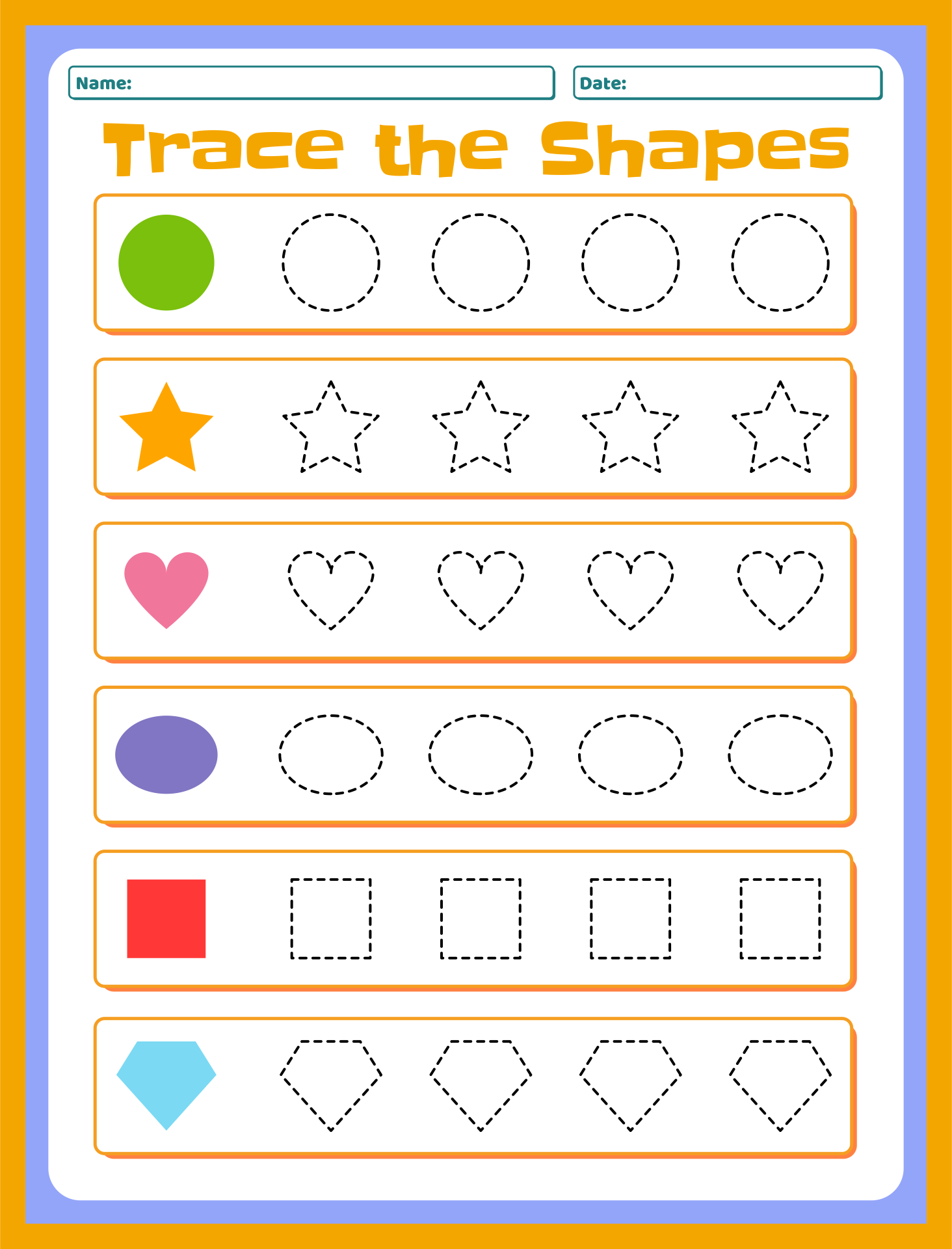
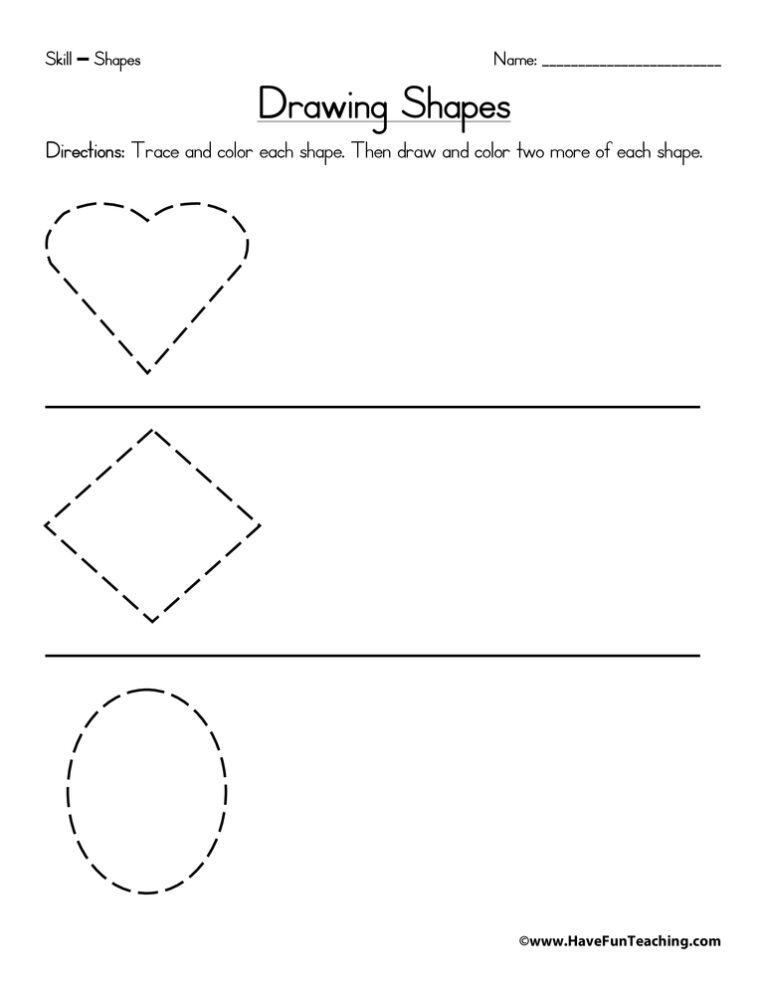
This printable resource focuses specifically on mastering the five-sided polygon through progressive visual prompts, dotted guides, and independent trial areas. Children move from tracing large, overarching geometric outlines down to smaller, constrained formations that require refined wrist stability. The pages incorporate directional arrows, starting dots, and varied line weights to teach pencil control naturally. Alongside traditional tracing tracks, the layout includes open workspace sections where children can attempt freehand replication, translating tactile muscle memory into visual-spatial understanding. Additional creative extensions invite coloring and counting exercises, which reinforce the core concept without relying on rote repetition. For more related activities, check out our Geometric Shape Tracing Activity”,1″,0″,0%”,10″.
Key Learning Outcomes
Working through these geometry exercises refines visual-motor integration by teaching hands to follow complex visual pathways smoothly. According to the National Association for the Education of Young Children, early engagement with manipulatives and structured drawing tasks supports spatial reasoning and early mathematical readiness. Learners build essential bilateral coordination as one hand stabilizes the paper while the dominant hand executes the angled strokes. Furthermore, navigating corners helps develop stopping control and redirection skills, which transfer directly to forming letters like ‘k’, ‘v’, and ‘z’. Confidence blooms as children realize they can successfully map out intricate shapes entirely on their own.
How to Use This Worksheet
Preparation involves selecting a quiet workspace with an appropriately sized child-height table and chair to ensure proper postural stability. Positioning the paper slightly slanted encourages an ergonomic wrist extension, reducing fatigue during extended drawing sessions. It sounds simple, and that’s the point: physical setup dictates pencil endurance just as much as hand strength does. Adults should guide the child to use a functional tripod grasp, ensuring fingers rest a short distance from the pencil tip for optimal visibility and leverage. Allowing children to trace the paths with an index finger first helps activate the brain’s motor planning centers before putting lead or crayon to paper.
Practical Tips for Parents and Teachers
Adults can model the correct stroke sequence on a separate sheet, demonstrating how to pause and pivot at each corner rather than rushing through curves. Scaffolding the activity involves gently covering completed sections to reduce visual clutter for children who easily become distracted by busy pages. Extending the learning happens organically when adults ask children to count the sides and corners aloud while tracing. Short, joyful practice sessions lasting five to ten minutes yield far better neurological retention than long, frustrating marathons. Celebrating small victories, such as landing cleanly on a corner dot, builds intrinsic motivation and resilience.
Age-Appropriate Recommendations
For younger preschoolers ages two to four, the focus centers on sensory exploration, large arm movements, and basic pre-writing strokes found within foundational collections like Shape and Line Tracing. According to the CDC developmental milestones, children in this age bracket are rapidly refining their ability to copy simple shapes and manage writing utensils with increasing precision. Older children ages five to eight transition toward independent accuracy, sharper corners, and cleaner closures, matching the rigorous fine motor expectations outlined in school readiness standards. At this stage, exploring broader skill sets via Fine Motor and Pre-Writing Skills helps solidify the hand strength needed for cursive and advanced printing.
Visual-motor integration and spatial awareness developed through geometric shape tracing significantly predict later academic success in both handwriting and mathematics. — American Occupational Therapy Association
Frequently Asked Questions
Answers to common inquiries regarding printing setup, fine motor progression, and developmental milestones assist caregivers in maximizing the benefits of these geometry tracing printables.
Explore More Free Printable Tracing Worksheets
Expanding a child’s pencil control toolkit requires a diverse selection of engaging, skill-targeted resources tailored to every developmental stage. Exploring the complete library of educational resources available at KidTraces.com provides endless opportunities for growth. Additional practice paths can be found across specialized galleries including Alphabet And Numbers Tracing and Seasonal and Fun Themes, ensuring learning remains fresh and exciting all year long.
Developmental Milestone & Activity Table
| Development Stage | Recommended Daily Duration | Primary Learning Objective |
|---|---|---|
| Preschool & Pre-K | 10 – 15 Minutes | Pencil grip development & basic pre-stroke lines |
| Kindergarten | 15 – 20 Minutes | Letter/number formation & spatial line awareness |
| Early Elementary (Grade 1–2) | 20 – 30 Minutes | Fluency, sentence construction & neatness |
Images References