Introduction
Many children recognize letters, numbers, and complex environmental symbols long before their developing fine motor skills can actually form them on paper. According to the American Occupational Therapy Association, foundational hand strength and visual-motor integration must be established before a child can master functional handwriting. Bridging this developmental gap requires engaging tools that build spatial awareness without causing hand fatigue. The free printable dotted lines house shape tracing worksheet offers an ideal pathway for young learners to bridge this gap. Geometric shapes serve as foundational visual blueprints that translate directly into the strokes required for letters and numbers. Exploring these shapes builds hand-eye coordination in a friendly, approachable format. Every vertical line, diagonal roof pitch, and horizontal base prepares tiny hands for the rigors of formal writing.
💡 Educational Key Takeaways:
- Core Skill: Structured Dotted Lines House Shape Tracing focused on developing pencil grip, stroke control, and early literacy/math confidence.
- Target Scope: Suited for homeschoolers, preschool, kindergarten, and elementary learners.
- Best Recommendation: Practice 10–15 minutes daily with ergonomic writing tools to reinforce muscle memory without hand fatigue.
What This Worksheet Covers
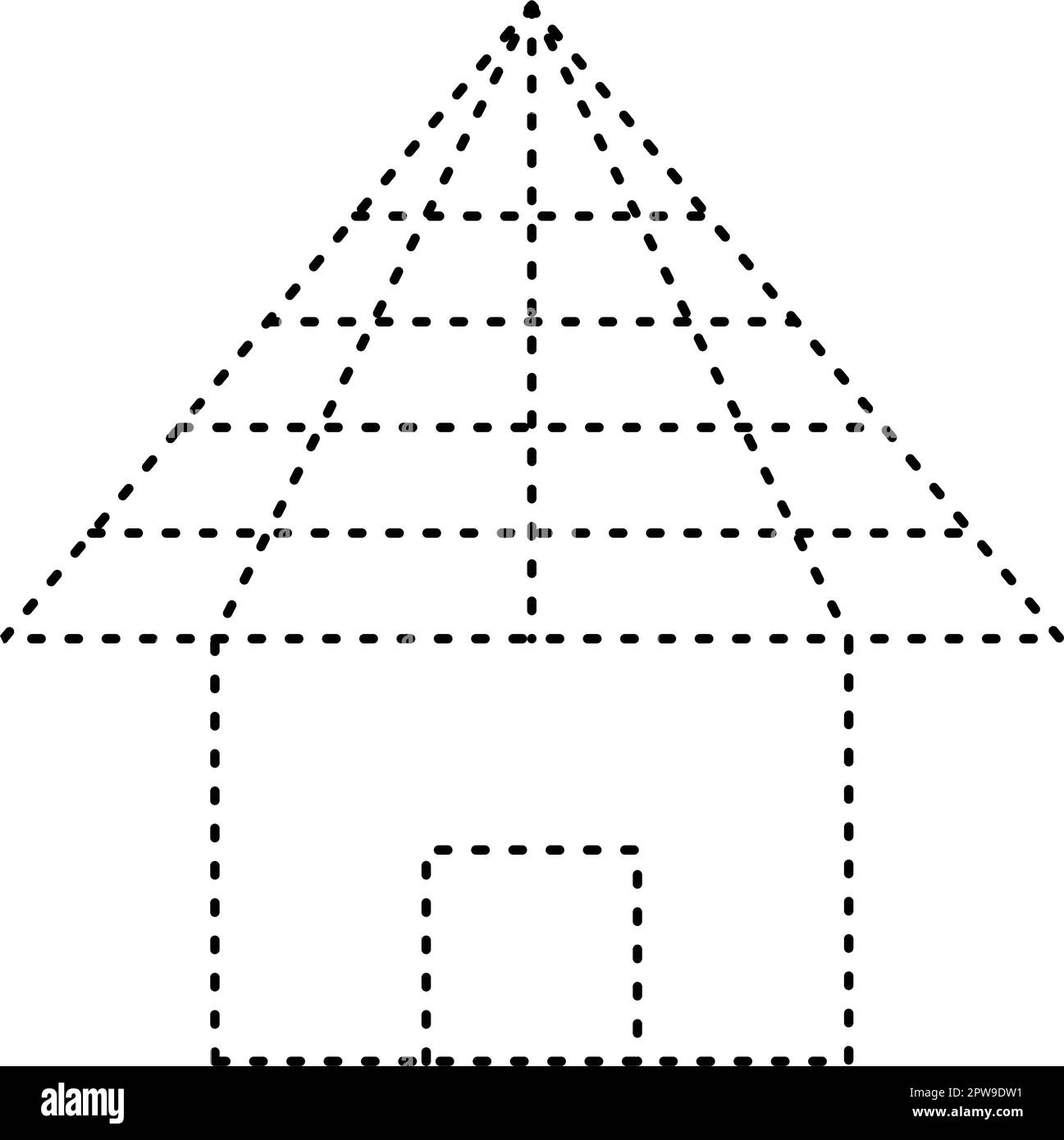
This specific printable focuses on fundamental pre-writing strokes hidden within a familiar, comforting architectural outline. Squares, triangles, and rectangles combine to form a complete house, prompting children to transition smoothly between different pencil trajectories. The dotted lines provide gentle, structured guidance that encourages proper directional control without overwhelming the child’s visual processing system. It sounds simple, and that’s the point. Young learners explore continuous lines, intersections, and corners, which are the exact spatial building blocks needed for uppercase letters like A, H, and T. Integrating these visual-motor challenges through Shape and Line Tracing keeps frustration low while maximizing structural learning.
Key Learning Outcomes
Children engaging with this printable systematically build critical visual-motor integration skills. First, tracing the sharp angles of the roof instills precise directional control for diagonal lines. Second, navigating vertical and horizontal walls reinforces spatial boundaries and page orientation. Third, executing continuous loops or straight walls fosters sustained muscle endurance in the intrinsic muscles of the hand. Finally, successfully completing the entire structure boosts self-regulation and task persistence. According to Reading Rockets, early visual-motor activities significantly predict later reading and writing proficiency by solidifying how the brain maps symbolic shapes.
How to Use This Worksheet
Successful execution of tracing exercises depends heavily on environment, posture, and pacing. Flat surfaces, properly sized chairs, and feet resting firmly on the floor create the stable proximal base required for distal finger control. Adults should encourage a functional grasp—such as a tripod or modified tripod grip—without forcing rigid compliance that causes hand cramping. Introducing sensory elements, like tracing the dotted lines with a finger before using a writing utensil, can activate tactile pathways. For additional pencil control resources, exploring Fine Motor and Pre-Writing Skills provides complementary exercises that strengthen arches and finger dexterity.
Practical Tips for Parents and Teachers
Scaffolding makes all the difference when introducing multi-line geometric shapes to reluctant writers. Adults can model the starting point of each stroke clearly, using verbal cues like “start at the chimney, slide down the roof.” If fatigue sets in midway through the house structure, stopping to stretch fingers or squeeze a soft toy revitalizes the hand muscles. For children who master basic lines quickly, extending the activity by having them draw their own windows and doors adds a creative, independent challenge. Transitioning smoothly into themed activities through Seasonal and Fun Themes maintains high engagement throughout the learning process.
Age-Appropriate Recommendations
Aligning expectations with developmental timelines prevents frustration and builds lasting confidence. According to the National Association for the Education of Young Children (NAEYC) Developmentally Appropriate Practice guidelines, toddlers aged two to four benefit most from larger, thicker tracing paths using crayons or markers that require less distal pressure. Children aged five to eight transition to standard pencils, focusing on precision, staying within narrower dotted pathways, and mastering corner execution. Meeting children precisely where they sit developmentally ensures that handwriting readiness remains an encouraging, positive experience rather than a chore.
Foundational hand strength and visual-motor integration must be established before a child can master functional handwriting. — American Occupational Therapy Association (AOTA)
Frequently Asked Questions
Navigating early childhood writing resources can generate many practical questions for educators and families alike. Clear answers ensure seamless integration of printable tools into daily routines.
Early visual-motor activities significantly predict later reading and writing proficiency by solidifying symbolic shape mapping. — Reading Rockets
Explore More Free Printable Tracing Worksheets
Expanding a child’s writing toolkit requires access to a diverse array of developmental resources that grow alongside growing hands. Every stage of early literacy thrives on variety, from early pre-writing lines to complex word formation. Discovering new ways to keep pencil practice fresh helps maintain enthusiasm day after day. Explore the full library of resources and printables at KidTraces.com to support every step of the journey.
Developmental Milestone & Activity Table
| Development Stage | Recommended Daily Duration | Primary Learning Objective |
|---|---|---|
| Preschool & Pre-K | 10 – 15 Minutes | Pencil grip development & basic pre-stroke lines |
| Kindergarten | 15 – 20 Minutes | Letter/number formation & spatial line awareness |
| Early Elementary (Grade 1–2) | 20 – 30 Minutes | Fluency, sentence construction & neatness |
Images References