Introduction
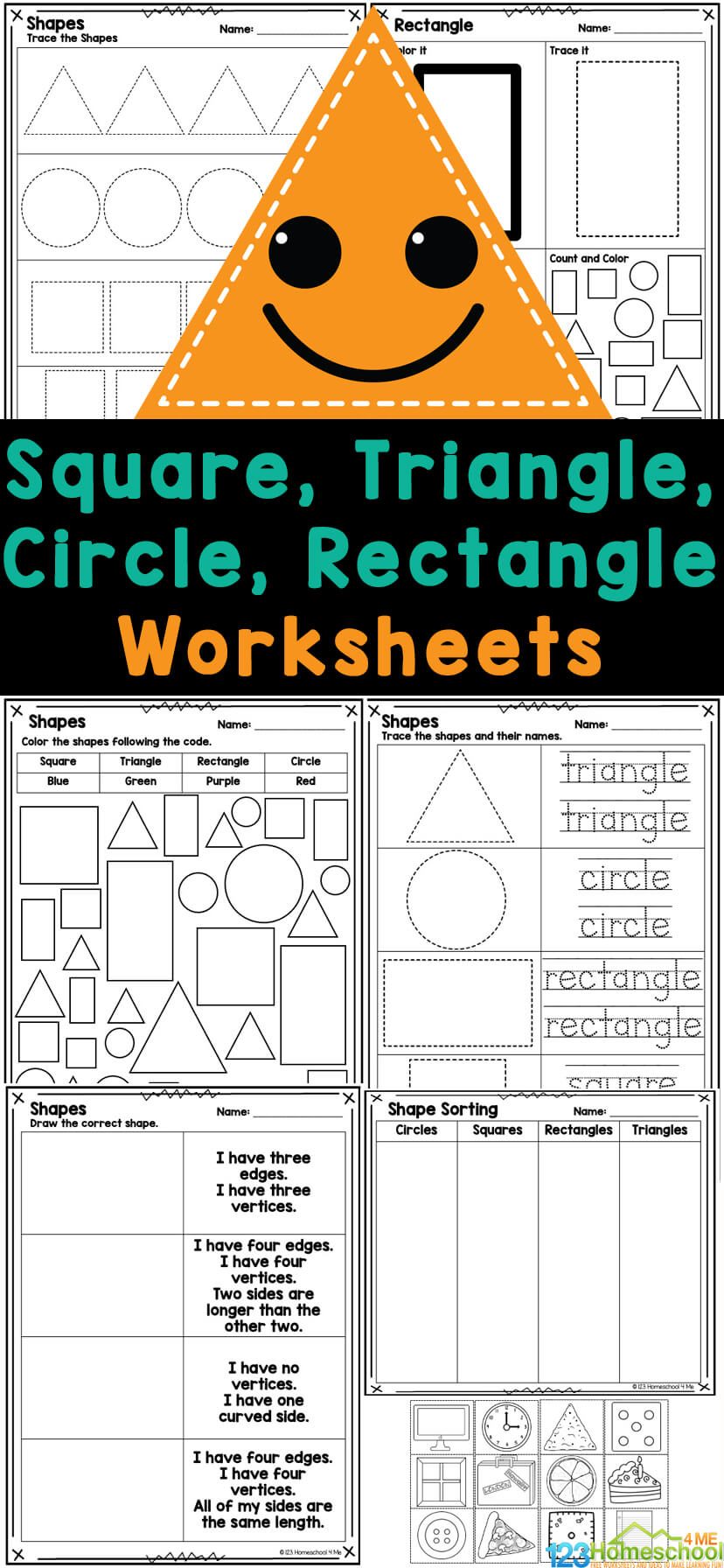
Many children recognize letters, numbers, and geometric forms long before their small hand muscles possess the endurance or dexterity to form them on paper. According to the American Occupational Therapy Association, foundational fine motor control and visual-motor integration are essential precursors to functional handwriting in early childhood. Educators and therapists often observe eager learners gripping crayons with a fist, wanting desperately to draw complex images before mastering basic strokes. The circle triangle square worksheet bridges this developmental gap by offering structured geometry tracing that builds essential hand strength, visual perception, and pencil control. Grounded in developmentally appropriate practice, this free printable introduces fundamental shapes that serve as the building blocks for both future letter formation and mathematical spatial awareness.
💡 Educational Key Takeaways:
- Core Skill: Structured Circle Triangle Square Worksheet focused on developing pencil grip, stroke control, and early literacy/math confidence.
- Target Scope: Suited for homeschoolers, preschool, kindergarten, and elementary learners.
- Best Recommendation: Practice 10–15 minutes daily with ergonomic writing tools to reinforce muscle memory without hand fatigue.
What This Worksheet Covers
The circle triangle square worksheet focuses on foundational geometric shapes designed to teach continuous curves, intersecting lines, and sharp corner pivots. Tracing a circle requires smooth, fluid wrist and finger movement without lifting the writing utensil, which prepares the hand for curved letters like “c,” “o,” and “s.” Moving on to the triangle introduces diagonal lines and distinct angular turns, training the brain and hand to coordinate stops, changes in direction, and precise corner closures. Squares round out the practice by incorporating horizontal and vertical straight lines at ninety-degree angles, mirroring the structural makeup of printed letters such as “H,” “E,” and “L.” Every section on the page challenges the child to maintain visual attention, stabilize the paper with the non-dominant hand, and calibrate finger pressure from top to bottom. It sounds simple, and that is precisely the point. By stripping away complex letter nomenclature, young learners can concentrate entirely on the biomechanics of holding a pencil, maintaining visual-motor coordination, and executing controlled strokes across the page. For more related activities, check out our Learners Trace Zigzags, Waves And Circles In The Sand Trays With Their Finger For Grade R Visual Perception Development..
Key Learning Outcomes
Working through these shape exercises fosters bilateral coordination as one hand secures the page while the other guides the writing tool across dotted pathways. Spatial awareness improves significantly as children learn to perceive boundaries, estimate distances, and understand how lines intersect to enclose space. According to the National Association for the Education of Young Children, active manipulation of early geometry and pre-writing tools strengthens the neurological pathways responsible for symbolic representation and visual discrimination. Hand-eye coordination is continually refined as the visual system tracks the moving pencil tip, sending real-time feedback to adjust pressure and speed. Finally, task persistence blossoms when young learners successfully complete a full page of geometric shapes, translating physical effort into visible geometric mastery.
How to Use This Worksheet
Printing the sheet on slightly heavier cardstock or sliding it into a dry-erase pocket sleeve transforms a single-use paper into an engaging, reusable practice station. Begin by inviting the child to trace the shapes first with an index finger, establishing a tactile memory of the path before introducing a writing instrument. Encourage slow, deliberate pacing rather than rushed completion, noting that precision matters far more than speed during early skill acquisition. When adults provide gentle verbal cues like “sweep around the curve” or “stop and turn the corner,” children internalize the rhythm required for successful writing. Here’s what makes this worksheet different: it treats geometry not as math flashcards, but as a kinetic laboratory for building hand dominance, finger dexterity, and pencil stamina.
Practical Tips for Parents and Teachers
Model an efficient tripod or quadrupod grasp before handing over the pencil, ensuring the thumb, index, and middle fingers work together while the ring and pinky fingers rest comfortably in the palm. Scaffolding the activity means starting with larger, finger-painted shapes in the air or in a tray of sand before moving down to the restricted dimensions of a printed page. If fatigue sets in early, allow the child to use chunky crayons or short golf pencils, which naturally encourage a proper grasp by discouraging a tight, full-fist hold. Extend the learning naturally by challenging the learner to find matching real-world circles, triangles, and squares around the room after completing the paper task. Praise the steady effort of the hand rather than just the final visual product, reinforcing a growth mindset toward challenging fine motor tasks.
Age-Appropriate Recommendations
For younger children ages two to four, align expectations with the Centers for Disease Control and Prevention developmental milestones by focusing on vertical line imitation, circular scribbles, and basic pre-writing strokes without demanding rigid adherence to dotted lines. At this stage, exploration and sensory engagement take priority over perfection. For older children ages five to eight, align practice with Handwriting Without Tears principles by emphasizing correct starting points, consistent directional pushes and pulls, and clean corner formations. This older cohort can utilize the shapes to refine sizing, spatial alignment, and pencil pressure regulation, preparing them directly for rigorous writing demands across the curriculum.
Foundational visual-motor integration and fine motor control are essential predictors of early academic success and functional handwriting. — American Occupational Therapy Association
Frequently Asked Questions
Explore More Free Printable Tracing Worksheets
Expanding a child’s pencil control journey involves exploring diverse practice materials that target every phase of early development. For older or developing writers seeking targeted practice, the Shape and Line Tracing collection provides fantastic follow-up activities. Children mastering fundamental pencil mechanics will benefit greatly from the exercises found within Fine Motor and Pre-Writing Skills. Additionally, young learners ready to transition from simple geometric forms into letters and numbers can explore Alphabet And Numbers Tracing. Every child deserves access to engaging, high-quality practice materials that foster confidence and skill. Visit the full library of resources available anytime at KidTraces.com to support continuous growth.
Developmental Milestone & Activity Table
| Development Stage | Recommended Daily Duration | Primary Learning Objective |
|---|---|---|
| Preschool & Pre-K | 10 – 15 Minutes | Pencil grip development & basic pre-stroke lines |
| Kindergarten | 15 – 20 Minutes | Letter/number formation & spatial line awareness |
| Early Elementary (Grade 1–2) | 20 – 30 Minutes | Fluency, sentence construction & neatness |
Images References