Introduction
Many children recognize letters, numbers, and geometric shapes long before their fine motor control and hand strength allow them to successfully form those symbols on paper. According to Reading Rockets, early literacy and writing foundations rely heavily on sensory-rich exploration and tactile experiences rather than immediate pencil-and-paper drilling. This developmental gap frequently frustrates young learners when traditional pencil tasks are introduced too early. Introducing low-pressure, tactile modalities bridges the gap between cognitive understanding and physical execution. The free printable tracing lines in sand resource transforms standard pre-writing practice into an engaging sensory activity that prepares small hands for future writing tasks.
💡 Educational Key Takeaways:
- Core Skill: Structured Tracing Lines In Sand focused on developing pencil grip, stroke control, and early literacy/math confidence.
- Target Scope: Suited for homeschoolers, preschool, kindergarten, and elementary learners.
- Best Recommendation: Practice 10–15 minutes daily with ergonomic writing tools to reinforce muscle memory without hand fatigue.
What This Worksheet Covers
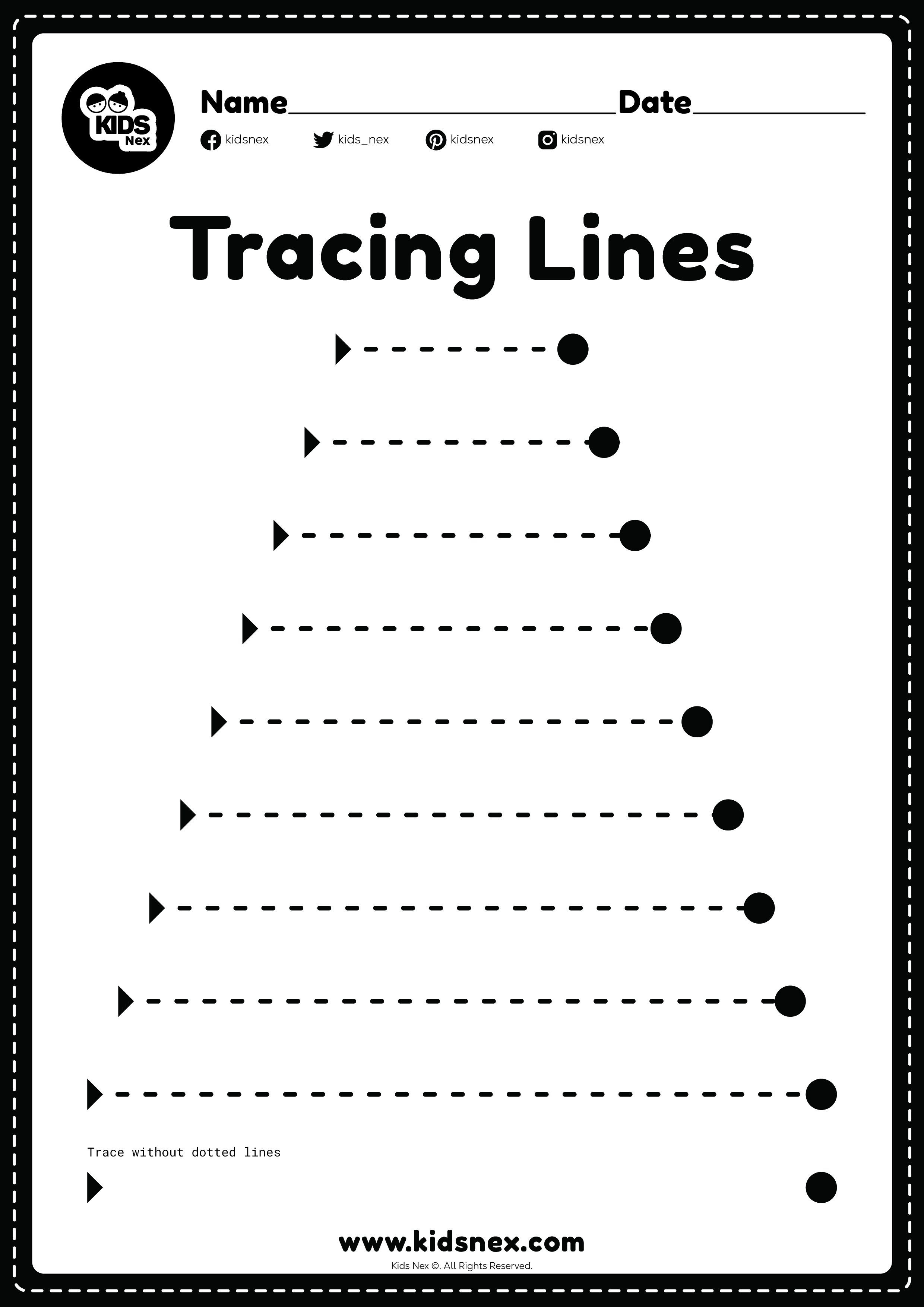
This printable instructional guide centers on mastering foundational pre-writing strokes through tactile sand tracing, which targets the vestibular, proprioceptive, and tactile systems simultaneously. Children explore vertical lines, horizontal lines, intersecting crosses, gentle waves, zig-zags, and looping curves by replicating visual prompts. These specific stroke patterns serve as the building blocks for uppercase and lowercase letter formation, as well as number writing. Instead of stressing over proper pencil grasp, young learners use index fingers or specialized stylus tools to plow through a shallow tray of sand, salt, or cornmeal. It sounds simple, and that is precisely the point. Removing the resistance of paper and pencil lowers anxiety and allows children to focus entirely on directional flow, spatial awareness, and fluid hand movements. For more related activities, check out our Free Mitten Line Tracing.
Key Learning Outcomes
Engaging with this sand-tracing guide supports the development of crucial physical and cognitive competencies necessary for academic success. Learners strengthen the intrinsic muscles of the hand, particularly the lumbricals and interossei, which are responsible for stabilizing the arches of the palm during fine motor tasks. Crossing the visual midline becomes second nature as children sweep their fingers continuously across the tray from left to right, reinforcing natural reading and writing trajectories. Hand-eye coordination improves dramatically as visual attention translates into motor output without the friction of graphite on cellulose. Furthermore, tactile feedback activates neural pathways in the brain, helping children retain motor memory for specific shapes and strokes far more effectively than passive observation.
How to Use This Worksheet
Preparing the sensory writing station requires minimal equipment: a shallow tray, a thin layer of fine sand, salt, or colored rice, and the printed guide placed nearby for visual reference. Adults can print and laminate the guide cards, setting them up at eye level where the child can easily reference the starting points and directional arrows. Children observe the stroke pattern on the card and then replicate the motion directly in the sensory material using a designated pointer finger. When errors occur, a gentle shake of the tray instantly erases the mistake without tearing paper or leaving frustrating eraser marks. This instant, mess-free reset encourages repeated attempts and fosters resilience, turning mistakes into playful trials rather than failures.
Practical Tips for Parents and Teachers
Adults play a vital scaffolding role by modeling correct stroke directions in the sand while verbalizing the movement using descriptive language like “start at the top, swoop down, and slide across.” If a child demonstrates an accidental fist grasp when holding a optional stylus, gently guide the hand into a functional three-finger tripod grasp to build proper muscle memory. According to the American Occupational Therapy Association, incorporating multi-sensory strategies significantly enhances motor skill acquisition in early childhood settings. Extend the learning experience by challenging children to close their eyes, trace a shape blindly in the sand, and guess the line pattern using haptic feedback alone. For extra challenge, incorporate different textures such as coarse salt or smooth textured beans to alter the sensory feedback profile.
Age-Appropriate Recommendations
For toddlers and preschoolers ages two through four, align expectations with the National Association for the Education of Young Children Developmentally Appropriate Practice guidelines by focusing on gross motor arm movements, large sweeping lines, and open-ended exploration without rigid perfection. At this stage, children benefit most from experimenting with vertical lines, horizontal lines, and simple circles. As children advance into kindergarten and early primary grades ages five through eight, align instruction with foundational Shape and Line Tracing milestones to refine precision, control, and directional consistency. Older children can transition from sand trays to Fine Motor and Pre-Writing Skills booklets, gradually shifting tactile memory onto structured Tracing Worksheets paper formats.
Multi-sensory instruction significantly enhances motor skill acquisition in early childhood settings — American Occupational Therapy Association
Frequently Asked Questions
Explore More Free Printable Tracing Worksheets
Expanding a young learner’s pre-writing toolkit involves exploring various engaging formats that build confidence and manual dexterity over time. Beyond tactile sand trays, educators and parents can access a wide assortment of thematic printables across the Alphabet And Numbers Tracing section and the Dotted Letters For Tracing archive. Celebrations and seasonal interests can keep motivation high through materials found in the Seasonal and Fun Themes gallery. Visitors can browse the full collection of educational resources by heading over to KidTraces.com to support every stage of early writing development.
Developmental Milestone & Activity Table
| Development Stage | Recommended Daily Duration | Primary Learning Objective |
|---|---|---|
| Preschool & Pre-K | 10 – 15 Minutes | Pencil grip development & basic pre-stroke lines |
| Kindergarten | 15 – 20 Minutes | Letter/number formation & spatial line awareness |
| Early Elementary (Grade 1–2) | 20 – 30 Minutes | Fluency, sentence construction & neatness |
Images References