Introduction
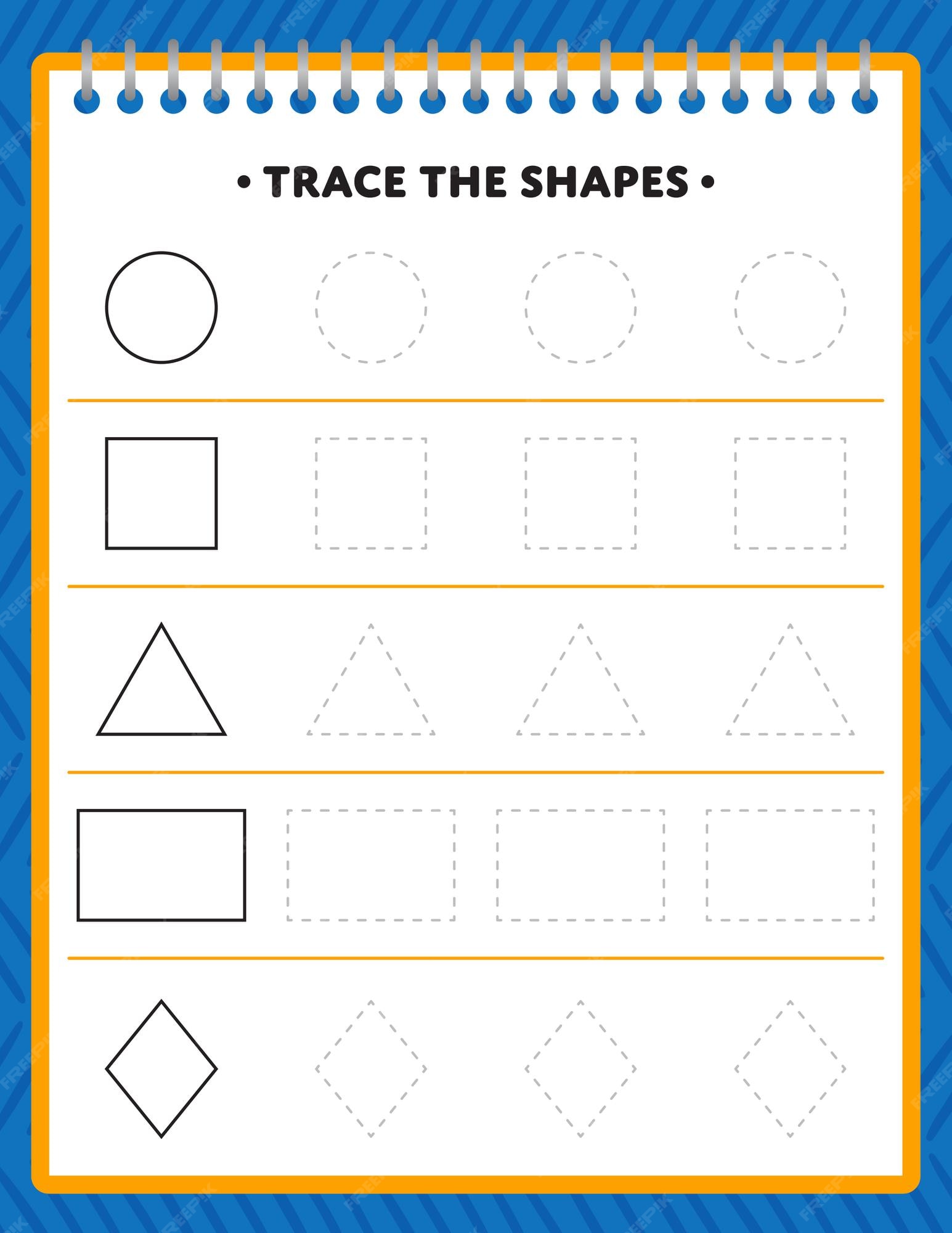
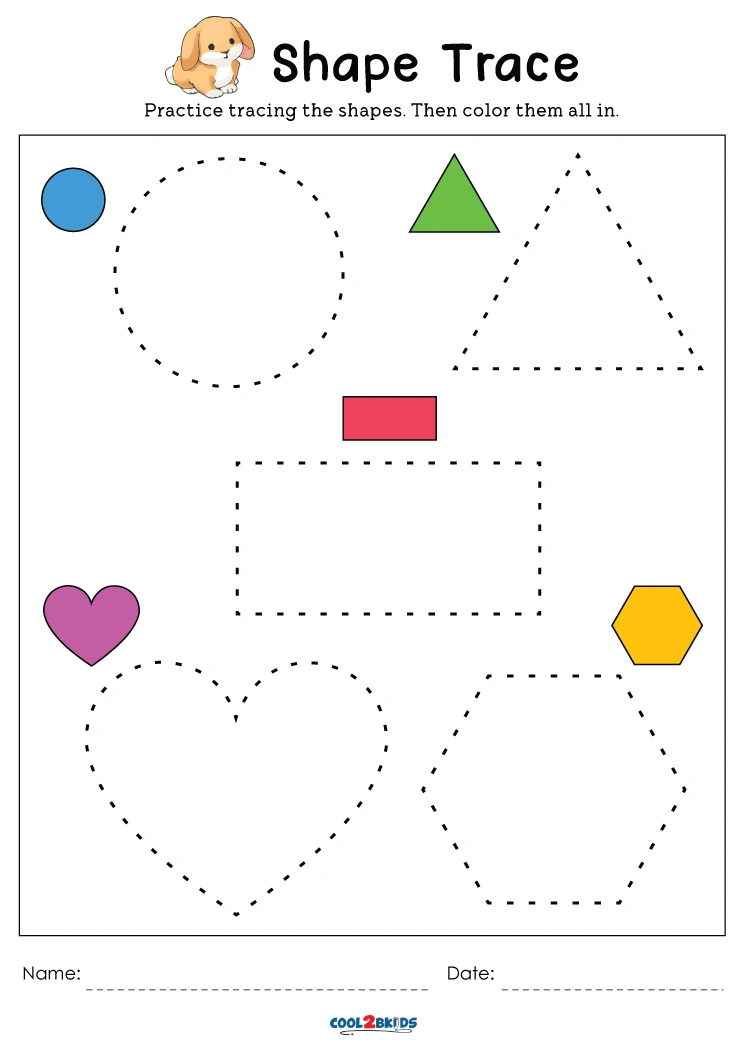
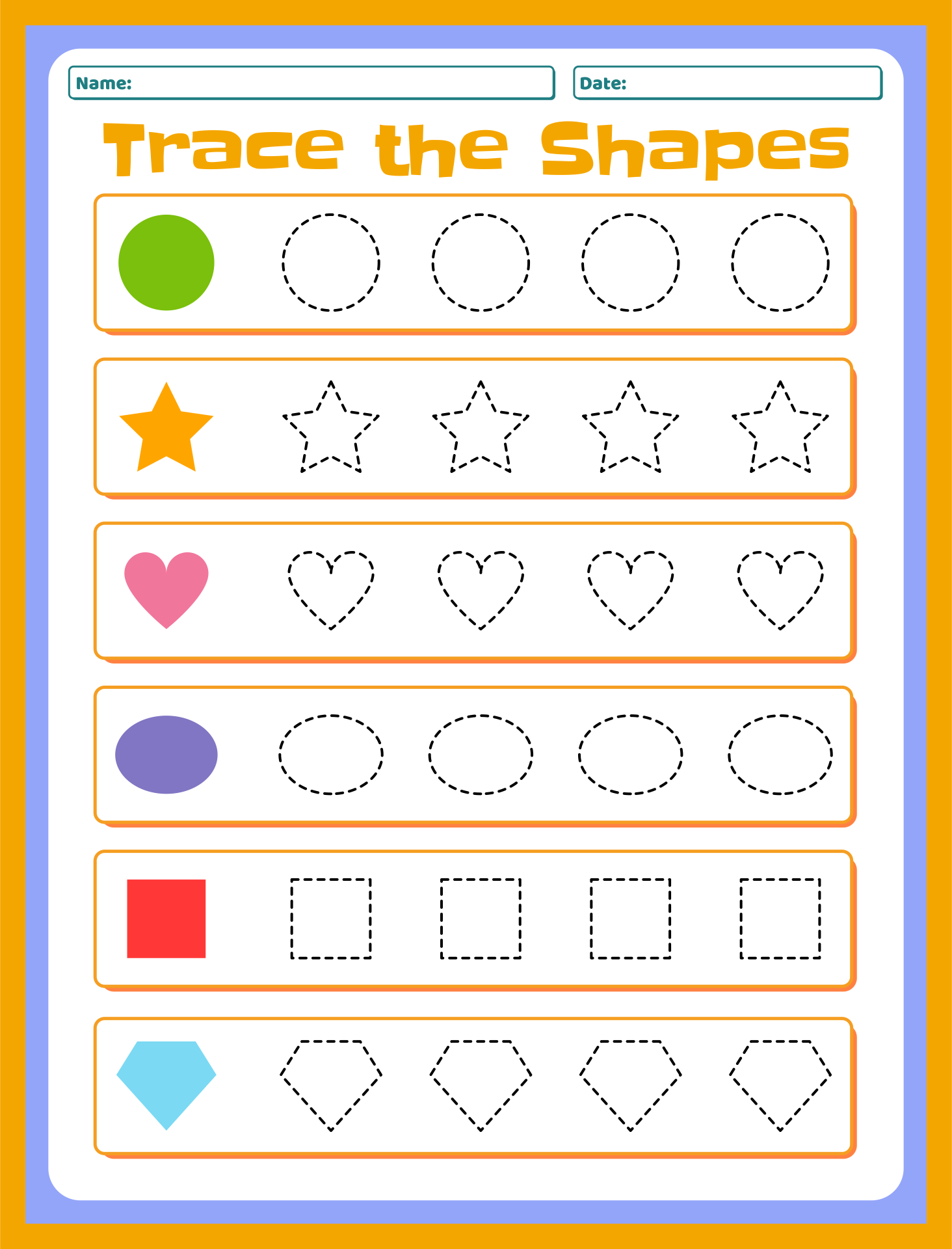
Many children recognize letters, symbols, and intricate environmental designs long before their fine motor control allows them to replicate those shapes on paper. According to the American Occupational Therapy Association, foundational hand strength and visual-motor integration must develop collaboratively through purposeful play and targeted graphic practice before complex writing tasks become effortless. It sounds simple, and that is precisely the point. The free printable trace shapes in this picture worksheet offers a bridge between visual recognition and physical execution, inviting learners to decode an image while building the precise muscle memory required for future academic success. Children sit at a classroom table or a kitchen counter, marker or pencil in hand, eager to discover the hidden geometric outlines woven directly into an engaging scene. Every stroke builds confidence, transforming a blank sheet of paper into an accessible gateway for early handwriting readiness.
💡 Technical Key Takeaways:
- Core Focus: Diagnostic schematic and terminal connection layout for Trace Shapes In This Picture.
- Target Scope: Field technicians, automotive DIYers, and residential/commercial electricians.
- Safety Rule: Always disconnect the primary power source/battery terminal and verify zero voltage with a multimeter before touching wires.
What This Worksheet Covers
This targeted resource focuses on embedding foundational geometric shapes into a larger, cohesive illustration rather than isolating them on a sterile grid. Learners scan the page to locate circles, squares, triangles, and rectangles disguised as everyday objects like house windows, sunbeams, and animal features. It sounds simple, and that is the point. When children trace shapes embedded in a picture, they practice critical visual-spatial skills alongside continuous stroke control. They learn to anchor their paper with a helper hand, adjust pencil pressure when transitioning from curved lines to sharp corners, and maintain visual focus across a complex background. This contextual approach keeps engagement high, reducing the fatigue often associated with repetitive, isolated drills while delivering the exact pre-writing practice developing hands need. For more related activities, check out our Age 4 Shape Tracing Activities.
Key Learning Outcomes
Working through this activity nurtures several interconnected developmental milestones essential for academic growth. Children refine their visual-motor integration as their eyes guide their hands along dotted paths to close open geometric shapes. According to the National Association for the Education of Young Children, early drawing and tracing experiences help young learners gain the bilateral coordination and spatial awareness necessary for letter formation and reading tracking. Dexterity improves organically as tiny fingers manage pencil grip adjustments around tight corners and sweeping curves. Learners also strengthen inhibitory control, learning to slow down their hand movements when approaching a shape boundary to ensure accuracy. Finally, attentional endurance expands naturally because the visual reward of completing a hidden picture motivates perseverance through challenging line intersections.
How to Use This Worksheet
Integrating this resource into a daily routine requires minimal preparation while yielding maximum developmental benefit. Adults can print the page on sturdy cardstock if learners tend to press down heavily with their writing utensils, or slip the sheet into a clear dry-erase sleeve for endless reuse with colorful markers. It sounds simple, and that is the point. Begin by inviting the child to examine the picture as a whole, discussing what objects they recognize before touching a pencil to the paper. Encourage them to use their pointer finger to trace the shapes in the air or directly on the page first, which primes the neural pathways for the actual physical motion. Once they pick up their writing tool, step back and observe their posture, hand placement, and paper angle, offering gentle verbal cues rather than taking over the physical movement.
Practical Tips for Parents and Teachers
Adults play a powerful role in shaping positive writing habits during these formative early childhood years. Modeling proper pencil grip explicitly—using a tripod grasp where the pencil rests comfortably between the thumb, index, and middle finger—prevents early hand cramping and finger fatigue. Scaffolding the activity means letting children tackle larger, more forgiving shapes first before encouraging them to focus on tiny, intricate geometric borders tucked into the corners of the illustration. Extend the learning beyond the paper by challenging the child to hunt for matching physical shapes around the room or playground, connecting two-dimensional representations to the three-dimensional world. Avoid rushing completion; the value lies entirely in the slow, controlled execution of the lines rather than finishing the page as quickly as possible. Celebrate steady focus and careful corner turns to reinforce intrinsic motivation over mere speed.
Age-Appropriate Recommendations
Understanding developmental trajectories ensures that expectations match a child’s unique neurological and physical stage. For toddlers and preschoolers aged two to four, alignment with the Head Start Early Learning Outcomes Framework emphasizes gross motor coordination transitioning into early fine motor control, making large, bold shapes and thick crayons the ideal starting point. By ages five through eight, children enter the kindergarten and primary grade window described by the Common Core State Standards (CCSS.ELA-LITERACY.L.K.1), where they must demonstrate command of the conventions of standard English capitalization, punctuation, and crucially, letter formation. At this later stage, worksheets featuring integrated shapes refine the exact directional fluidity, line crossing, and spatial boundaries required to transition seamlessly from basic pre-writing strokes into legible alphabet and number writing.
Foundational hand strength and visual-motor integration must develop collaboratively through purposeful play and targeted graphic practice before complex writing tasks become effortless. — American Occupational Therapy Association
Frequently Asked Questions
Clear guidance on implementing these printables helps educators and families maximize learning potential. The following answers address common questions regarding access, physical development, and established early childhood standards.
Early drawing and tracing experiences help young learners gain the bilateral coordination and spatial awareness necessary for letter formation and reading tracking. — National Association for the Education of Young Children
Explore More Free Printable Tracing Worksheets
Expanding a child’s pre-writing repertoire requires a diverse toolkit of engaging, developmentally appropriate activities. For targeted practice with foundational strokes and pencil control, explore the resources available in Shape And Line Tracing. When learners are ready to transition from geometric outlines to early letter structures, the exercises found within Alphabet And Numbers Tracing provide excellent structured support. Educators and caregivers seeking specialized support for pencil grip and dexterity will find wonderful options under Fine Motor and Pre-Writing Skills. Discovering seasonal motifs that keep enthusiasm high throughout the school year is simple by browsing Seasonal And Fun Themes. Visit the main resource hub anytime at KidTraces.com to explore the complete library of free, carefully crafted worksheets designed to support every step of the early childhood literacy and writing journey.
Quick Wiring Specifications & Terminal Guide
| Component / Circuit | Standard Wire Gauge | Recommended Protection |
|---|---|---|
| Control & Trigger Signals | 18 – 20 AWG | 5A – 7.5A Inline Fuse |
| Standard Auxiliary Load | 14 – 16 AWG | 15A – 20A Circuit Breaker |
| Main Power Feed / Supply | 10 – 12 AWG | 30A – 40A Heavy-Duty Relay |
Images References