Introduction
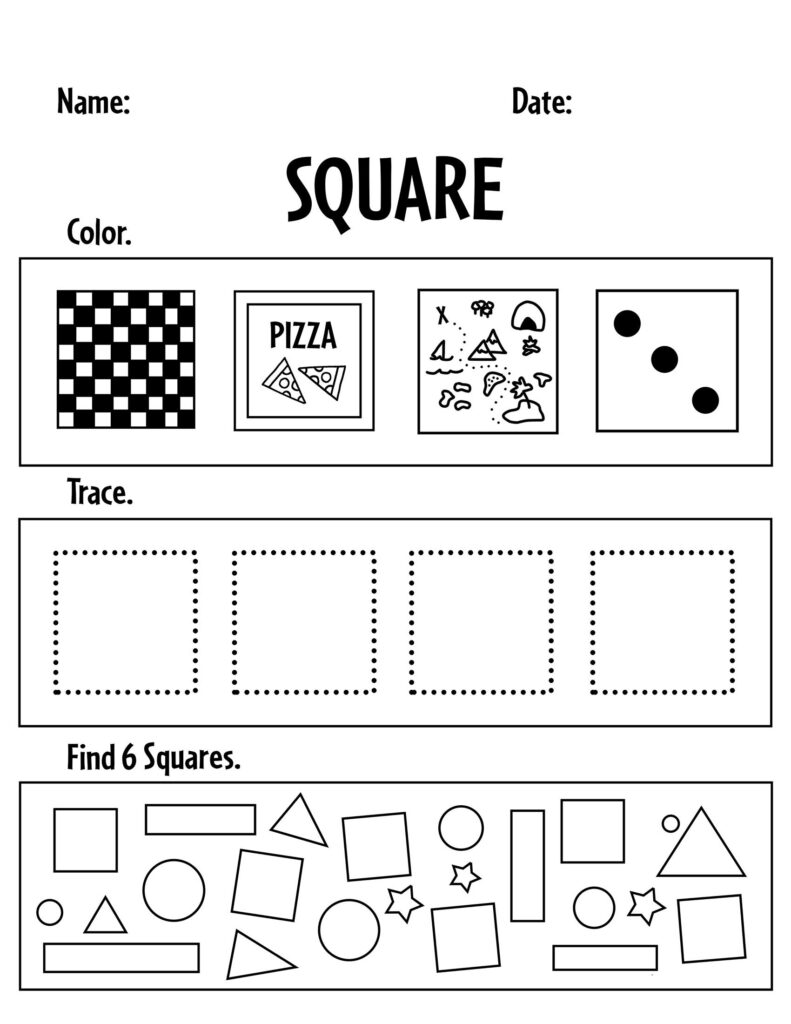
Many young children recognize letters and shapes long before their fine motor skills can actually form them on paper. This common gap between visual understanding and physical execution often leads to frustration during early writing exercises. According to the National Association for the Education of Young Children (NAEYC), developmentally appropriate practice requires balancing expectations with physical readiness, ensuring that foundational hand movements are established before demanding mastery over complex symbols. The free printable fun square tracing worksheet,3″,0″,0%”,8″” bridges this exact developmental gap by offering a structured, engaging path toward pencil control. Simple geometric paths teach children how to regulate pressure, cross the midline, and maintain steady visual attention. It sounds simple, and that’s the point.
💡 Educational Key Takeaways:
- Core Skill: Structured Fun Square Tracing Worksheet”,3″,0″,0%”,8″ focused on developing pencil grip, stroke control, and early literacy/math confidence.
- Target Scope: Suited for homeschoolers, preschool, kindergarten, and elementary learners.
- Best Recommendation: Practice 10–15 minutes daily with ergonomic writing tools to reinforce muscle memory without hand fatigue.
What This Worksheet Covers
Mastering a closed shape requires precise directional changes, distinct corner transitions, and continuous visual-motor coordination. When exploring the Shape and Line Tracing category, early learners encounter geometric frameworks that form the bedrock of both handwriting and spatial awareness. Squares are particularly valuable because they demand four distinct 90-degree directional shifts, requiring young hands to pause, pivot, and restart with intent. This repetition builds the precise motor memory needed later for letters like H, B, and E, which rely on similar straight-line configurations and sharp corners.
Key Learning Outcomes
Working through these geometric templates strengthens intrinsic hand muscles while promoting a mature tripod or quadripod pencil grasp. Children naturally refine bilateral coordination, learning to stabilize the paper with one hand while the dominant hand executes controlled strokes. Visual tracking improves steadily as eyes guide the hand around each closed perimeter, reinforcing left-to-right progression and directional awareness. Additionally, completing the continuous lines builds crucial frustration tolerance and task persistence, turning early handwriting practice into an achievable, satisfying challenge. For more related activities, check out our Hexagon Tracer”,3″,0″,0%”,9.333333333333334″.
How to Use This Worksheet
Success with early tracing materials depends heavily on preparation and environmental setup rather than simply handing over a pencil. Heavy cardstock or glossy write-and-wipe sleeves transformed with dry-erase markers offer optimal resistance, providing essential tactile feedback that regular printer paper often lacks. Positioning the surface on a slightly tilted slant board naturally promotes a functional wrist extension, keeping tiny fingers relaxed and preventing early hand fatigue during extended drawing sessions.
Practical Tips for Parents and Teachers
Adults should always model the correct starting point and directional flow before inviting children to try independently. Scaffolding might involve physically guiding a hand through the first corner to demonstrate the required pause and pivot. Extending the activity is just as easy: try finger-tracing the printed paths with textured glue lines or damp sponges before introducing writing utensils. Watch for white knuckles or excessive grip tension, gently resetting the hand when fatigue sets in to protect developing joints and encourage lifelong ergonomic comfort.
Age-Appropriate Recommendations
Children ages two through four benefit most from using thick crayons or short markers on oversized geometric outlines, aligning closely with the physical milestones outlined by the Centers for Disease Control and Prevention (CDC). At this stage, perfection matters far less than fluid motion and sustained engagement. By ages five through eight, expectations shift toward accuracy and alignment, supporting the Handwriting Without Tears framework by emphasizing correct stroke sequence, proportional sizing, and corner precision within structured boundaries.
According to the American Occupational Therapy Association (AOTA), foundational fine motor interventions involving targeted shape tracing significantly improve functional hand control and classroom writing readiness in early childhood education. — AOTA Practice Guidelines
Frequently Asked Questions
Getting started is straightforward, and clear answers help maximize the educational value of every printed page.
Explore More Free Printable Tracing Worksheets
Building robust pre-writing foundations requires a diverse variety of engaging, developmentally appropriate practice materials that keep young learners motivated. Exploring additional resources within the Fine Motor and Pre-Writing Skills section provides targeted exercises designed to strengthen hand muscles and improve pencil control. For thematic engagement that sparks seasonal excitement, browsing the Seasonal and Fun Themes collection ensures learning stays fresh all year round. Families and educators can discover a comprehensive library of resources by visiting KidTraces.com to support every stage of early childhood development.
Developmental Milestone & Activity Table
| Development Stage | Recommended Daily Duration | Primary Learning Objective |
|---|---|---|
| Preschool & Pre-K | 10 – 15 Minutes | Pencil grip development & basic pre-stroke lines |
| Kindergarten | 15 – 20 Minutes | Letter/number formation & spatial line awareness |
| Early Elementary (Grade 1–2) | 20 – 30 Minutes | Fluency, sentence construction & neatness |
Images References