Introduction
Many children recognize letters, shapes, and patterns long before their hands possess the muscular endurance to form them consistently on paper. According to the American Occupational Therapy Association, foundational fine motor skills—such as finger dexterity and bilateral hand coordination—must mature significantly before a child can master controlled pencil movements. Traditional worksheets often demand too much too soon, leading to frustration and fatigue. Engaging printable resources bridge this developmental gap by turning essential muscle work into a playful experience. The fun circle tracing game for child introduces continuous, flowing motions that prepare tiny fingers for the complex demands of formal handwriting. By focusing on circular shapes, this resource targets the exact foundational strokes required for writing letters like ‘o’, ‘a’, ‘c’, and ‘g’. It sounds simple, and that’s the point: removing the pressure of letters allows children to focus purely on fluid motion, spatial awareness, and pencil control.
💡 Educational Key Takeaways:
- Core Skill: Structured Fun Circle Tracing Game For Child”,3″,0″,0%”,8″ focused on developing pencil grip, stroke control, and early literacy/math confidence.
- Target Scope: Suited for homeschoolers, preschool, kindergarten, and elementary learners.
- Best Recommendation: Practice 10–15 minutes daily with ergonomic writing tools to reinforce muscle memory without hand fatigue.
What This Worksheet Covers
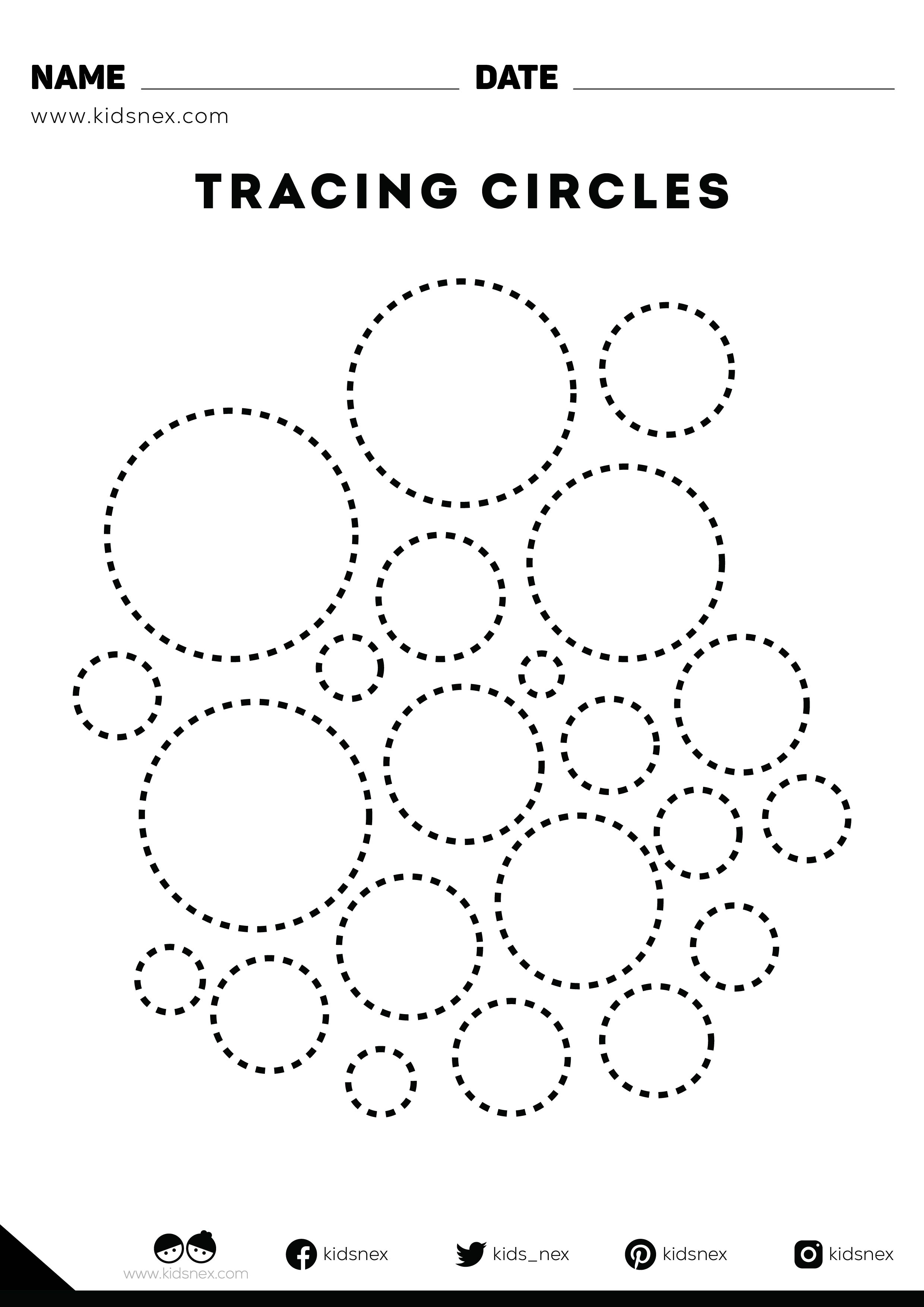
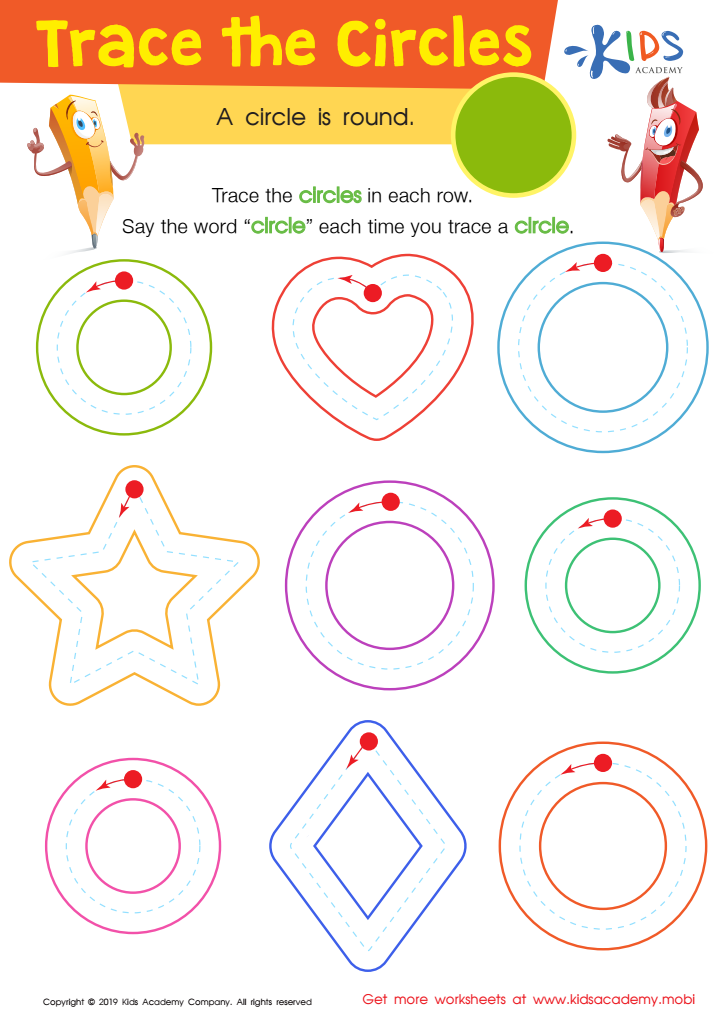
Circular movements form the bedrock of pre-writing geometry. Unlike straight lines or sharp angles, circles require continuous visual-motor integration and smooth adjustments of the wrist and fingers. This specialized printable transforms abstract shape practice into an engaging journey, guiding little hands along curved paths of varying sizes. Children navigate concentric circles, spiral paths, and interconnected loops that gently test their ability to maintain consistent contact with the paper. The underlying mechanics of drawing circles reinforce counterclockwise stroke habits, which serve as the universal standard for letter formation in English literacy instruction. Furthermore, tracing these continuous lines encourages children to modulate their writing pressure, shifting away from heavy, fatiguing grips toward a dynamic tripod grasp that supports long-term writing stamina. For more related activities, check out our Line Tracing Candy Cane”,3″,0″,0%”,6″.
Key Learning Outcomes
Working through these guided paths strengthens the intrinsic muscles of the hand while building essential visual-motor integration. As young learners track the curved lines from start to finish, eye-hand coordination improves noticeably, allowing the hand to accurately execute what the eyes perceive. Spatial awareness also deepens because children must navigate boundaries, stay within designated tracks, and anticipate turns before the pencil reaches them. Additionally, completing these engaging paths fosters sustained attention and task persistence, two critical non-cognitive factors that predict early academic success. Children naturally develop bilateral integration as one hand stabilizes the paper while the dominant hand maneuvers the writing tool.
How to Use This Worksheet
Introducing a new tracing activity works best when the environment remains calm and free from rigid performance expectations. Placing the paper on a flat, well-lit surface prevents awkward posture and encourages an upright sitting position, which frees the shoulder and elbow joints to move fluidly. Adults can initiate the session by demonstrating how to trace a circle slowly in the air using an index finger before touching the paper. Letting children explore the lines with colorful crayons, chunky markers, or textured pencils adds sensory variety and maintains high interest levels. If a child drifts off the line, redirection should focus on the playful nature of the path rather than error correction, keeping the emotional climate positive and supportive.
Practical Tips for Parents and Teachers
Scaffolding the experience ensures every child finds a comfortable entry point regardless of current skill levels. For younger learners who struggle with standard pencils, short stubby crayons or golf pencils naturally encourage a proper grasp by restricting the space available for fist-clenching. Adults should model the dynamic tripod grip explicitly, showing how the thumb, index, and middle fingers work as a team while the ring and pinky fingers rest comfortably against the palm. When children experience hand fatigue, taking a quick break to wiggle the fingers or squeeze a soft therapy ball restores circulation and prevents negative associations with writing tasks. Extending the activity is easy by sliding the printed sheet into a clear plastic sleeve and using dry-erase markers, allowing for repeated practice without paper waste.
Age-Appropriate Recommendations
According to the National Association for the Education of Young Children guidelines on developmentally appropriate practice, learning experiences must match the physical and cognitive capacities of the child. For ages two through four, the focus centers on large, sweeping arm movements, coloring inside broad shapes, and exploring thick lines using Fine Motor and Pre-Writing Skills. Children in this younger bracket benefit immensely from using thick markers on upright easels, which naturally engages shoulder stability. For children ages five through eight, expectations shift toward refined wrist movement, controlled pencil pressure, and accurate placement within tighter boundaries, aligning closely with foundational Shape and Line Tracing milestones. During these early elementary years, tracing circular loops helps refine the muscle memory needed for smooth handwriting transitions found across Tracing Worksheets.
Foundational motor control and visual-motor integration are robust predictors of later academic achievement in writing and mathematics. — American Occupational Therapy Association
Frequently Asked Questions
Explore More Free Printable Tracing Worksheets
Supporting a child’s early literacy and physical development journey involves providing consistent, engaging, and varied practice materials. Educators, parents, and homeschoolers can discover an extensive library designed to foster confidence and skill acquisition at KidTraces.com. Whether the goal is mastering early pencil control through Alphabet And Numbers Tracing, exploring letter patterns via Dotted Letters For Tracing, or celebrating seasonal milestones with Seasonal and Fun Themes, every resource aims to make learning joyful and accessible. Exploring categories like Word and Name Tracing and Tracing Number ensures a comprehensive approach to school readiness that honors each child’s unique pace of development.
Developmental Milestone & Activity Table
| Development Stage | Recommended Daily Duration | Primary Learning Objective |
|---|---|---|
| Preschool & Pre-K | 10 – 15 Minutes | Pencil grip development & basic pre-stroke lines |
| Kindergarten | 15 – 20 Minutes | Letter/number formation & spatial line awareness |
| Early Elementary (Grade 1–2) | 20 – 30 Minutes | Fluency, sentence construction & neatness |
Images References