Introduction
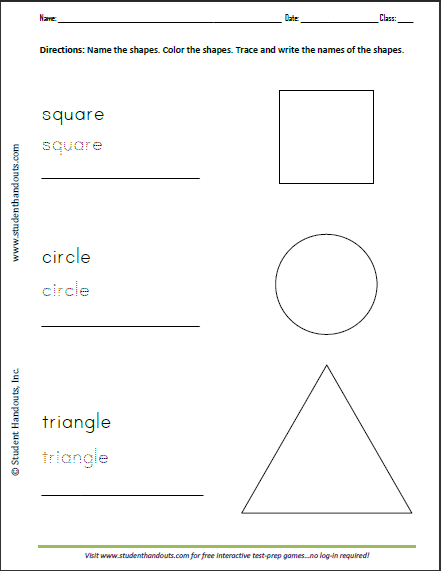
Many adults observe children recognizing letters, numbers, and distinct symbols long before those tiny hands possess the physical endurance required to form them on paper. According to the American Occupational Therapy Association, foundational fine motor control and visual-motor integration must be actively cultivated through purposeful pre-writing strokes before children can master complex letter formations. Sitting down with a pencil often reveals shaky lines, excessive pressure, or frustration when hands tire too quickly. Bridging this gap requires targeted pencil control practice that moves away from stressful letter copying and toward foundational geometry. The shapes circle square triangle worksheet offers a brilliant starting point for developing essential hand strength, visual discrimination, and spatial awareness. By focusing on fundamental closed shapes, young learners safely build the exact muscle memory needed for future writing success without the heavy cognitive load of alphabet mastery.
💡 Educational Key Takeaways:
- Core Skill: Structured Shapes Circle Square Triangle Worksheet focused on developing pencil grip, stroke control, and early literacy/math confidence.
- Target Scope: Suited for homeschoolers, preschool, kindergarten, and elementary learners.
- Best Recommendation: Practice 10–15 minutes daily with ergonomic writing tools to reinforce muscle memory without hand fatigue.
What This Worksheet Covers
Mastering pencil control relies on an explicit progression of lines, curves, and angles that mirror the building blocks of both numbers and letters. Geometric forms provide the ultimate canvas for developing these precise visual-motor skills because every letter in the alphabet ultimately stems from simple vertical, horizontal, diagonal, and curved strokes. Circles demand smooth, continuous counter-clockwise motion and sustained bilateral hand coordination, requiring one hand to stabilize the paper while the dominant hand steers the writing tool. Squares and triangles introduce sharp directional changes, demanding that little fingers pause, lift, pivot, or maneuver corners with deliberate intention. Tracing these foundational figures trains the brain to track visual paths across a page, interpret spatial boundaries, and translate those visual cues into controlled physical movements. Furthermore, according to the National Association for the Education of Young Children, early engagement with spatial relationships and geometric shapes supports cognitive development and mathematical readiness in preschool classrooms. Children naturally engage with these concepts when interacting with a thoughtfully designed shapes circle square triangle worksheet.
Key Learning Outcomes
Working through these geometric tracing exercises yields a wide array of developmental milestones for growing children. Enhanced bilateral coordination develops as learners simultaneously hold the paper steady and guide the pencil along dotted lines. Hand-eye coordination improves dramatically as visual tracking guides the hand across curves and sharp angles. Fine motor endurance increases because tracing requires sustained, controlled pressure from the thumb, index, and middle fingers rather than a clumsy fist grasp. Spatial awareness deepens when children learn to navigate inside, outside, and along specific boundary lines. Finally, children build confidence with directional strokes, learning how to start at a designated visual anchor point and finish a complete stroke successfully.
How to Use This Worksheet
Introducing tracing materials effectively requires setting up an environment that supports physical comfort and sustained attention. Children achieve optimal postural stability when sitting at a table or desk where their feet flatly touch the floor and their hips and knees bend at ninety-degree angles. Slanting the working surface slightly using a small easel or a thick binder can also dramatically improve wrist extension, which naturally encourages a more mature pencil grasp. Adults should always ensure that writing tools match the developmental stage of the child, substituting standard skinny pencils with thicker triangle crayons or short golf pencils when hand fatigue sets in early. It sounds simple, and that is the point: small adjustments to seating and grip prevent physical frustration and turn a potentially difficult chore into an engaging, successful activity.
Practical Tips for Parents and Teachers
Guiding a young learner through pre-writing exercises works best when adults balance gentle scaffolding with creative freedom. Begin by demonstrating the correct stroke direction in the air or directly on the page, using descriptive verbal cues like “up, over, down, and around” to anchor the physical movement in memory. Watch closely for signs of a tight fist grasp, gently encouraging fingers to transition into a functional tripod or quadrupod position without demanding rigid perfection. Scaffolding means letting children trace bold, dotted lines independently while offering hand-over-hand assistance only when a sharp corner causes the pencil to slip wildly off track. Extending the learning comes effortlessly when adults invite children to hunt for circles, squares, and triangles hidden in the surrounding room right after finishing the printable Shape and Line Tracing activities.
Age-Appropriate Recommendations
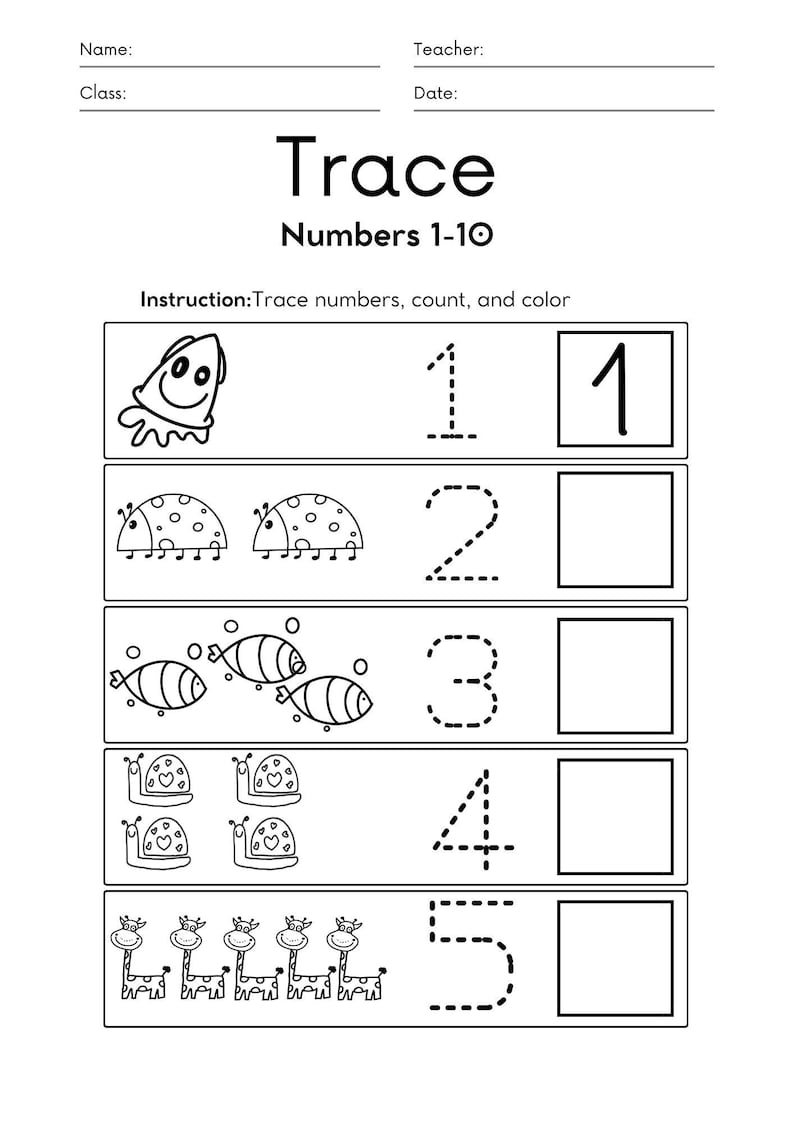
Tailoring tracing expectations to distinct developmental stages aligns closely with the guidelines set forth by the Centers for Disease Control and Prevention developmental milestones for early childhood. For toddlers and younger preschoolers aged two to four, the focus centers entirely on palmar and digital grasping, large arm movements, and exploring basic vertical or horizontal lines without strict adherence to boundaries. By the time children reach kindergarten and early primary grades spanning ages five through eight, expectations shift toward precise pencil control, refined letter and number strokes, and independent spatial planning. During these older years, a dedicated Fine Motor and Pre-Writing Skills resource provides the necessary challenge to refine hand dominance and increase writing stamina. Educators and caregivers can easily expand these foundational lessons by exploring broader concepts found within the Tracing Worksheets archive, ensuring children always have access to appropriate developmental challenges.
Foundational fine motor control and visual-motor integration must be actively cultivated through purposeful pre-writing strokes before children can master complex letter formations. — American Occupational Therapy Association
Frequently Asked Questions
Finding clear answers about early childhood writing readiness helps parents and educators make the most of free printables.
Explore More Free Printable Tracing Worksheets
Supporting a child through every stage of pencil readiness requires a diverse collection of engaging, stress-free practice materials. Beyond geometric shapes, young learners benefit immensely from practicing fluid curves, loops, and diagonal paths found throughout the General Kidtraces collection. Adults looking to expand skill sets can easily discover comprehensive resources spanning alphabet formations, seasonal challenges, and numerical practice by browsing the complete library hosted directly at KidTraces.com today.
Developmental Milestone & Activity Table
| Development Stage | Recommended Daily Duration | Primary Learning Objective |
|---|---|---|
| Preschool & Pre-K | 10 – 15 Minutes | Pencil grip development & basic pre-stroke lines |
| Kindergarten | 15 – 20 Minutes | Letter/number formation & spatial line awareness |
| Early Elementary (Grade 1–2) | 20 – 30 Minutes | Fluency, sentence construction & neatness |
Images References