Introduction
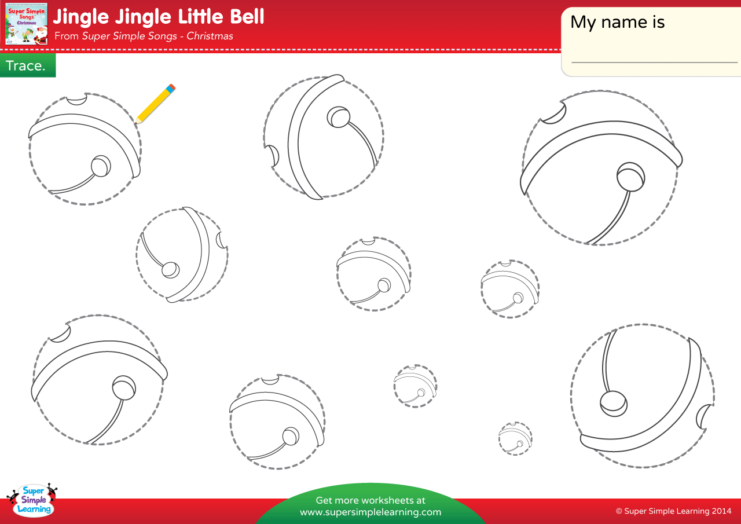
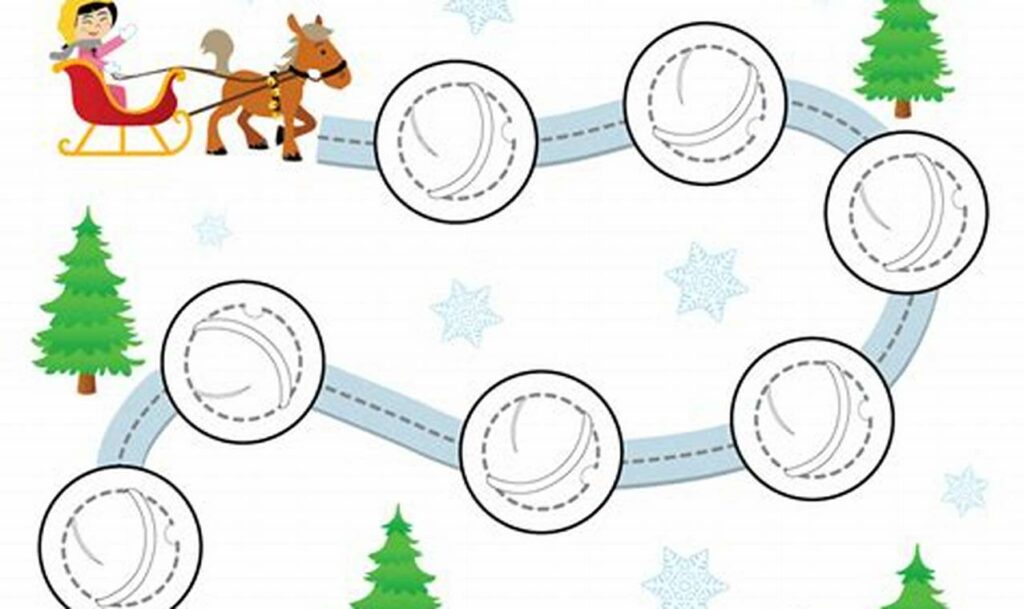
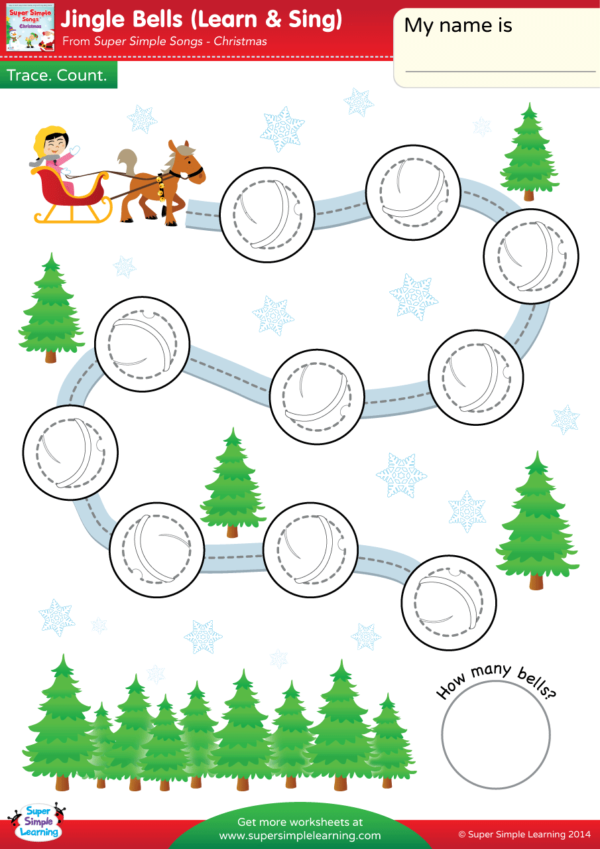
Many children recognize letters, shapes, and holiday symbols long before their developing hands possess the intrinsic muscle strength required to cleanly form them on paper. According to Reading Rockets, early literacy and writing success are deeply rooted in the physical mastery of basic strokes, hand-eye coordination, and spatial awareness. Educators frequently witness the frustration that occurs when pencil control fails to match a child’s vibrant imagination. Festive seasonal activities bridge this gap by transforming repetitive pencil practice into an engaging journey. The free printable jingle bell tracing map invites young learners to guide Santa’s sleigh or festive ornaments along winding paths, offering a joyful context for crucial pre-writing practice. Exploring Seasonal and Fun Themes provides children with the intrinsic motivation they need to sustain focus during tabletop tasks.
💡 Educational Key Takeaways:
- Core Skill: Structured Jingle Bell Tracing Map focused on developing pencil grip, stroke control, and early literacy/math confidence.
- Target Scope: Suited for homeschoolers, preschool, kindergarten, and elementary learners.
- Best Recommendation: Practice 10–15 minutes daily with ergonomic writing tools to reinforce muscle memory without hand fatigue.
What This Worksheet Covers
The jingle bell tracing map features an intricate landscape of horizontal, vertical, diagonal, and curved lines designed to mimic holiday sleigh routes, festive ribbons, and falling snowflakes. Instead of traditional rigid drills, this worksheet encourages fluid hand movements across the page. Children practice stopping, starting, changing directions, and maintaining a steady visual-motor pace from left to right. This deliberate layout strengthens the neural pathways responsible for tracking text and forming letters. Practitioners often observe that incorporating Shape and Line Tracing builds the foundational stroke control necessary before children tackle complex alphabet formations.
Key Learning Outcomes
Working through the jingle bell map refines visual-motor integration, allowing eyes and hands to communicate seamlessly across the paper plane. Children develop essential bilateral coordination as one hand stabilizes the sheet while the dominant hand executes controlled pencil strokes. Finger dexterity and intrinsic hand muscle endurance improve significantly through the varied turns and loops embedded in the design. Furthermore, consistent engagement with these pathways reinforces spatial concepts like top, bottom, left, right, and middle, which form the bedrock of early math and reading readiness.
How to Use This Worksheet
Preparation and presentation dictate whether a tracing sheet becomes an empowering challenge or a tedious chore. Adults should begin by introducing the map as a playful rescue mission or a festive journey rather than a handwriting test. Printing the page on heavy cardstock or slipping it inside a dry-erase sleeve allows children to practice multiple times without the anxiety of making permanent mistakes. Pairing the activity with scented markers, colorful gel pens, or chunky crayons transforms a standard worksheet into a multi-sensory experience that activates tactile feedback. Discovering additional ideas via Fine Motor and Pre-Writing Skills helps caregivers tailor the difficulty to each child’s current developmental stage.
Practical Tips for Parents and Teachers
Adults play a pivotal role in modeling and maintaining an efficient functional pencil grasp without triggering resistance. When a child struggles with hand fatigue, shortening the tracing session into brief, playful bursts keeps frustration at bay while still building endurance. Scaffolding the activity involves having the adult lightly trace the path first with a highlighter, creating a visual track for the child to follow with a finger before picking up a writing utensil. To extend the challenge for older or more advanced learners, encourage them to trace the paths using their non-dominant hand or attempt the route while looking at the paper through a vertical tabletop easel. According to the American Occupational Therapy Association, engaging children in vertical surface activities naturally promotes wrist extension and postural stability, which directly enhances distal finger control.
Age-Appropriate Recommendations
According to the National Association for the Education of Young Children guidelines on developmentally appropriate practice, children aged two to four benefit most from gross-to-fine motor transitions, utilizing thick crayons or finger-tracing larger paths to build basic spatial awareness. For children aged five to eight, the focus shifts toward precision, pencil grip refinement, and maintaining consistent line pressure across complex intersecting paths. Kindergarten and early elementary educators can use this holiday map to assess directional tracking, pencil control, and stamina during quiet desk work intervals.
Visual-motor integration and fine motor control are among the strongest predictors of early academic success and handwriting fluency in primary classrooms. — American Occupational Therapy Association
Frequently Asked Questions
Finding the right approach to early writing tools can raise questions for parents and educators navigating skill development at home or in the classroom. The answers below address common inquiries regarding downloading, developmental benefits, and professional standards for early childhood motor practice.
Explore More Free Printable Tracing Worksheets
Supporting a young writer involves offering a wide variety of fresh, engaging practice materials that grow alongside their developing capabilities. Exploring the complete library of resources available at KidTraces.com ensures that parents, teachers, and caregivers always have access to thoughtfully designed printables. Whether transitioning into letter formation or reinforcing basic stroke control, the collection provides targeted support for every stage of early childhood development. Print today to inspire confidence, strengthen hand muscles, and make the journey toward independent writing a joyful experience.
Developmental Milestone & Activity Table
| Development Stage | Recommended Daily Duration | Primary Learning Objective |
|---|---|---|
| Preschool & Pre-K | 10 – 15 Minutes | Pencil grip development & basic pre-stroke lines |
| Kindergarten | 15 – 20 Minutes | Letter/number formation & spatial line awareness |
| Early Elementary (Grade 1–2) | 20 – 30 Minutes | Fluency, sentence construction & neatness |
Images References