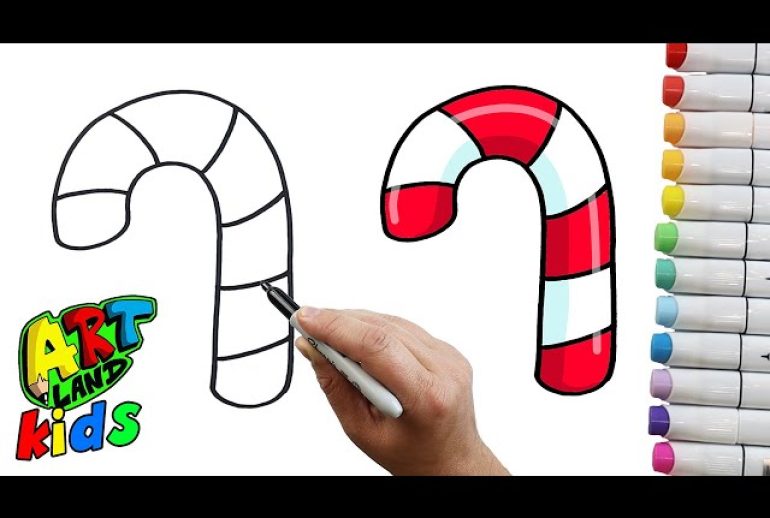
Introduction
Many children recognize letters, numbers, and festive symbols long before their fine motor coordination is strong enough to cleanly form them on paper. According to the American Occupational Therapy Association, foundational hand strength and visual-motor integration are critical prerequisites for functional handwriting and classroom success. Bridging the gap between cognitive recognition and physical execution requires engaging, low-pressure practice materials. Holiday-themed activities provide the exact motivation needed to sustain attention during pencil-control exercises. Enter the free printable candy cane drawings tracing pictures, a resource designed to transform seasonal excitement into purposeful developmental progress. Children often look at a holiday page as pure fun, while therapists and educators see a structured canvas for building essential hand arches, finger isolation, and visual tracking.
💡 Educational Key Takeaways:
- Core Skill: Structured Candy Cane Drawings Tracing Pictures focused on developing pencil grip, stroke control, and early literacy/math confidence.
- Target Scope: Suited for homeschoolers, preschool, kindergarten, and elementary learners.
- Best Recommendation: Practice 10–15 minutes daily with ergonomic writing tools to reinforce muscle memory without hand fatigue.
What This Worksheet Covers
Seasonal pages serve a dual purpose by delivering playful motivation alongside targeted pre-writing skill reinforcement. The familiar curved shape of holiday confections mimics foundational motor strokes like arcs, loops, and continuous circular movements. Tracing these iconic patterns requires precise visual-motor control, forcing the hand to alternate between smooth sweeping lines and controlled directional shifts. Many children squeeze pencils with a white-knuckle grip when faced with rigid academic drills, but festive artwork relaxes the nervous system and encourages fluid movement. This particular sheet focuses heavily on curved line control, spatial awareness, and sustained pencil pressure. It targets the intrinsic muscles of the hand, which are often weak in early childhood, supporting the transition from whole-hand grasps to efficient tripod grips. Furthermore, exploring Seasonal and Fun Themes keeps enthusiasm high during the winter months, preventing frustration and burnout.
Key Learning Outcomes
Engaging with these holiday illustrations helps children refine several interrelated developmental domains simultaneously. First, visual-motor integration improves as the eyes guide the hand along the dotted paths, strengthening the neural pathways between sight and action. Second, fine motor precision advances through continuous line control, teaching little fingers how to regulate speed and stopping points. Third, bilateral coordination gets a subtle workout as one hand stabilizes the paper while the dominant hand executes the tracing stroke. Finally, children build emotional resilience and confidence, learning that steady, deliberate effort leads to a satisfying finished product. These outcomes lay the groundwork for future letter formation, spatial orientation, and fluid handwriting habits across all academic subjects.
How to Use This Worksheet
Implementation requires balancing structure with creative freedom to keep young learners invested in the task. Setting up an inviting workspace with proper seating—feet flat on the floor and hips at a ninety-degree angle—instantly supports optimal core stability and hand function. It sounds simple, and that is the point; posture dictates writing endurance. Adults can introduce the page as a special art challenge rather than a handwriting test. Encouraging children to use non-traditional tools like short crayons, broken chalk pieces, or scented markers naturally promotes a correct grasp by leaving no room for multi-finger wrapping. When children trace the festive outlines, the focus should remain on steady pacing rather than absolute perfection.
Practical Tips for Parents and Teachers
Scaffolding the activity makes a tremendous difference for children who tire easily or struggle with sustained focus. Modeling the correct starting point with a verbal cue, such as starting at the top hook and sliding down the straight candy stick, helps internalize directional habits. For children who need extra tactile feedback, placing the printable over a textured surface like a craft mat or sanding board turns the tracing exercise into a sensory-rich experience. Teachers and parents should watch for fatigue, swapping out standard pencils for thicker writing utensils if the child’s hand begins to arch awkwardly. When introducing broader pre-writing paths alongside these holiday graphics, pairing the activity with resources found in Shape and Line Tracing ensures a well-rounded foundation of stroke variations.
Age-Appropriate Recommendations
Developmental readiness varies wildly between ages two and eight, requiring thoughtful adaptation of tracing materials. According to the National Association for the Education of Young Children guidelines on developmentally appropriate practice, toddlers and young preschoolers benefit most from large-scale, thick-lined graphics that accommodate palmar or digital pronate grasps. For children aged two to four, the focus centers on gross arm movements, large curves, and basic cause-and-effect pencil marks. By ages five through eight, expectations shift toward refined pencil control, proper tripod grip, and precise boundary maintenance aligned with formal handwriting curricula. During these early elementary years, expanding practice into foundational letter work through Alphabet And Numbers Tracing helps bridge festive drawing activities directly to academic writing standards.
Visual-motor integration and fine motor precision are core predictors of early academic success and functional handwriting readiness in young children. — American Occupational Therapy Association
Frequently Asked Questions
Explore More Free Printable Tracing Worksheets
Sustaining a child’s interest in writing requires a steady rotation of fresh, engaging practice materials throughout the entire school year. Exploring a comprehensive library of early childhood resources allows educators and families to target specific developmental milestones without repetition fatigue. From foundational lines to complex letter formations, every printable serves as a stepping stone toward academic independence and physical confidence. Discover the full collection of developmental tools by visiting KidTraces.com to support your young learner every step of the way. Additional targeted practice can also be found within the curated categories for Fine Motor and Pre-Writing Skills and general Tracing Worksheets.
Developmental Milestone & Activity Table
| Development Stage | Recommended Daily Duration | Primary Learning Objective |
|---|---|---|
| Preschool & Pre-K | 10 – 15 Minutes | Pencil grip development & basic pre-stroke lines |
| Kindergarten | 15 – 20 Minutes | Letter/number formation & spatial line awareness |
| Early Elementary (Grade 1–2) | 20 – 30 Minutes | Fluency, sentence construction & neatness |
Images References