Introduction
Many children recognize letters, shapes, and numbers long before their fine motor skills can actually form them on paper. According to the National Association for the Education of Young Children (NAEYC), developmentally appropriate practice requires aligning expectations for early writing with physical maturation and playful engagement. Children often possess rich vocabularies and acute visual recognition while still developing the intrinsic hand muscles required for sustained pencil control. This developmental gap can create frustration during traditional desk work. That exact friction is where thematic activities transform a clinical chore into an engaging motor challenge. The free printable tractor letter tracing sheet bridges the gap between cognitive readiness and physical execution, utilizing a familiar farm motif to capture attention. Integrating thematic visuals provides an immediate anchor for young learners who thrive on contextual play rather than abstract lines. Explore additional resources via Seasonal and Fun Themes to maintain high engagement across different units of study.
💡 Educational Key Takeaways:
- Core Skill: Structured Tractor Letter Tracing focused on developing pencil grip, stroke control, and early literacy/math confidence.
- Target Scope: Suited for homeschoolers, preschool, kindergarten, and elementary learners.
- Best Recommendation: Practice 10–15 minutes daily with ergonomic writing tools to reinforce muscle memory without hand fatigue.
WhatThis Worksheet Covers
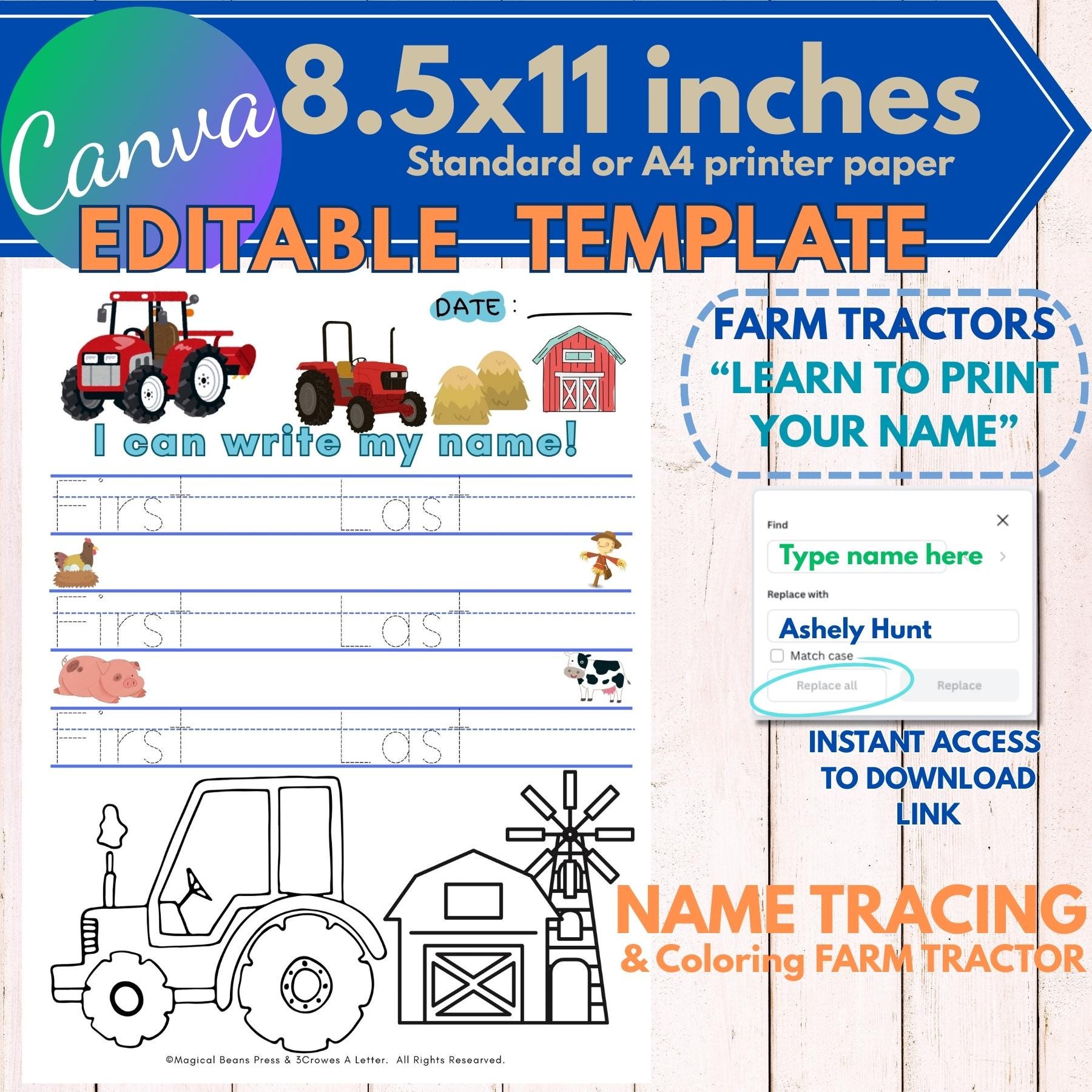
This specific print resource addresses the foundational mechanics of early writing by combining targeted letter forms with visual guidance. Dotted letter models provide clear starting points, directional arrows, and stopping cues that prevent bad habits like bottom-up stroke formation. Mastery of these strokes requires consistent practice with proper proportional spacing and alignment on writing guidelines. Furthermore, the incorporation of heavy machinery graphics invites children to imagine driving a real vehicle along the paths, turning repetitive drills into a purposeful journey across the page. This playful context disguises the repetitive nature of stroke acquisition, which is essential for building muscle memory. Educators can integrate these resources alongside materials found in Dotted Letters For Tracing to reinforce directional consistency across multiple alphabet sets.
Key Learning Outcomes
Young learners engaging with this printout develop enhanced visual-motor integration by coordinating eye movements with hand execution. Stroke control improves significantly as little fingers learn to decelerate around corners and maintain steady pressure on the writing utensil. Letter formation accuracy increases through repeated exposure to correct top-to-bottom and left-to-right sequences. Additionally, bilateral coordination strengthens because one hand stabilizes the paper while the dominant hand executes the precise tracing movements. These combined outcomes lay a robust foundation for future academic tasks, supporting the broader skillsets highlighted within Fine Motor and Pre-Writing Skills.
How to Use This Worksheet
Implementation succeeds best when adults frame the activity as an imaginative driving expedition rather than a test of academic endurance. Positioning the paper at a slight angle matching the child’s natural writing slant encourages an ergonomic wrist posture and reduces hand fatigue. Encouraging the child to trace the paths first with an index finger provides crucial tactile feedback before introducing a writing tool. Observing hand positioning closely allows adults to correct compensatory grips early before they become deeply ingrained neurological habits. Rotating between standard pencils, scented markers, and thick crayons keeps novelty high and prevents muscular strain during longer sessions.
Practical Tips for Parents and Teachers
Scaffolding the experience involves starting with larger, gross-motor arm movements in the air before moving down to the restricted space of the page. Modeling correct pencil grip explicitly while verbalizing the stroke direction helps auditory learners connect verbal cues to physical actions. Extending the learning beyond the paper can involve tracing letter outlines in shaving cream, salt trays, or kinetic sand to build foundational hand strength. Limiting sessions to brief, five-minute intervals ensures the child remains focused and prevents the frustration associated with hand cramping or fatigue. Celebrating small victories in stroke continuity reinforces self-efficacy and motivates ongoing perseverance through difficult letter curves.
Age-Appropriate Recommendations
According to the CDC developmental milestones, children typically transition from gross scribbling to controlled lines and simple shapes between the ages of three and four. For toddlers aged two to four, the focus should remain on large pre-writing strokes, finger tracing, and thick writing utensils that accommodate immature palmar grasps. Children aged five to eight are ready for more refined letter formation, consistent baseline adherence, and standard pencil grips in alignment with the Handwriting Without Tears framework. Tailoring expectations to these distinct developmental windows prevents undue pressure and fosters a lifelong enjoyment of written expression. Pair these exercises with foundational numeral practice available in Alphabet And Numbers Tracing to ensure comprehensive early learning coverage.
Developmentally appropriate practice requires aligning expectations for early writing with physical maturation and playful engagement. — National Association for the Education of Young Children (NAEYC)
Frequently Asked Questions
Answers to common inquiries regarding printing setup, fine motor acquisition, and developmental milestones assist caregivers in maximizing the utility of these educational materials.
Explore More Free Printable Tracing Worksheets
Supporting a young writer requires a diverse library of accessible materials that grow alongside developing capabilities. Caregivers and educators can discover an extensive collection of educational printables designed to foster early literacy and dexterity at KidTraces.com. Every child progresses at an individualized pace, and having access to varied thematic exercises ensures practice remains engaging and effective. Explore additional resources tailored to specific developmental stages to keep the learning journey fresh, fun, and structurally sound.
Developmental Milestone & Activity Table
| Development Stage | Recommended Daily Duration | Primary Learning Objective |
|---|---|---|
| Preschool & Pre-K | 10 – 15 Minutes | Pencil grip development & basic pre-stroke lines |
| Kindergarten | 15 – 20 Minutes | Letter/number formation & spatial line awareness |
| Early Elementary (Grade 1–2) | 20 – 30 Minutes | Fluency, sentence construction & neatness |
Images References