Introduction
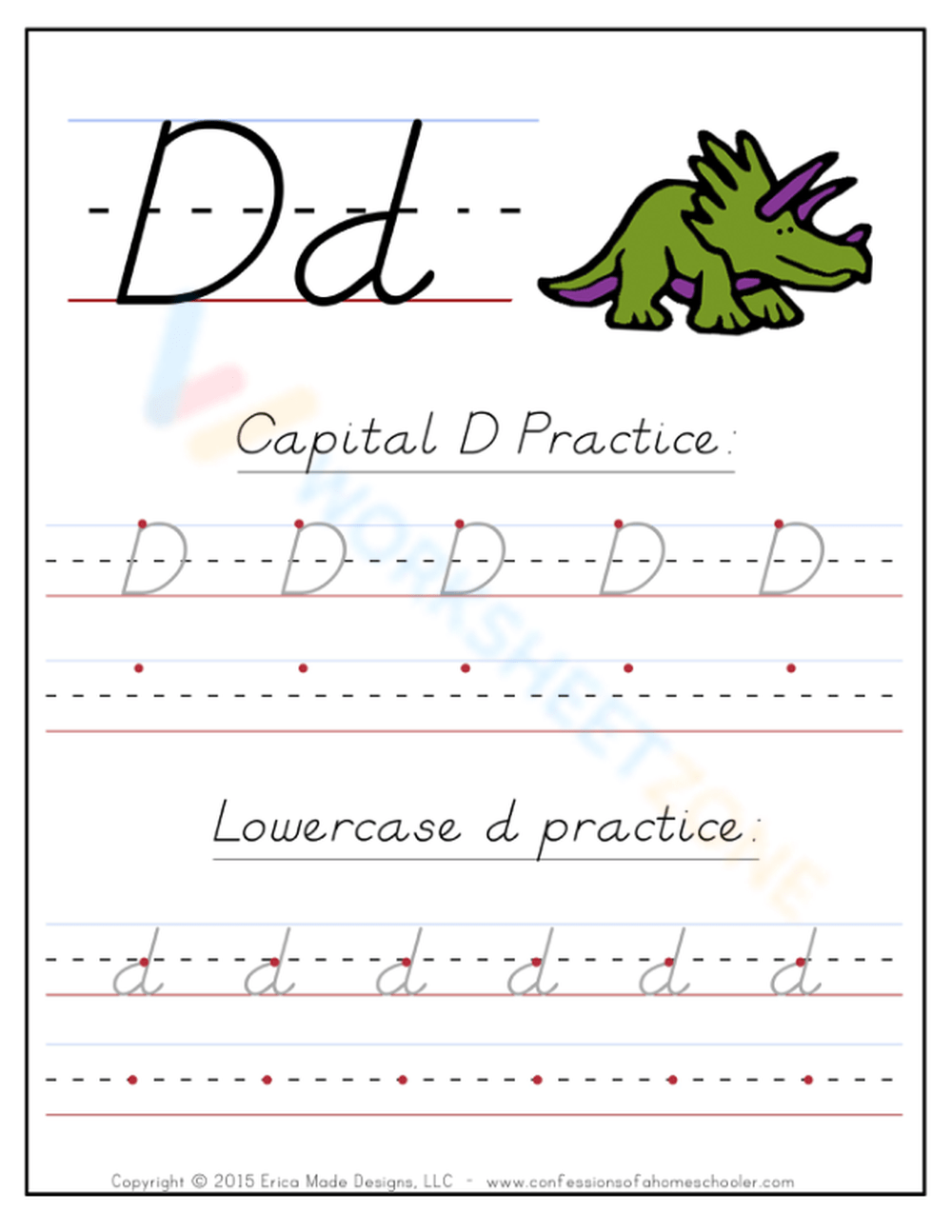
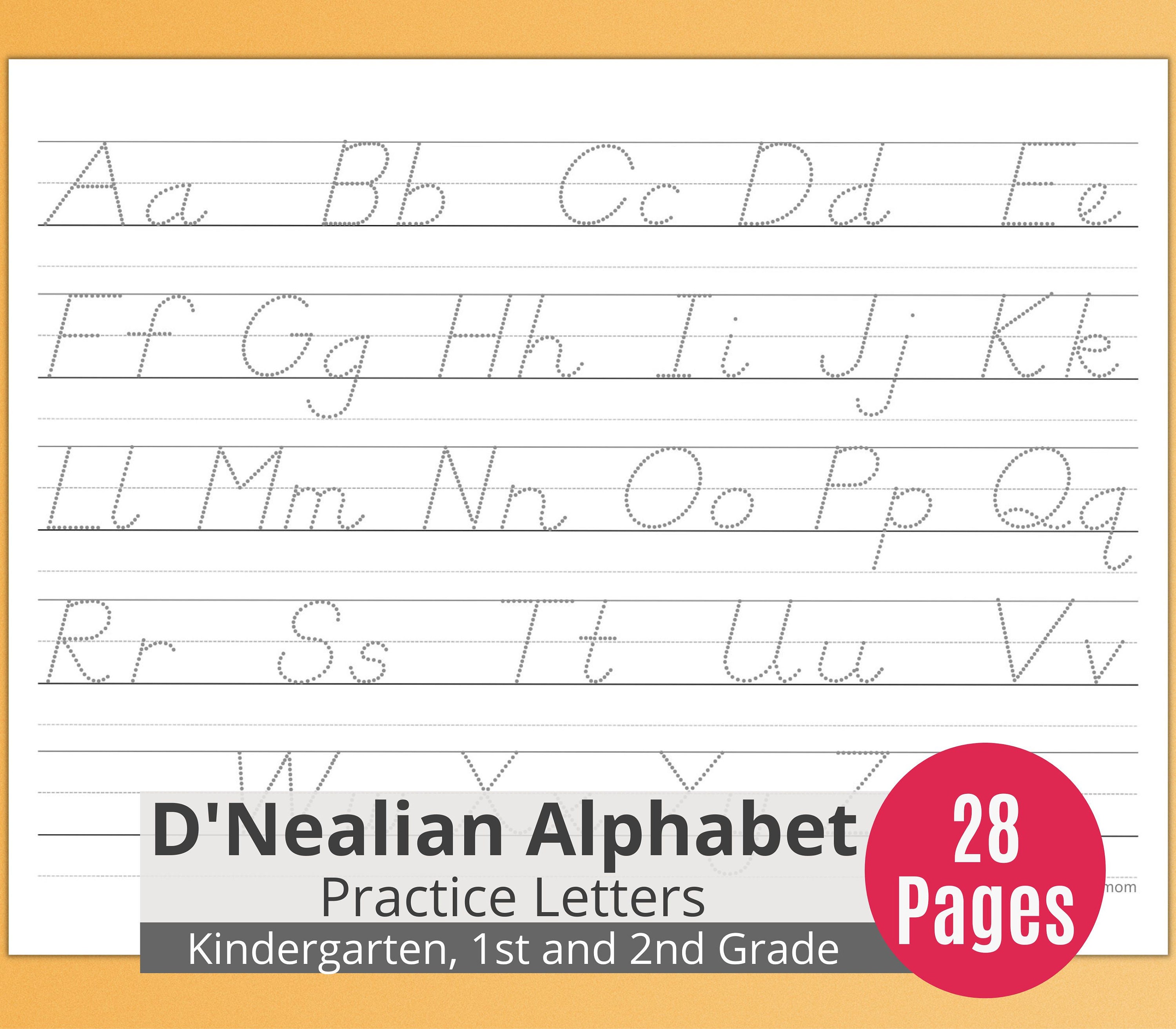
Many young children recognize letters long before their fine motor skills possess the strength and coordination required to form them manually. According to the National Association for the Education of Young Children, intentional pre-writing and writing experiences should be meaningful, hands-on, and tailored to individual developmental readiness rather than forced through rigid repetition. Translating early visual letter recognition into confident physical handwriting requires specialized tools that honor the natural slope of emerging hand mechanics. The d’nealian alphabet tracing worksheets free serve this exact purpose by introducing a slanted, continuous-stroke manuscript style that eases the eventual transition into cursive handwriting. Children often stare at a blank page with hesitation, unsure where to place the pencil or how to orchestrate the subtle wrist movements needed for smooth loops and slanted lines. It sounds simple, and that’s the point: structured guidance removes the intimidation factor, allowing little hands to focus entirely on directional flow, spatial awareness, and pencil control. Exploring resources found within dotted letters for tracing collections further supports this foundational stage by providing clear, predictable pathways for developing minds and muscles to follow effortlessly.
💡 Educational Key Takeaways:
- Core Skill: Structured D’Nealian Alphabet Tracing Worksheets Free focused on developing pencil grip, stroke control, and early literacy/math confidence.
- Target Scope: Suited for homeschoolers, preschool, kindergarten, and elementary learners.
- Best Recommendation: Practice 10–15 minutes daily with ergonomic writing tools to reinforce muscle memory without hand fatigue.
WhatThis Worksheet Covers
Mastering the unique slanted aesthetic of the D’Nealian system demands a deliberate breakdown of stroke order, starting points, and directional arrows. Here’s what makes this worksheet different: every glyph is rendered with specialized dotted lines that encourage continuous motion rather than disjointed, robotic lifts of the writing utensil. Young learners practice specific slant angles, curved descenders, and distinct ascenders that mirror the physical flow of cursive writing later on. This method specifically targets spatial orientation, helping children keep letters properly aligned on the baseline instead of floating haphazardly across the page. Hand-eye coordination improves naturally as eyes guide the pencil tip along the gentle forward slant inherent to this specific alphabet style. Practitioners utilizing alphabet and numbers tracing materials will notice an immediate difference in how smoothly children transition from traditional vertical block letters into these slanted, connected forms.
Key Learning Outcomes
Children engaging consistently with these targeted tracing pages develop a remarkably strong muscle memory for consistent letter formation and proportional sizing. Finger dexterity and intrinsic hand strength improve significantly as tiny muscles adapt to maintaining a dynamic tripod grasp over extended periods of guided practice. Directional habits solidify deeply, reducing common letter reversals such as confusing lowercase b and d through distinct starting point recognition. Visual-motor integration flourishes as the brain learns to translate visual cues on the page into precise, controlled physical hand movements. Finally, confidence grows exponentially when children realize they can independently produce fluid, beautiful letterforms that look remarkably similar to real cursive writing.
How to Use This Worksheet
Success with early writing tools depends heavily on creating a low-stress environment where physical comfort precedes formal perfection. Positioning the paper at a slight matching slant to the child’s forearm promotes ergonomic wrist posture and prevents unnecessary strain during extended practice sessions. Adults should always demonstrate the correct starting point first, verbalizing the motion out loud so the child associates auditory cues with physical strokes. It helps to keep sessions brief, vibrant, and engaging, stopping long before frustration sets in or hand fatigue causes an awkward pencil grip collapse. Additional support for foundational hand strength can be seamlessly integrated using exercises found in fine motor and pre-writing skills guides, ensuring the physical body is fully prepared for pencil work.
Practical Tips for Parents and Teachers
Scaffolding the learning process involves starting with larger, gross-motor tracing motions in the air or on vertical surfaces before moving down to standard paper sheets. Modeling a functional pencil grasp is essential; adults should gently correct thumb wraps or fist grasps early before bad habits become deeply ingrained muscle memory. Offering sensory alternatives, such as tracing the dotted letters with a textured finger dipped in colored sand or paint, bridges the gap between tactile exploration and pencil control. According to the American Occupational Therapy Association, building foundational upper body and core stability directly enhances a child’s distal control and finger dexterity for precise writing tasks. Providing enthusiastic praise for effort, focus, and steady pencil pressure transforms a mundane worksheet drill into an empowering, confidence-building milestone for the developing writer.
Age-Appropriate Recommendations
Aligning with the developmental expectations outlined in the Common Core ELA standards for kindergarten and early elementary grades, these specialized D’Nealian worksheets cater effectively to distinct developmental windows. For children ages two through four, the focus remains primarily on exploring pre-writing lines, gross motor control, and occasional sensory letter tracing rather than mastering precise miniature slants. As children progress into the five-to-eight age bracket, their neurological development supports the fine visual-motor integration required to execute the consistent forward slants and proportional sizing demanded by the D’Nealian curriculum. Scaffolding expectations ensures that younger toddlers are never pushed prematurely into micro-writing, while older kindergarteners and first graders receive the rigorous, structured practice necessary for seamless handwriting fluency.
According to developmental milestones outlined by the American Occupational Therapy Association, children typically develop the refined finger dexterity required for a functional dynamic tripod grasp between the ages of four and six. — AOTA Guidelines
Frequently Asked Questions
Addressing common inquiries helps educators and families maximize the utility of these printables while supporting healthy developmental trajectories for every unique learner.
Explore More Free Printable Tracing Worksheets
Expanding a child’s writing toolkit requires access to a diverse array of structured practice pages that keep engagement high and boredom low. The complete library available through KidTraces.com offers an extensive collection of resources designed by specialists to support every phase of early literacy. Exploring categories such as shape and line tracing provides wonderful foundational practice for absolute beginners just learning to control a crayon or pencil. Every printable is thoughtfully crafted to make the journey toward independent writing an encouraging, joyful experience for both children and the adults guiding them.
Developmental Milestone & Activity Table
| Development Stage | Recommended Daily Duration | Primary Learning Objective |
|---|---|---|
| Preschool & Pre-K | 10 – 15 Minutes | Pencil grip development & basic pre-stroke lines |
| Kindergarten | 15 – 20 Minutes | Letter/number formation & spatial line awareness |
| Early Elementary (Grade 1–2) | 20 – 30 Minutes | Fluency, sentence construction & neatness |
Images References