Introduction
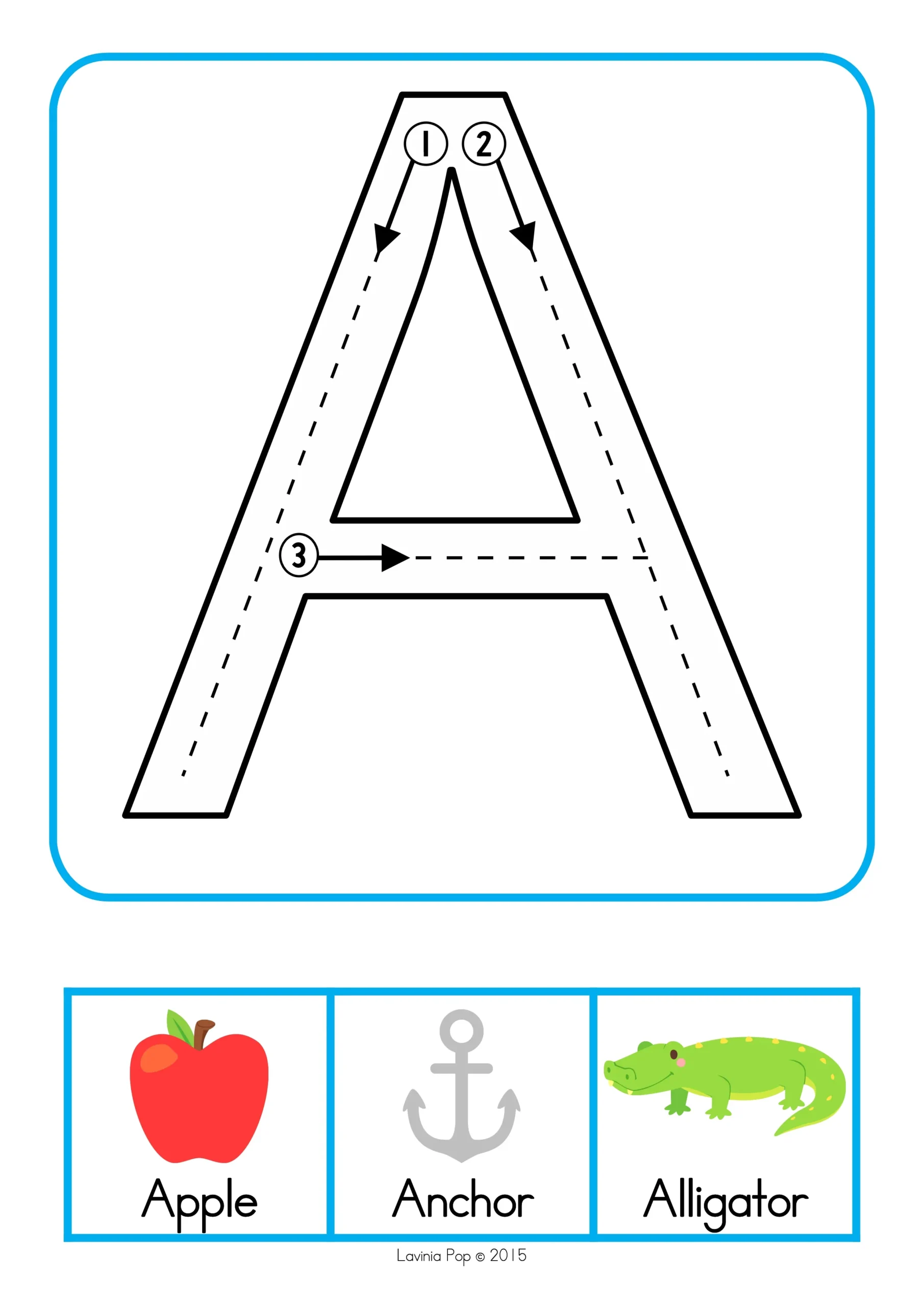
Many children recognize letters, shout out their sounds, and attempt to spell out loud long before their tiny hands possess the physical maturity to form them neatly on paper. According to Reading Rockets, early writing development relies heavily on the gradual integration of visual perception, fine motor control, and cognitive understanding of letter symbols. Alphabet tracing worksheets with arrows bridge this exact gap by giving visual learners the explicit directionality they need to move from random scribbling to deliberate letter formation. It sounds simple, and that is the exact point. When children see numbered directional arrows guiding their pencils, the mystery of where a letter begins and ends disappears. This foundational practice supports early literacy by turning abstract symbols into physical muscle memory, setting the stage for legible, confident handwriting down the road.
💡 Educational Key Takeaways:
- Core Skill: Structured Alphabet Tracing Worksheets With Arrows focused on developing pencil grip, stroke control, and early literacy/math confidence.
- Target Scope: Suited for homeschoolers, preschool, kindergarten, and elementary learners.
- Best Recommendation: Practice 10–15 minutes daily with ergonomic writing tools to reinforce muscle memory without hand fatigue.
What This Worksheet Covers
Mastering the alphabet requires more than just memorizing shapes; it demands an understanding of consistent stroke order and spatial orientation. Alphabet tracing worksheets with arrows systematically introduce both uppercase and lowercase letters through guided formation principles. Each letter features explicit starting points paired with clear directional arrows that show young writers precisely how to maneuver the pencil. This approach prevents the formation of inefficient habits, such as starting letters from the bottom or drawing circles clockwise instead of counterclockwise. Alongside letter recognition, these pages build essential confidence by breaking complex alphabetical shapes down into manageable, repeatable strokes. Practitioners often notice that when children understand the flow of a stroke, their overall writing speed and hand endurance improve dramatically. Exploring resources like Dotted Letters For Tracing can further reinforce these precise directional pathways through gradual fading prompts.
Key Learning Outcomes
Working through structured letter sheets yields several distinct developmental benefits that extend far beyond simple handwriting practice. Children rapidly internalize correct stroke order, which reduces hand fatigue and increases writing fluency during longer classroom assignments. Visual-motor integration strengthens as little fingers learn to translate visual cues from the arrows into fluid hand movements across the page. Spatial awareness improves significantly as writers navigate baseline, midline, and top line boundaries within the provided writing guides. Furthermore, letter identification solidifies through multisensory engagement, combining the visual sight of the letter with the kinesthetic feel of tracing its path. For broader foundational skill-building before tackling full letters, integrating Fine Motor and Pre-Writing Skills helps prepare the hand muscles for these specific directional demands.
How to Use This Worksheet
Successful handwriting practice depends entirely on the approach taken at the table, not just the paper placed in front of the child. Begin by observing how the pencil is held, ensuring an efficient grasp that allows for fluid finger and wrist movement rather than a tight, fatiguing fist clench. Introduce the worksheet by first tracing the arrows with a bare index finger to let the child feel the motion kinesthetically before introducing a writing tool. Encourage slow, deliberate pacing over speed, as building correct muscle memory requires mindfulness during every single stroke. If a child makes a mistake, treat it as a natural part of the learning process rather than an error to be erased. Diversifying practice methods with materials found under Alphabet And Numbers Tracing keeps the daily routine fresh and deeply engaging.
Practical Tips for Parents and Teachers
Scaffolding the tracing experience makes a massive difference in how a child responds to structured writing tasks. Start by demonstrating the stroke yourself on a separate whiteboard or in the air, exaggerating the starting point and following the arrow directions aloud. Modify the writing instrument if fatigue sets in too quickly, swapping standard pencils for short golf pencils or colorful crayons to encourage a natural tripod grasp. Provide gentle physical guidance at the elbow or wrist only when necessary, slowly fading assistance as the child gains independence. Keep sessions short, typically lasting between five to ten minutes, to maintain positive associations with writing tasks. Connecting these literacy skills to thematic units through Seasonal and Fun Themes also helps sustain high motivation levels throughout the school year.
Age-Appropriate Recommendations
Developmental readiness dictates how children interact with letter formation resources across different age brackets. According to the National Association for the Education of Young Children (NAEYC) Developmentally Appropriate Practice guidelines, children aged two to four benefit most from large, gross-motor-based pre-writing strokes, finger tracing, and sensory letter exploration rather than rigid desk work. By ages five through eight, children transition into structured handwriting instruction, aligning with Common Core standard L.K.1a, which emphasizes printing all upper- and lowercase letters clearly. During these early elementary years, alphabet tracing worksheets with arrows serve as an invaluable tool for refining letter proportions, spacing, and automaticity. Educators and parents should always match the complexity of the worksheet to the current fine motor capacity of the child, ensuring success at every single developmental stage.
According to developmental milestones tracked by the American Occupational Therapy Association (AOTA), children typically achieve a mature three-point pencil grasp between the ages of four and six, which directly supports the precise control needed for letter formation. — American Occupational Therapy Association
Frequently Asked Questions
Clear answers to common questions help parents and educators implement these tracing pages effectively at home or in the classroom.
How do I download and print these alphabet tracing worksheets?
Click the download link directly on the page to save the PDF file to a device, then open it in any standard document reader and send it to a home or classroom printer.
How do tracing worksheets support fine motor development?
Tracing requires intrinsic hand muscle control, bilateral coordination, and visual-motor integration, which collectively strengthen the fingers and hands for everyday writing tasks.
What does the International Dyslexia Association recommend for letter formation?
The International Dyslexia Association emphasizes multisensory instruction, recommending that children simultaneously see, say, and trace letters with directional cues to anchor letter formation in memory.
Explore More Free Printable Tracing Worksheets
Supporting a young writer involves offering a rich variety of engaging, developmentally appropriate practice materials that grow alongside their changing abilities. Building a comprehensive toolbox of resources ensures that learning to write remains an exciting adventure filled with discovery and success rather than a daily chore. Exploring the full library at KidTraces.com provides instant access to hundreds of teacher-created and therapist-approved printables designed for every stage of early childhood development.
Developmental Milestone & Activity Table
| Development Stage | Recommended Daily Duration | Primary Learning Objective |
|---|---|---|
| Preschool & Pre-K | 10 – 15 Minutes | Pencil grip development & basic pre-stroke lines |
| Kindergarten | 15 – 20 Minutes | Letter/number formation & spatial line awareness |
| Early Elementary (Grade 1–2) | 20 – 30 Minutes | Fluency, sentence construction & neatness |
Images References