Introduction
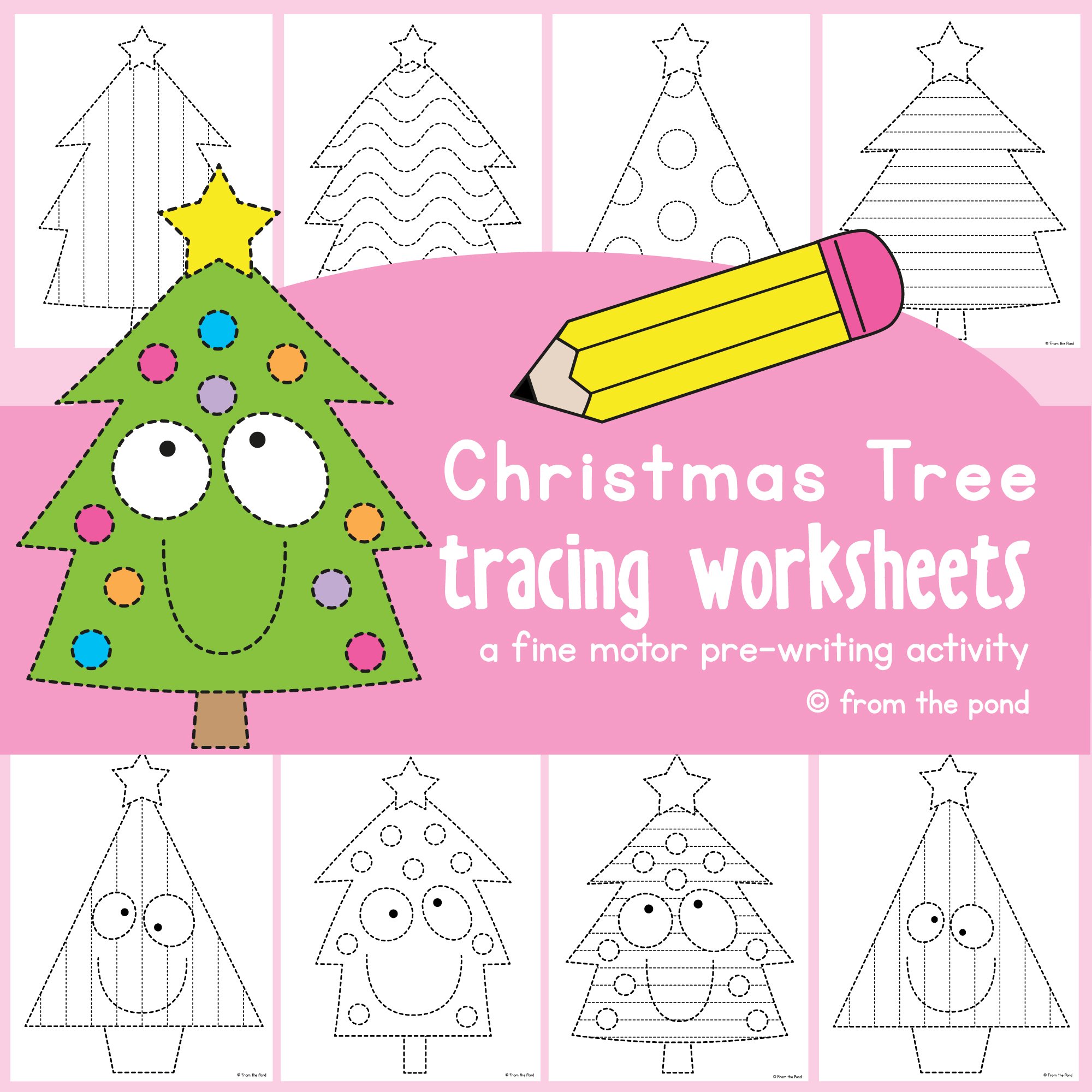
Many children recognize letters, shapes, and holiday symbols long before their fine motor skills can accurately form them on paper. According to the National Association for the Education of Young Children, young children learn best through active, playful experiences that integrate sensory-motor control with meaningful contexts. Bridging the gap between visual recognition and physical execution requires targeted practice that feels more like play than work. Enter the cartoon christmas tracing tree, a seasonal favorite designed to capture holiday excitement while building foundational pencil control. Festive graphics provide immediate visual motivation, transforming standard line work into a joyful winter wonderland adventure. Children eagerly trace branching evergreen boughs, ornaments, and star toppers, unknowingly refining the precise hand movements required for future handwriting success.
💡 Educational Key Takeaways:
- Core Skill: Structured Cartoon Christmas Tracing Tree focused on developing pencil grip, stroke control, and early literacy/math confidence.
- Target Scope: Suited for homeschoolers, preschool, kindergarten, and elementary learners.
- Best Recommendation: Practice 10–15 minutes daily with ergonomic writing tools to reinforce muscle memory without hand fatigue.
What This Worksheet Covers
Pencil control is built upon a progression of fundamental strokes, moving from simple vertical and horizontal lines to complex diagonals, curves, and intersecting paths. The cartoon christmas tracing tree targets these exact pre-writing strokes by guiding young hands along dotted pathways that mimic the festive contours of holiday evergreen trees, garlands, and gift packages. Working through these seasonal designs reinforces hand-eye coordination, spatial awareness, and bilateral integration as one hand stabilizes the paper while the dominant hand executes the tracing motion. It sounds simple, and that is the exact point. By breaking complex writing motions down into manageable, festive segments, learners build the muscle memory necessary for future letter formation without the frustration often associated with blank lined paper.
Key Learning Outcomes
Engaging with seasonal tracing sheets fosters several developmental milestones simultaneously. First, children strengthen the intrinsic muscles of the hand, which supports a functional tripod or quadrupod pencil grasp. Second, fluid hand movements across angled tree branches improve visual-motor integration, teaching the brain to translate visual cues into precise physical actions. Third, directional tracking from top to bottom and left to right naturally reinforces the foundational visual scanning patterns required for early reading fluency. Finally, completing the intricate details of a holiday tree instills a deep sense of accomplishment and persistence, qualities that are vital when tackling more demanding academic tasks later on.
How to Use This Worksheet
Scaffolding the tracing experience ensures that children remain confident and engaged rather than overwhelmed. Begin by encouraging finger-tracing along the dotted lines before introducing a writing utensil, allowing the tactile system to map out the route first. Short, high-friction tools like broken crayons, golf pencils, or short markers naturally encourage a proper grasp by limiting the space available for an adult-style fist grip. It is always wise to limit sessions to short, playful bursts, stopping well before hand fatigue sets in and leads to poor compensatory posturing. Every child’s developmental timeline is unique, so patience and positive reinforcement remain the greatest tools for lasting skill acquisition.
Practical Tips for Parents and Teachers
Creating an optimal workspace makes a remarkable difference in fine motor output and postural stability. Ensure the table sits at elbow height and the feet rest flat on the floor or a stable footstool to provide a solid base of support for the trunk and shoulders. Adults can model correct pencil grip explicitly, gently correcting thumb tucks or excessive finger wraps before muscle habits become deeply ingrained. According to the American Occupational Therapy Association, proximal stability in the core and shoulder girdle is essential for achieving distal control in the fingers and hands. Extending the activity is simple when children finish tracing; invite them to color the evergreen needles, cut out the tree along solid borders with safety scissors, or explore broader concepts found within Fine Motor and Pre-Writing Skills resources.
Age-Appropriate Recommendations
Meeting children at their exact developmental stage is the cornerstone of developmentally appropriate practice, often highlighted in frameworks like the NAEYC Developmentally Appropriate Practice guidelines. For toddlers and preschoolers ages two to four, the focus centers on grosser pre-writing strokes, thick primary pencils, and large-format holiday shapes that forgive minor hand tremors. Children aged five to eight are ready for more refined control, narrower lines, and complex intersecting paths that prepare them for formal cursive and manuscript handwriting. Educators and caregivers can also pair this festive resource with complementary practice found in Seasonal and Fun Themes to maintain high engagement throughout the entire academic year.
Hand-eye coordination and visual-motor integration are robust predictors of early academic success and pencil control proficiency — American Occupational Therapy Association (AOTA)
Frequently Asked Questions
Explore More Free Printable Tracing Worksheets
Supporting early literacy, number recognition, and pen control does not require expensive workbooks or complicated preparation. The complete collection of free printables at KidTraces.com offers endless opportunities for children to practice foundational strokes through engaging, thematic activities. Whether looking for letter formation help or specialized line control sheets, parents and teachers will find a wealth of tools designed to make learning fun and accessible. Discover additional practice avenues by browsing through Shape and Line Tracing and Alphabet And Numbers Tracing to keep young learners motivated every single day.
Developmental Milestone & Activity Table
| Development Stage | Recommended Daily Duration | Primary Learning Objective |
|---|---|---|
| Preschool & Pre-K | 10 – 15 Minutes | Pencil grip development & basic pre-stroke lines |
| Kindergarten | 15 – 20 Minutes | Letter/number formation & spatial line awareness |
| Early Elementary (Grade 1–2) | 20 – 30 Minutes | Fluency, sentence construction & neatness |
Images References


