Introduction
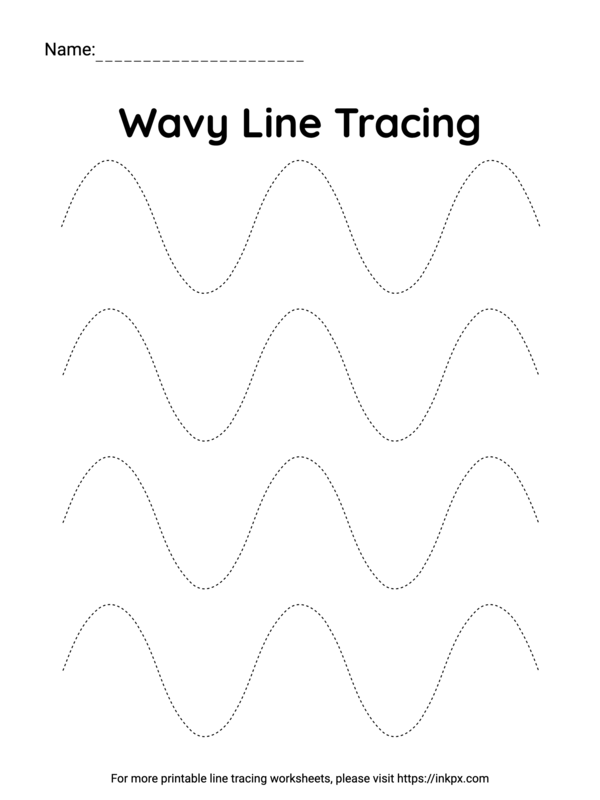
Many children recognize letters, shapes, and numbers long before their fine motor systems possess the endurance and dexterity to comfortably form them on paper. According to the American Occupational Therapy Association, foundational fine motor control is built through progressive exposure to varied stroke patterns and line control exercises. Bridging this gap between cognitive understanding and physical capability requires targeted, low-stress practice. The free printable waving line tracing sheet provides an ideal environment for building this crucial hand control. Through gentle, continuous curves that mimic ocean waves or flowing ribbons, children develop the exact wrist and finger movements needed for future handwriting success.
💡 Educational Key Takeaways:
- Core Skill: Structured Waving Line Tracing focused on developing pencil grip, stroke control, and early literacy/math confidence.
- Target Scope: Suited for homeschoolers, preschool, kindergarten, and elementary learners.
- Best Recommendation: Practice 10–15 minutes daily with ergonomic writing tools to reinforce muscle memory without hand fatigue.
What This Worksheet Covers
The waving line tracing activity focuses squarely on continuous fluid motion, alternating hills and valleys, and visual-motor integration. Unlike rigid vertical or horizontal lines, waves require the hand to smoothly transition from a supination movement to a pronation movement while tracking a visual path across the page. This fluid motion replicates the exact motor planning necessary for cursive writing and the loops found in letters like lowercase “e,” “l,” and “s.”. For more related activities, check out our Oval Kids Drawing.
Key Learning Outcomes
Engaging with this printable directly strengthens pencil control by training the hand to modulate pressure during directional shifts. Children naturally learn bilateral coordination as one hand stabilizes the paper while the dominant hand traces the sweeping contours. Visual tracking improves significantly as eyes scan ahead of the writing utensil to anticipate the crest and trough of each wave. Furthermore, completing the continuous path builds crucial sustained attention, teaching young learners to follow a multi-step visual sequence from left to right without lifting the writing tool.
How to Use This Worksheet
Successful implementation begins long before the pencil touches the paper, often starting with air-tracing or finger-tracing the large curves to establish muscle memory. Positioning the paper at a slight slant matching the child’s natural arm angle reduces wrist fatigue and encourages a stable posture. According to Reading Rockets, early literacy and writing instruction are most effective when coupled with multisensory approaches that ground abstract symbols in physical movement. Allowing children to trace the waves with chunky crayons, colored markers, or even fingerpaints before moving to standard pencils keeps frustration low and engagement exceptionally high.
Practical Tips for Parents and Teachers
Encouraging a functional tripod or quadrupod grasp prevents early hand cramping, but gentle redirection works better than forced corrections during creative tasks. When observing a child struggle with the crest of a wave, scaffolding the activity by lightly guiding their hand through the transition point builds immediate confidence. For children who master the basic sheet quickly, extending the exercise by having them draw their own parallel waves underneath adds a layer of independent creative challenge. Breaking practice sessions into short, five-minute bursts ensures the hand muscles strengthen without triggering negative associations with writing.
Age-Appropriate Recommendations
For toddlers and preschoolers aged two to four, this activity aligns with the CDC developmental milestones for grasping crayons and beginning to imitate horizontal and vertical strokes. At this stage, using thicker writing utensils on magnified versions of the wave patterns supports developing palmar and digital grasps. For older children aged five to eight, the activity serves as a valuable warm-up for formal handwriting instruction, supporting the physical demands outlined in the Handwriting Without Tears developmental framework. Older students can be challenged to use finer-tipped pens, maintain consistent speed, and keep their wrists elevated off the page to foster advanced fluid control.
Foundational fine motor control and visual-motor integration are built through progressive exposure to varied stroke patterns, curved lines, and continuous movement exercises. — American Occupational Therapy Association
Frequently Asked Questions
Answers to common questions regarding the printable waving line tracing resource help parents and educators maximize its developmental benefits.
Explore More Free Printable Tracing Worksheets
Expanding a child’s pencil control repertoire involves moving seamlessly from loose curves to structured symbols. Exploring resources focused on Shape and Line Tracing provides wonderful variety for daily hand-strengthening exercises. For children ready to transition into letterforms, structured practice through Alphabet And Numbers Tracing offers targeted support. When building foundational pre-writing strokes, dedicated resources found in Fine Motor and Pre-Writing Skills deliver exceptional value. Discover the complete collection of educational resources designed for young learners by visiting KidTraces.com to find activities for every stage of development.
Developmental Milestone & Activity Table
| Development Stage | Recommended Daily Duration | Primary Learning Objective |
|---|---|---|
| Preschool & Pre-K | 10 – 15 Minutes | Pencil grip development & basic pre-stroke lines |
| Kindergarten | 15 – 20 Minutes | Letter/number formation & spatial line awareness |
| Early Elementary (Grade 1–2) | 20 – 30 Minutes | Fluency, sentence construction & neatness |
Images References