Introduction
Many children recognize letters, shapes, and patterns long before their hands possess the tiny muscle strength required to form them on paper. According to the American Occupational Therapy Association, foundational fine motor control and bilateral coordination develop progressively through purposeful manipulation of everyday tools and early geometric templates. It sounds simple, and that is precisely the point. The printable square for toddlers bridges the gap between visual recognition and physical execution, offering a structured yet gentle introduction to closed shapes. Years of therapy and classroom observations reveal that mastering a simple square is a fundamental milestone on the pathway to advanced pencil control. Children often attempt to draw vertical and horizontal lines in isolation before combining them into structured forms, making this printable an invaluable tool for early geometry and motor planning. Within the broader collection of early childhood resources, targeted shape templates serve as the building blocks for future letter formation, spatial awareness, and cognitive organization.
💡 Technical Key Takeaways:
- Core Focus: Diagnostic schematic and terminal connection layout for Printable Square For Toddles.
- Target Scope: Field technicians, automotive DIYers, and residential/commercial electricians.
- Safety Rule: Always disconnect the primary power source/battery terminal and verify zero voltage with a multimeter before touching wires.
What This Worksheet Covers
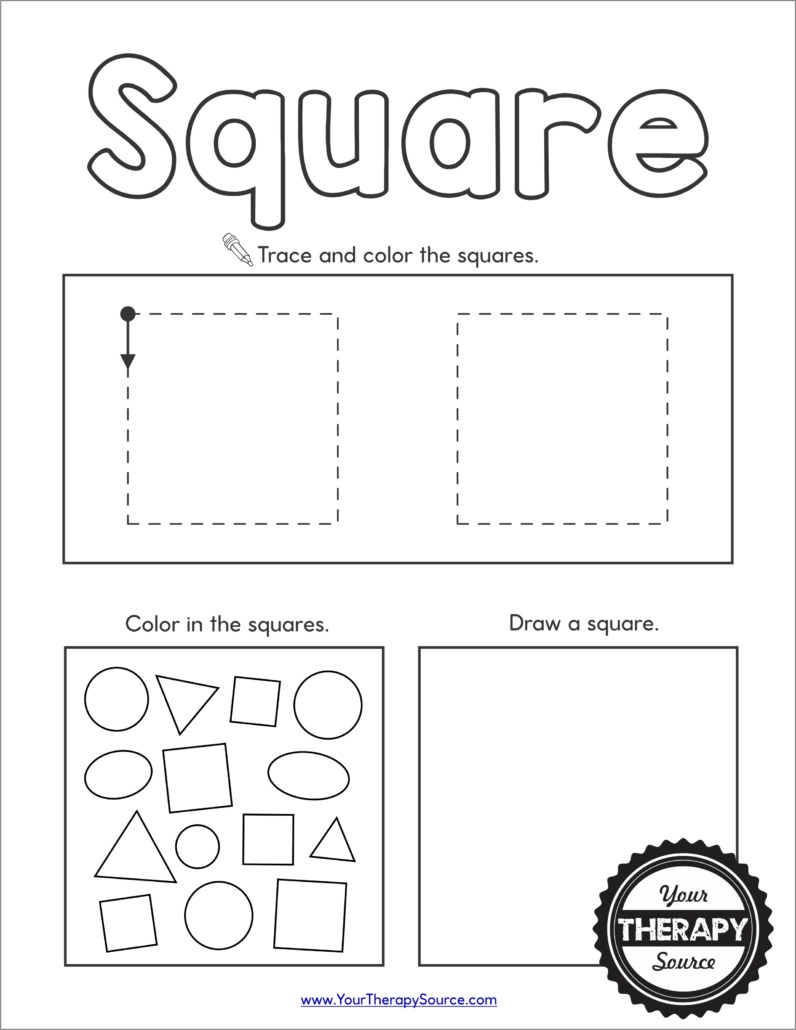
This specific printable focuses on introducing the fundamental properties of a square through guided tracing lines, distinct corners, and spatial boundaries. Young learners encounter continuous strokes that require intentional directional changes, helping them understand how to stop, pivot, and redirect a writing instrument. It sounds simple, and that is the point. When children trace a square, they practice simultaneous visual-motor integration, coordinating eye movements with hand adjustments to stay on track. This lays the groundwork for more complex geometric explorations found throughout various Shape and Line Tracing activities. Furthermore, the worksheet builds confidence by providing clear starting and ending points, minimizing frustration for little learners who are just beginning to grasp directional concepts like top, bottom, left, and right.
Key Learning Outcomes
Engaging with this resource fosters several interconnected developmental milestones crucial for early school readiness. Learners refine visual-motor integration by coordinating eye movements with hand actions to follow distinct geometric paths. Hand strength and finger dexterity improve naturally as little fingers sustain a functional grip to navigate four distinct 90-degree corners. Directional awareness and spatial orientation blossom as children experience the tactile difference between vertical drops and horizontal sweeps. Finally, focus and perseverance lengthen naturally when children see a completed shape emerge from their own purposeful strokes.
How to Use This Worksheet
Introducing geometric tracing requires a mindful balance of playful exploration and gentle physical guidance. Adults can begin by letting young children trace the outer borders with an index finger, tracing the corners physically before introducing crayons or pencils. Placing the paper on a flat, stable surface ensures that the hand maintains a comfortable and efficient posture throughout the exercise. Transitioning from thick crayons to shorter pencils or broken chalk pieces naturally encourages a more mature tripod grasp, as shorter tools naturally prevent fisted grips. Celebrating every completed corner transforms a routine worksheet into an encouraging experience that builds genuine enthusiasm for writing tasks.
Practical Tips for Parents and Teachers
Scaffolding instruction effectively means meeting every child at their current developmental stage without forcing premature perfection. Adults should model proper pencil grip and slow, deliberate stroke pacing before inviting the child to try independently. For children who struggle with staying on the lines, placing a textured backing underneath the paper provides tactile feedback that reinforces boundary awareness. Offering praise for sustained effort rather than flawless execution keeps the emotional climate positive and low-stress. When attention begins to wane, pausing the activity or shifting focus to broader motor tasks found within Fine Motor and Pre-Writing Skills helps prevent hand fatigue and frustration.
Age-Appropriate Recommendations
For toddlers ages two to four, the focus centers on sensory exploration, finger strength, and simple finger-tracing over large geometric outlines. According to the National Association for the Education of Young Children developmentally appropriate practices, young children learn best through active, hands-on manipulation and sensory-rich tasks rather than rigid drill-and-practice methods. As children progress toward ages five through eight, expectations shift naturally toward precise pencil control, corner accuracy, and independent stroke sequencing. During these primary years, incorporating themed practice from Seasonal and Fun Themes maintains high engagement while reinforcing advanced spatial concepts.
Perceptual-motor interventions significantly enhance pre-writing competency and spatial awareness in early childhood learners — American Occupational Therapy Association
Frequently Asked Questions
Navigating early childhood writing tools can raise numerous practical questions for educators and families alike. Clear answers help ensure that practice remains encouraging, developmentally appropriate, and easy to implement in busy home or classroom environments.
Systematic fine motor practice correlates directly with improved letter formation and early academic confidence — National Association for the Education of Young Children
Explore More Free Printable Tracing Worksheets
Supporting a young learner involves offering a rich variety of engaging, developmentally tailored practice materials. Expanding beyond basic shapes allows children to explore letters, numerals, and themed paths at their own comfortable pace. Discovering these supplementary resources is entirely stress-free and designed to keep young hands motivated and curious. Families and educators can browse the complete collection of learning materials by visiting KidTraces.com to find everything needed for an inspiring early childhood curriculum.
Quick Wiring Specifications & Terminal Guide
| Component / Circuit | Standard Wire Gauge | Recommended Protection |
|---|---|---|
| Control & Trigger Signals | 18 – 20 AWG | 5A – 7.5A Inline Fuse |
| Standard Auxiliary Load | 14 – 16 AWG | 15A – 20A Circuit Breaker |
| Main Power Feed / Supply | 10 – 12 AWG | 30A – 40A Heavy-Duty Relay |
Images References


