Introduction
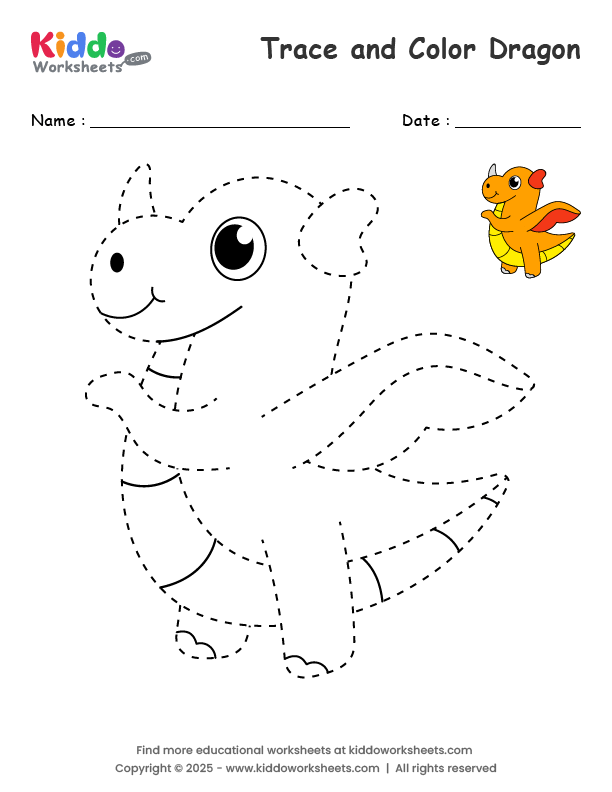
Many children recognize letters, numbers, and symbols long before their fine motor skills can consistently form them on a blank page. According to Reading Rockets, early writing development relies heavily on the integration of visual-perceptual skills and muscle control in the hands and fingers. Translating visual recognition into physical marks requires targeted practice that bridges the cognitive and physical gaps of early childhood. Engaging thematic printables, such as tracing worksheets dragons, capture the imagination of young learners while addressing foundational pencil control. Sparking immediate interest through mythical creatures transforms a sometimes frustrating physical task into an exciting quest across the page.
💡 Educational Key Takeaways:
- Core Skill: Structured Tracing Worksheets Dragons focused on developing pencil grip, stroke control, and early literacy/math confidence.
- Target Scope: Suited for homeschoolers, preschool, kindergarten, and elementary learners.
- Best Recommendation: Practice 10–15 minutes daily with ergonomic writing tools to reinforce muscle memory without hand fatigue.
What This Worksheet Covers
Fantasy-themed tracing exercises focus on building the foundational pencil strokes necessary for future handwriting success, all wrapped in a playful scale-and-wing aesthetic. Children navigate winding paths, jagged mountain ridges, and fiery loops that mimic the exact motor patterns required for letters and numbers. These guided lines help stabilize the hand, encourage smooth visual tracking, and develop the intrinsic hand muscles needed for sustained writing endurance without fatigue. It sounds simple, and that’s the point: purposeful play builds the neurological pathways essential for lifelong literacy and motor control.
Key Learning Outcomes
Working through these fantasy-themed pages strengthens visual-motor integration as the eyes guide the hand along precise dotted trajectories. Learners refine bilateral coordination by holding the paper steady with one hand while manipulating the writing tool with the other. Hand strength improves naturally through sustained, controlled pressure application, reducing the likelihood of early cramping during extended writing tasks. Children also master directional awareness, learning to track from left to right and top to bottom across the page layout. Exploring related concepts is easy when expanding practice into Shape and Line Tracing for foundational pre-writing strokes.
How to Use This Worksheet
Successful implementation begins with selecting a quiet workspace with adequate lighting and a child-sized chair and table setup. Adults should introduce the activity by framing it as a storytelling adventure, inviting the learner to help the friendly dragon fly home or guard treasure. Observing how the child approaches the page reveals valuable clues about their current grip maturity and hand dominance preferences. Children who tire quickly may benefit from breaking the exercise into smaller segments rather than attempting to finish an entire sheet in one sitting. For broader skill development, educators often pair these pages with resources found under Fine Motor and Pre-Writing Skills to build comprehensive hand strength.
Practical Tips for Parents and Teachers
Adults can model proper tripod grasp before handing over the pencil, ensuring the thumb, index, and middle fingers share the workload comfortably. Scaffolding the activity by lightly tracing the lines first helps children who struggle with initial motor planning and spatial orientation. Extending the challenge for advanced learners involves timing the tracing or asking them to invent a short story about the dragon on the page. Upright vertical surfaces, such as easels or taped wall pages, naturally encourage wrist extension and improve shoulder stability for reluctant writers. Incorporating options from Seasonal and Fun Themes keeps motivation high throughout the changing school year.
Age-Appropriate Recommendations
According to NAEYC Developmentally Appropriate Practice guidelines, children aged two to four benefit most from thick, sweeping lines, large circles, and gross-motor pre-writing movements that engage the whole arm. At this stage, chubby fingers naturally gravitate toward palmar grasps, which should be gently guided toward transitional grips using broken crayons or short markers. For children aged five to eight, the focus shifts toward controlled pencil strokes, correct letter formation, and smaller, more precise visual-motor tasks aligned with school readiness expectations. Refining these skills at an older age ensures smooth transitions into paragraph writing and complex notebook journaling without physical strain.
According to the American Occupational Therapy Association (AOTA), fine motor proficiency in early childhood directly correlates with academic readiness and classroom participation. — AOTA Practice Guidelines
Frequently Asked Questions
Common questions regarding the implementation, printing, and developmental benefits of fantasy-themed tracing printables are addressed below to assist parents and educators.
Explore More Free Printable Tracing Worksheets
Supporting a young writer involves offering a wide variety of engaging, developmentally appropriate practice materials that keep enthusiasm high. The complete library at KidTraces.com provides endless opportunities to practice pencil control, letter formation, and line tracking without the hassle of prep work. Caregivers and teachers can easily find fresh content to match any current classroom unit or home interest by browsing the full catalog of resources. Exploring additional categories ensures every child finds a favorite character or theme to make daily writing practice feel like pure fun.
Developmental Milestone & Activity Table
| Development Stage | Recommended Daily Duration | Primary Learning Objective |
|---|---|---|
| Preschool & Pre-K | 10 – 15 Minutes | Pencil grip development & basic pre-stroke lines |
| Kindergarten | 15 – 20 Minutes | Letter/number formation & spatial line awareness |
| Early Elementary (Grade 1–2) | 20 – 30 Minutes | Fluency, sentence construction & neatness |
Images References


